Cascais: A Seaside Day Trip from Lisbon!
Whilst I’m the type of person that spends ages planning a trip, sometimes things don’t go to plan. Like the time we spent an unexpected day in Athens because of a ferry cancellation. And the unexpected bus journey to Rome because of a flight cancellation. So when our Sintra plans were cancelled last-minute due to the potential risk of forest fires, I had about two hours to find out as much about nearby Cascais as I could. And what I found out was that Cascais is an easy-peasy day trip from Lisbon.
This is where blogger knowledge comes in handy! Caroline from Pack the Suitcases has a load of Portugal content, including what to see and do in Cascais!
Tell me more about Cascais!
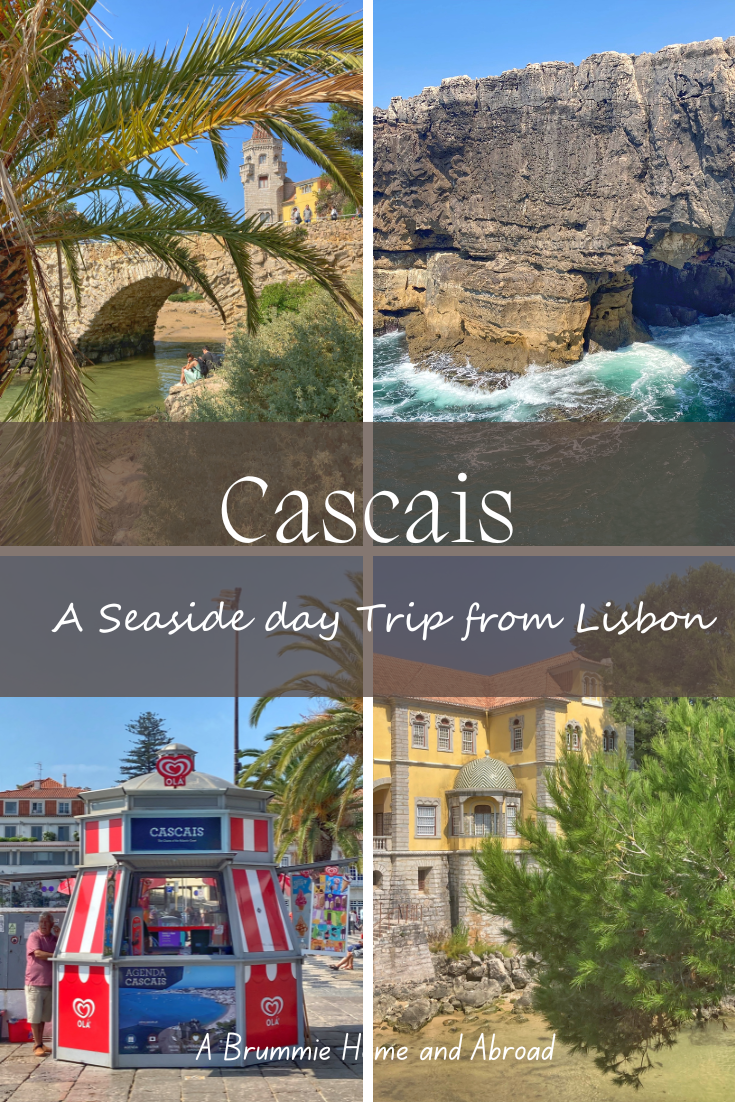
Lying 20 miles east of Lisbon, Cascais (pronounced “Cash-Caish”) is perfect for taking a break from the city. It’s only 40 minutes on the train, but it feels like a world away. A charming seaside town with an arty vibe, it has the royal seal of approval. Cascais was an official summer residence for the Portuguese royal family during the 19th century. There are golden beaches, clear blue waters, rugged cliffs and plenty of traditional tiled buildings for the azulejo fan.
Known as the Portuguese Riviera, Cascais has grown from a modest fishing village into a vibrant and idyllic resort. It was a haven for sailors and explorers between expeditions, and you can still see its maritime roots today. Seafood is abundant!
Getting to Cascais from Lisbon
You’ll need to get to Cais do Sodre railway station to connect to the suburban CP train to Cascais. Cais do Sodre is on the Green (VD) Metro line, or well connected by the Lisbon trams (25E or 15E). We chose to stroll along the riverfront; it’s just 10 minutes from Praça do Comércio. We then spent 10 minutes bouncing between the metro station and railway station. For info, there is a public toilet at the metro station only, it’ll cost you €1 for the pleasure. There’s an attendant who’ll help you out if you have notes but no change. Mr Fletche returned with 9 x €1 coins stuffed in his pocket for subsequent loo visits.
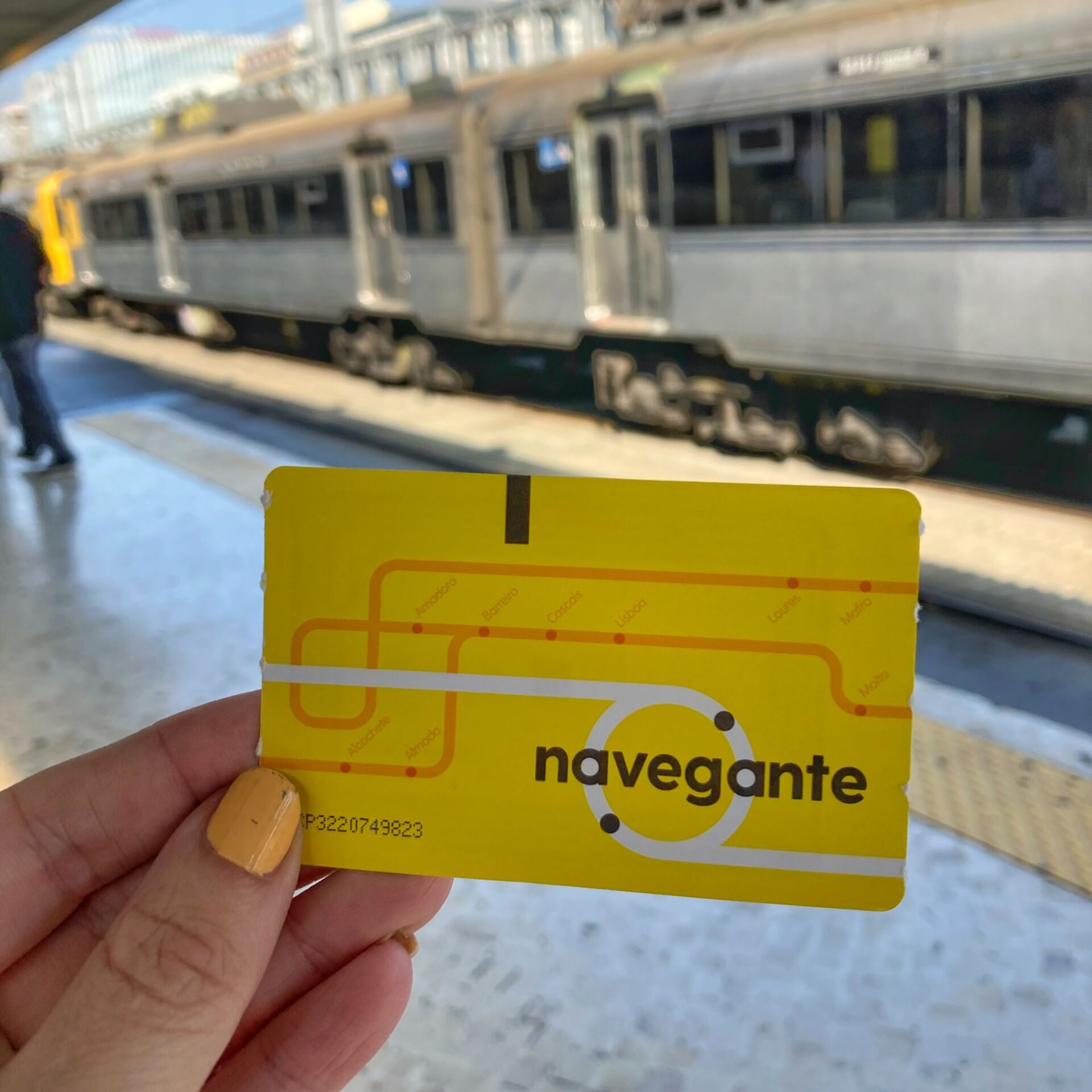
Trains to Cascais run every 20 minutes. The fare can be added to your Navegante card if you’re zapping your way around the city*. You’ll need a 4-zone ticket – a single ticket is €2.30. If you’re travelling on 1-day travel ticket make sure you purchase the one which includes CP rail travel.
If you have the Lisboa Card, this includes unlimited travel on the CP Train Line to Cascais. You can read more about the Lisboa Card – and if it saved us any money – here!
*The Navegante Card is a quick and easy way to pay for public transport in Lisbon. The electronic smart card can be preloaded with pay-per-ride credit (aka “zapping”), or with a day ticket for €6,80. If you want to include trains, the one-day ticket is €9,60 at the time of writing. A 1 day public transportation ticket can be used for unlimited journeys on Carris (trams, buses and lifts) and Metro networks, for 24 hours from the first validation.
Loaded Navegante Card in hand, we zap in at the turnstiles and wait for the Cascais train. There are plenty of beach-goers around us, loaded with seaside paraphernalia. It’s no relaxing beach day for us though. I tell Mr Fletche we are going for the architecture, and mosaic flooring, and coastal strolls. In truth, we’re going for the pastries and the gelato. What do you think I spent those two hours researching?!
Cascais Train Tip: Make sure you sit on the left hand side to take in the views (or on the right hand side for the return!)
Things to see and do in Cascais
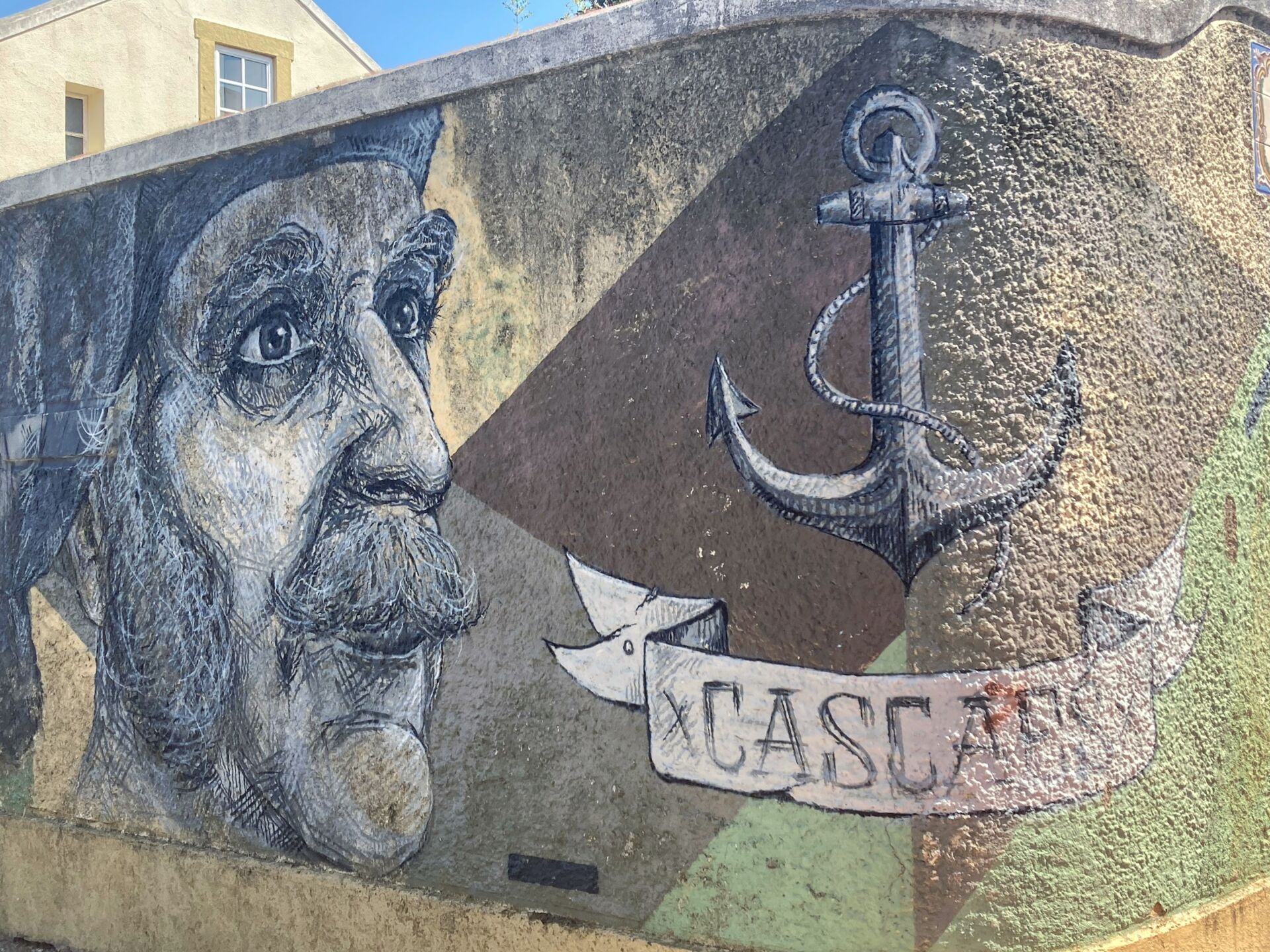
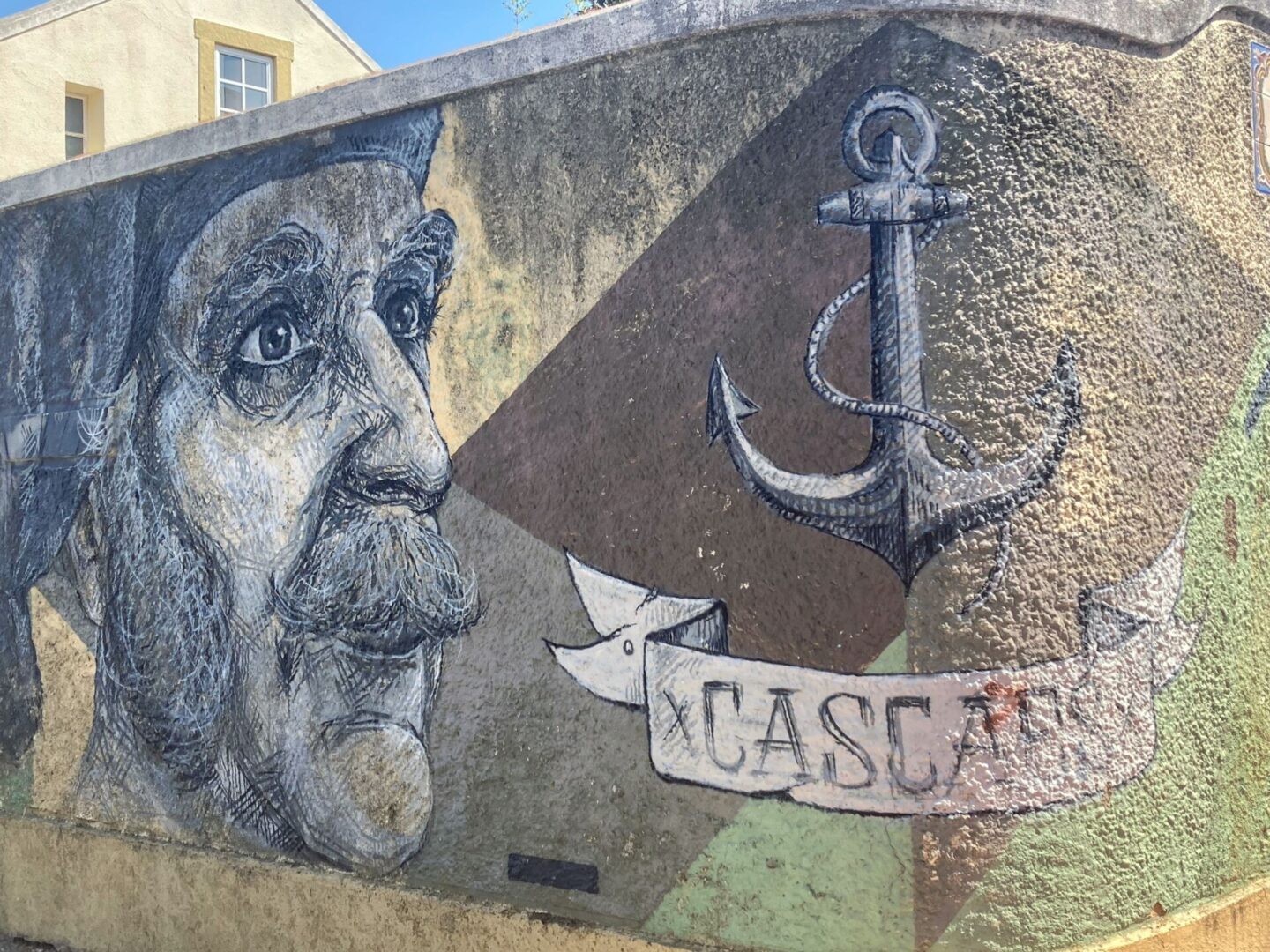
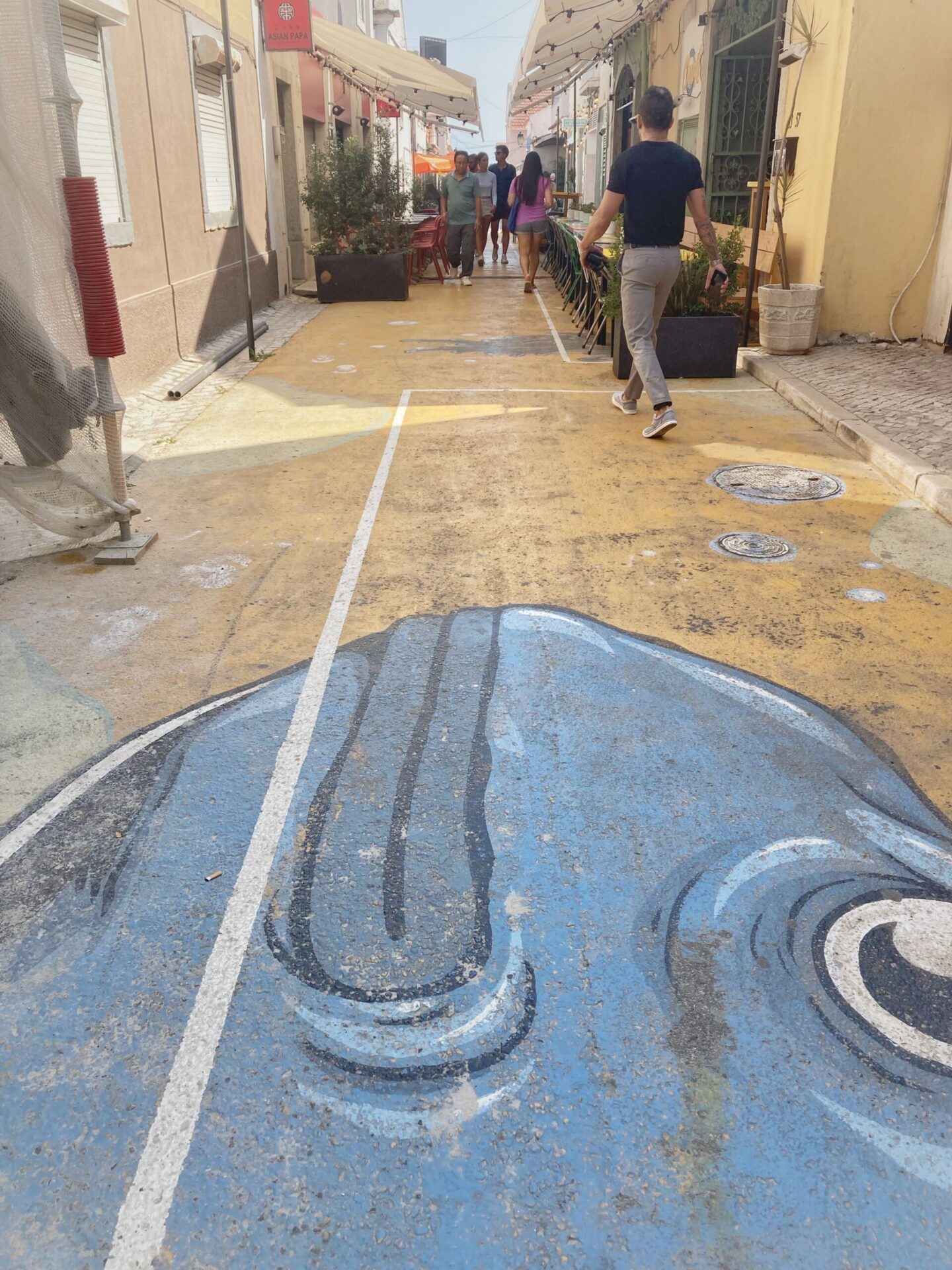
From Cascais Railway Station we head into the labyrinth of streets that make up the old town of Cascais. Lined with tiled streets and Portugal’s famous azulejos, there are plenty of shops, galleries and cafes, nestled amongst incredible architecture. Watch out for the crazy zig-zag tiled paving, it’s enough to make you feel a little dizzy!
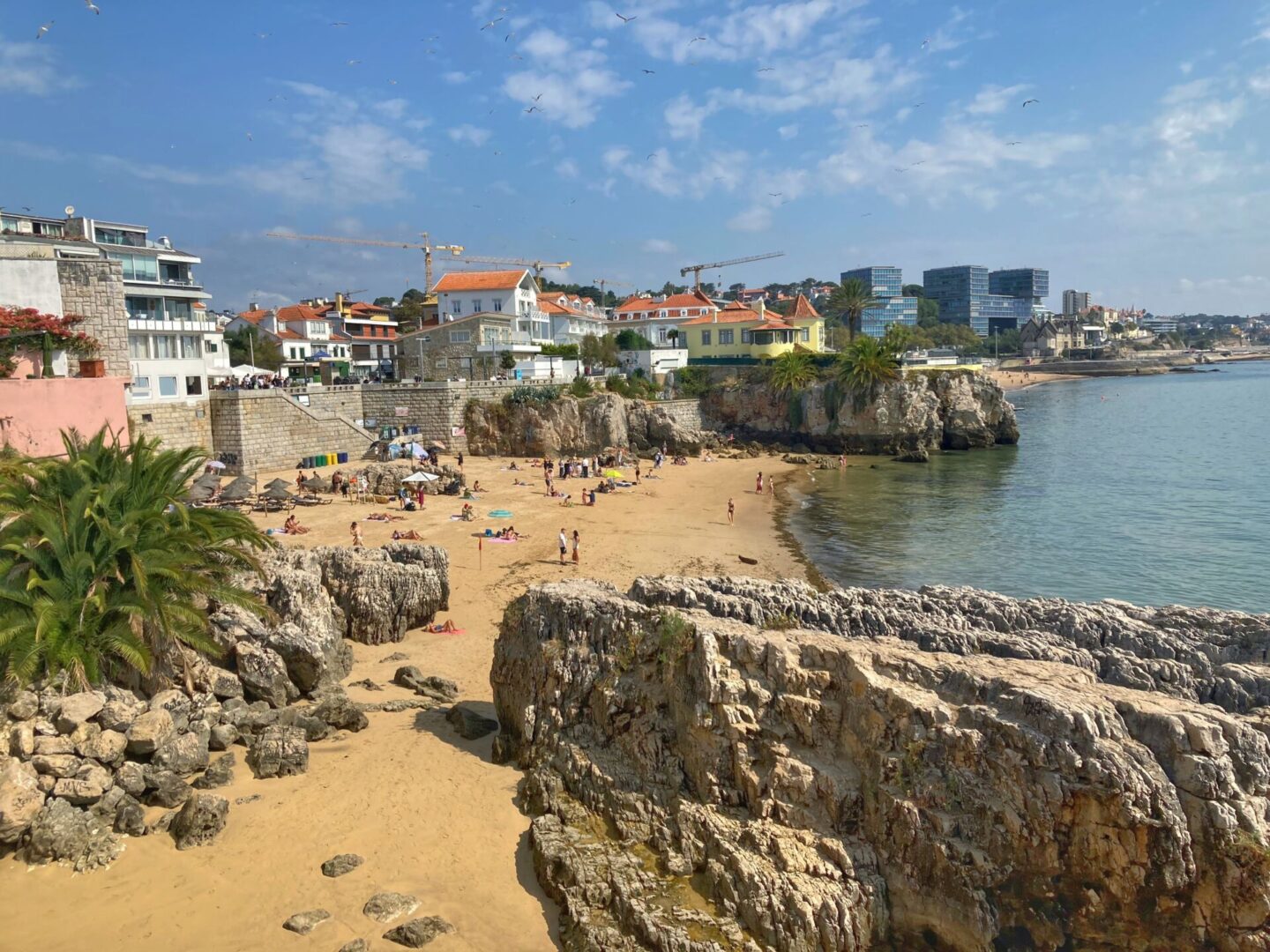
We emerge onto Rua da Saudade – or Street of Longing. A little alleyway at the side of a blue building takes us down to Praia da Rainha. This small beach, nestled in a sheltered cove surrounded by cliffs, used to be the private beach of Queen Amelia, the last queen of Portugal. It’s now accessible to all if you fancy walking in royal footsteps or paddling in crystal-clear waters.
Cascais Beaches
If you have the opportunity to build a relaxing beach day into your Lisbon trip then Cascais is the perfect place to do it. It’s not a sun lounger and parasol type of town, more a “throw a towel onto the sand and claim your spot” type of town. Praia da Conceição and Praia da Duquesa are both convenient for the centre of town, with plenty of amenities which mean you don’t need to stroll too far from the sand. Praia da Ribeira is right by the pier and marina and harks back to when the town was a mere fishing village.
If you’re looking for breathtaking beaches, then just north of Cascais are Praia do Guincho – a popular surfing spot – and the neighbouring Praia da Cresmina. Cascais is on the North Atlantic coast, which makes for a chilly dip, but there are plenty of beachside cafes and bars overlooking the ocean and perfect for soaking up the sunshine.
Santa Marta Lighthouse
We don’t linger at the beach though. Instead we head along Rua da Suadade and onto Passeio de Dom Luis I, with Praia da Ribeira on our left and Praça 5 de Outubro (5th October Square) on our right. King Dom Pedro stands proud in the centre of the square, outside the Town Hall.
Instead of taking the coastal road, we cut inland (and uphill) past faded buildings, some decorated with the ever-present azulejos. We’ve taken a path probably less followed by the tourists, and locals go about their business. Some of the locals are stopping at a little bar for a post-noon drink, so we join them. It’s not the friendliest service we’ve come across in Lisbon, but it makes for a pleasant pit stop.
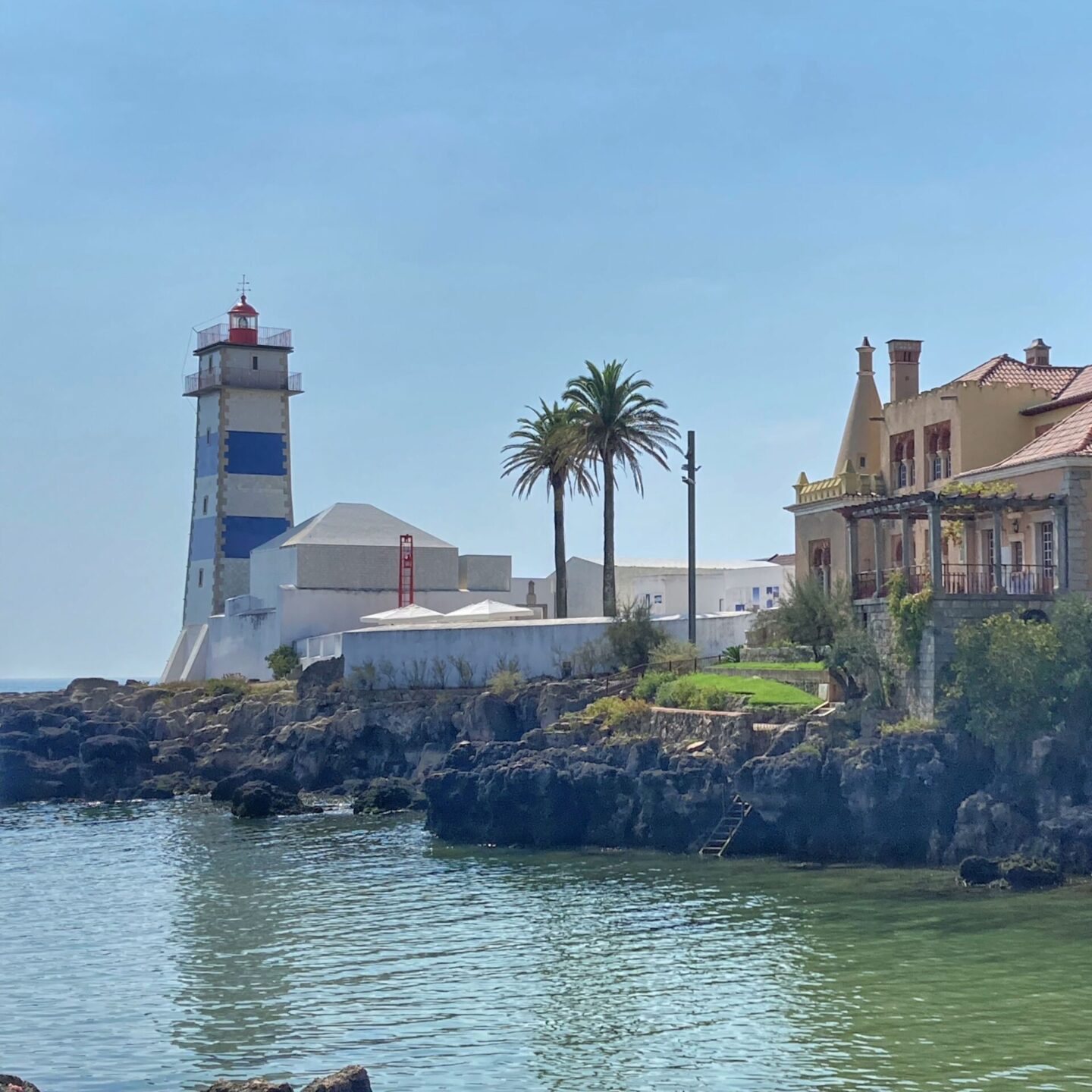
We head back towards the coast. Our inland diversion means that missed the Citadel – a fortress built to defend the mouth of the Tagus River, and therefore Lisbon from pirate attacks, now a quirky art district with modern art and giant sculptures. Our next stop though is something of a symbol of Cascais, the blue and white striped Santa Marta Lighthouse. Perched on the Tejo Estuary, this is a picture postcard scene, particularly when viewed from Mirador Casa de Santa Maria where it’s perfectly framed by palm trees. You might need to do a bit of rock scrambling to get the best vantage point. Approach with caution if you’re wearing flip-flops or flimsy sandals.
You can visit the lighthouse itself and you can climb the spiral staircase for spectacular views. Entrance is €5. The lighthouse is right next to Casa de Santa Maria, an Italianate mansion with a rich history and waterfront terrace. Admission is included in your lighthouse ticket.
Boca do Inferno – the mouth of hell
We continue walking along the Avenue Rei Humberto II de Italia. It’s pleasantly warm on this mid-September afternoon, but beware on a hot mid-summers day – there’s no shade on the 15 minute walk between the lighthouse and Boca do Inferno.
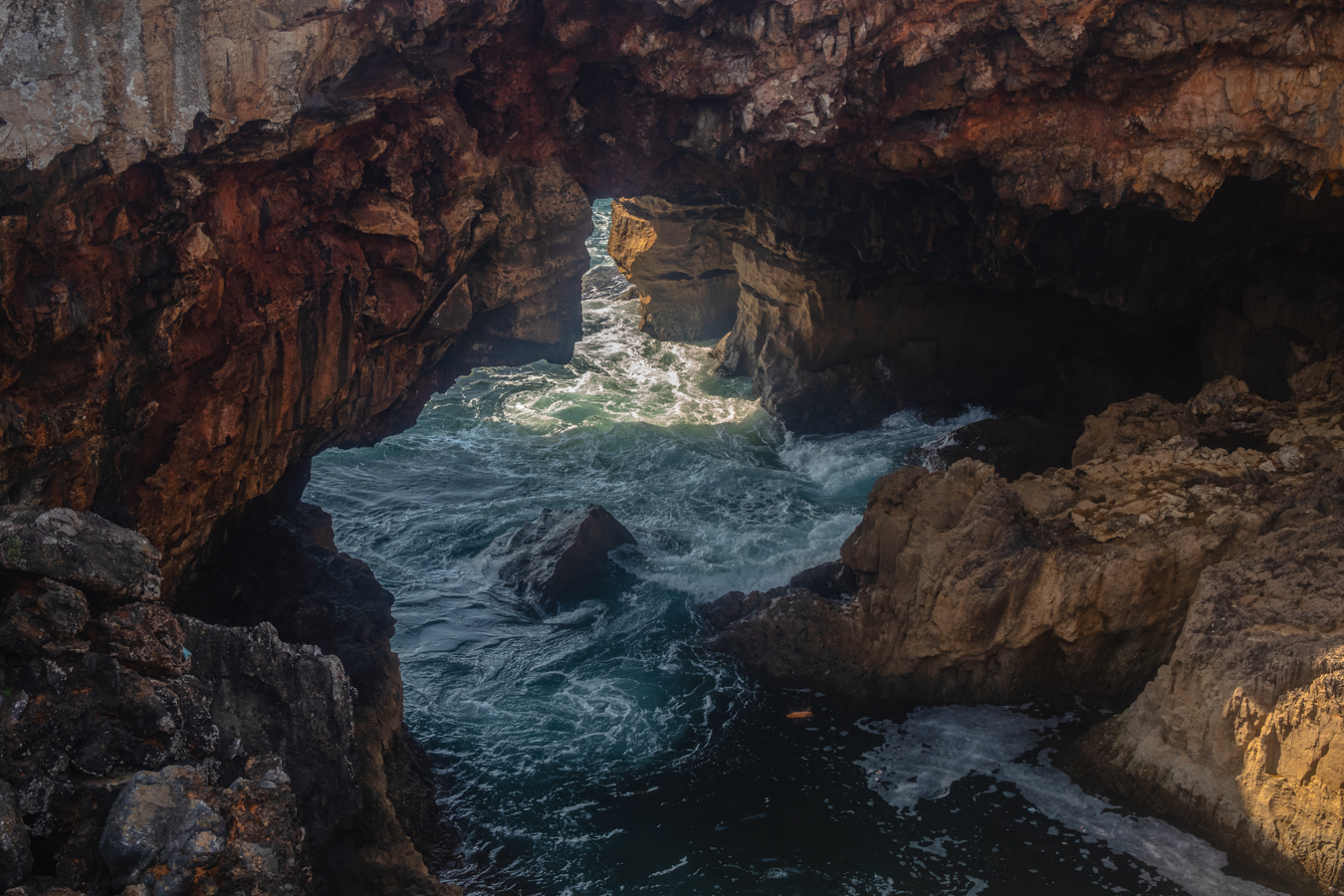
This natural phenomenon is a striking chasm, where pounding waves crash hypnotically against the rugged limestone cliffs. forcing their way into an opening beyond. You can walk down to the viewpoint, but personally I think the views are better from above, behind the little gift shop. The waves weren’t particularly fierce during our visit, sparing us the thundering noise and ocean spray. The “Mouth of Hell” name seemed a bit over-dramatic. Still, I wouldn’t want to clamber past the flimsy rope barriers onto the rocks below to get a closer look. The emergency services were there during our visit, tending to someone that had gotten themselves into trouble. A clear warning that Mother Nature does not mess around.
Park Life at Parque Marechal Carmona
We stroll back along the seafront promenade to Parque Marechal Carmona. This shady oasis is the perfect place to escape the sun, with plenty of quiet spots to relax and commune with the park’s fowl community and spot the turtles basking at the pond. Meandering pathways are lined with trees and surrounded by lush lawns. There are a couple of children’s playgrounds, and there are also free clean public toilets here.
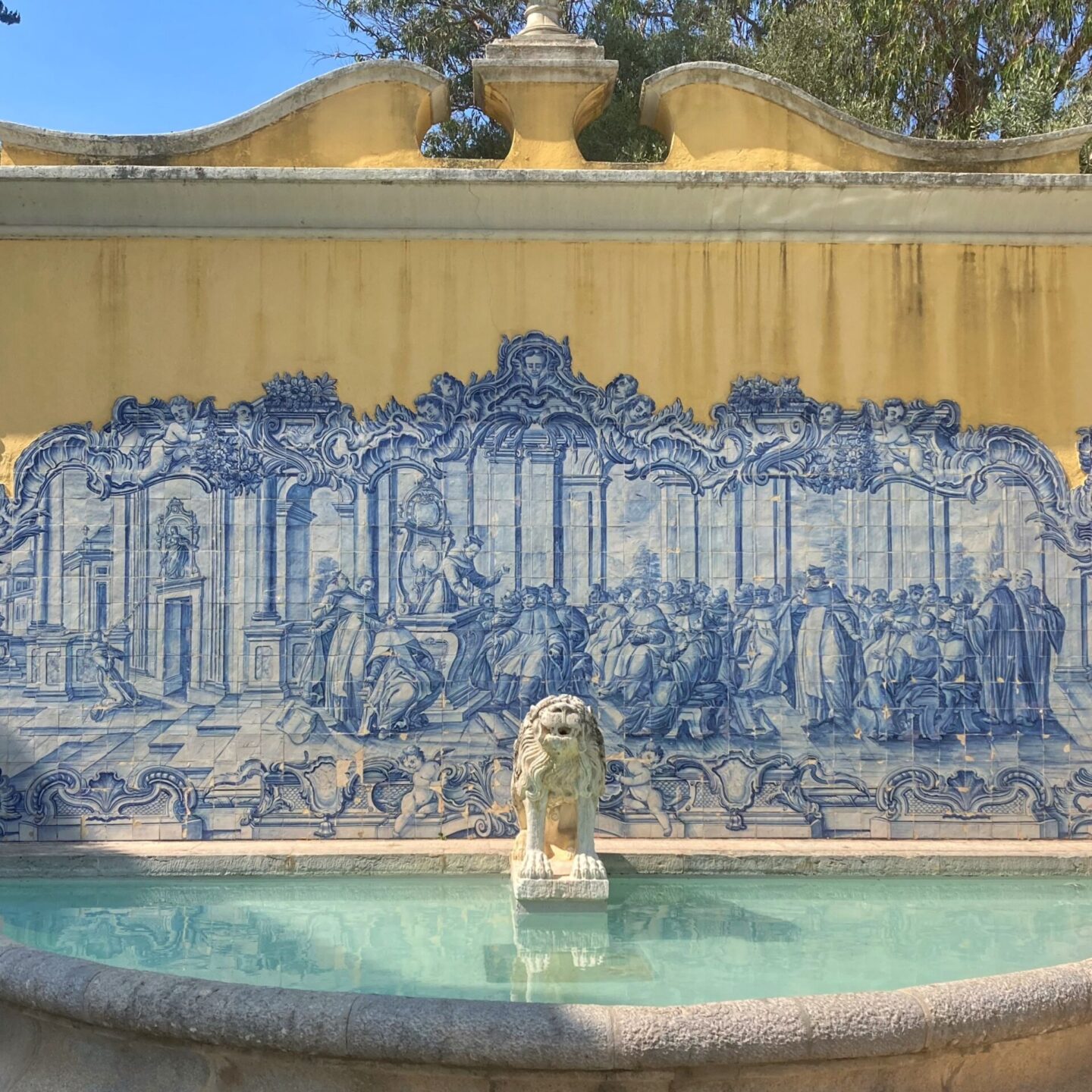
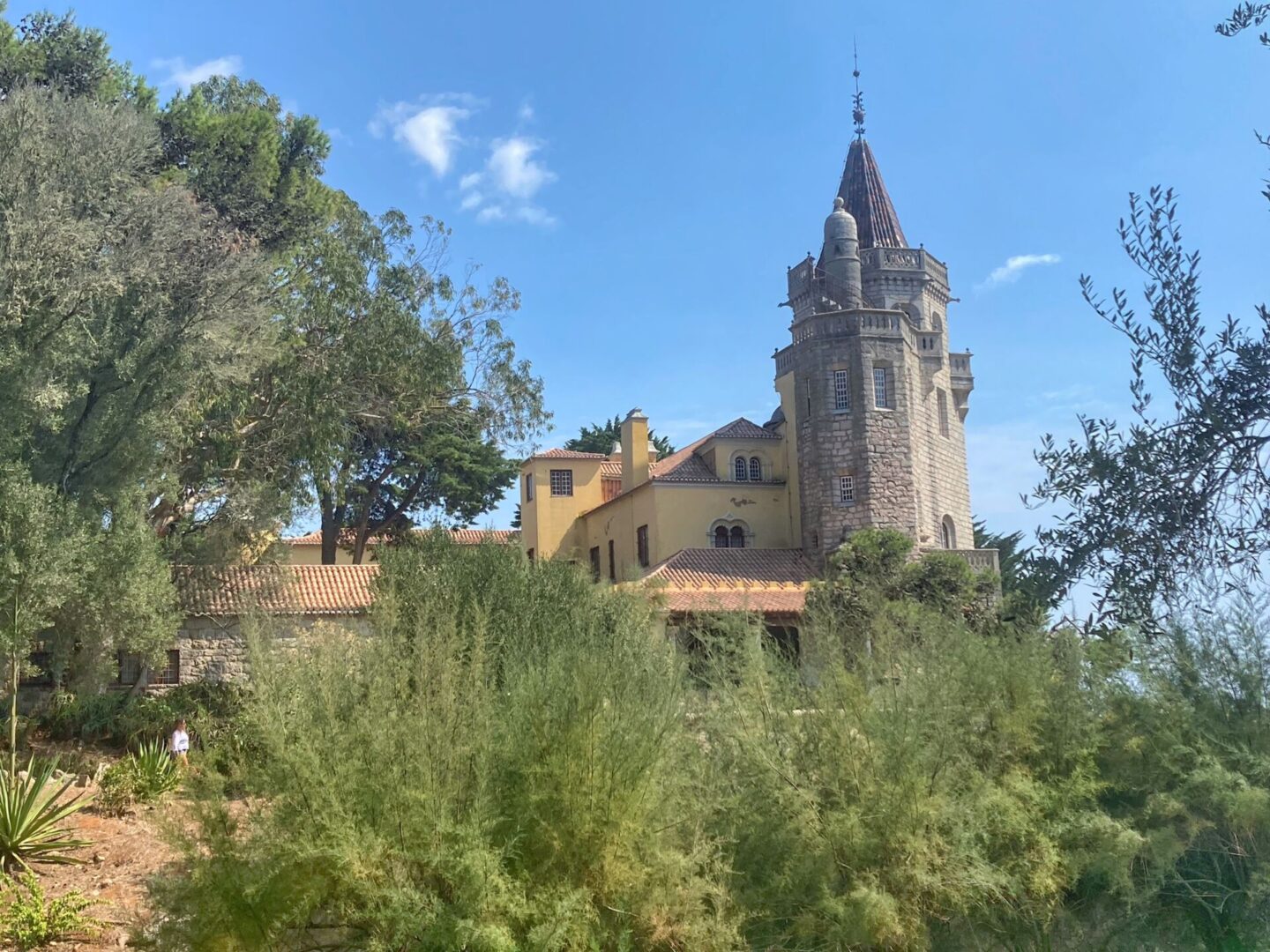
The park is also home of the Museu Condes de Castro Guimarães. Famous for its stunning azulejos and lavish decor, this museum gives an insight into the life of the aristocracy that summered in Cascais. If you can’t make it to Sintra, this is a fairytale castle in its own right with its bright yellow exterior and small beach. Entrance is €3


Eating and drinking in Cascais
It’s time for lunch. We stroll along whitewashed streets until we arrive back at the heart of the Old Town. On the corner of Navegantes and Rua Alfonso Sanches we find Cantina Clandestina, highly recommended for a casual lunch. The outdoor terrace is full, but there’s one table for two available and we’re quickly seated. We both opt for a hot focaccia; one with smoked salmon and burrata, the other with beef steak. Embracing the Italian fare on the menu, we wash it down with an Aperol Spritz. It’s the perfect light lunch to see us through the day.
I have my sights set on gelato for dessert. There’s one place on my radar – Santini’s. It’s the oldest ice cream parlour in Portugal and they still use the original family recipe, passed down through generations since 1949. We have to queue, but it moves quickly. Sadly there were no vegan gelato options for lactose-intolerant Mr Fletche, but he patiently waits for me whilst I eat my lemon and hazelnut combo. I placate him with promises of sweet treats, and we head back to Pastelaria A Bijou de Cascais on the lively Largo Luis de Camoes. Here we pick up areias, nozes and a couple of pastei de nata for good measure.



Clutching our A Bijou box carefully we make our way back through the Old Town, slowly weaving our way towards the train station. Cascais train station is quite easy to miss as it doesn’t look like a train station at all! We activate our 48 hour Lisboa Cards for the return journey, and barely have to wait any time at all for the next train to Cais do Sodre.
Final thoughts on Cascais
Every inch of Cascais is a picture postcard. You don’t need much of an itinerary; it’s the perfect place to stroll around at your leisure for a few hours. It’s just a 40 minute train ride, but it feels a world away. Trains run between Cascais and Lisbon late into the night so it would be incredibly easy to enjoy a full day and evening sampling all of the delights that Cascais has to offer. Cascais also offers plenty of museums and galleries, great independent shopping and a seafront walk all the way to the neighbouring district of Estoril.
Lisbon residents are so lucky to have this lovely little seaside spot so close by, In fact, can we move here? Easy to commute to the big city, incredible seafood and just a few minutes from the beach, wherever you are in town. Perfect.
I try my hardest to keep the information in this travel guide up to date; however if you notice anything has changed please let me know! Happy travels, Emmalene