
Osaka Travel Diaries: 48 hours in Japan’s Kitchen
”Osaka is crazy”. So said the WhatsApp I received from Mr Fletche. I had decided to relax and take in the dated redwood décor of our hotel room whilst he took in the local sights.
Me: “Crazy bad or crazy good? Should I just stay in our dated redwood hotel room?”
The resounding response was crazy good. And I was soon to discover exactly what he meant during our 48 hours in Osaka.
Osaka was the final stop on our long-awaited Japan trip. You can view all the rest of my Japan content here – and there’s a lot to share!
**This blog post may contain affiliate links. This means that if you go on to make a purchase or booking after clicking through one of my external links, then I may make a tiny bit of commission, at no extra cost to you!**
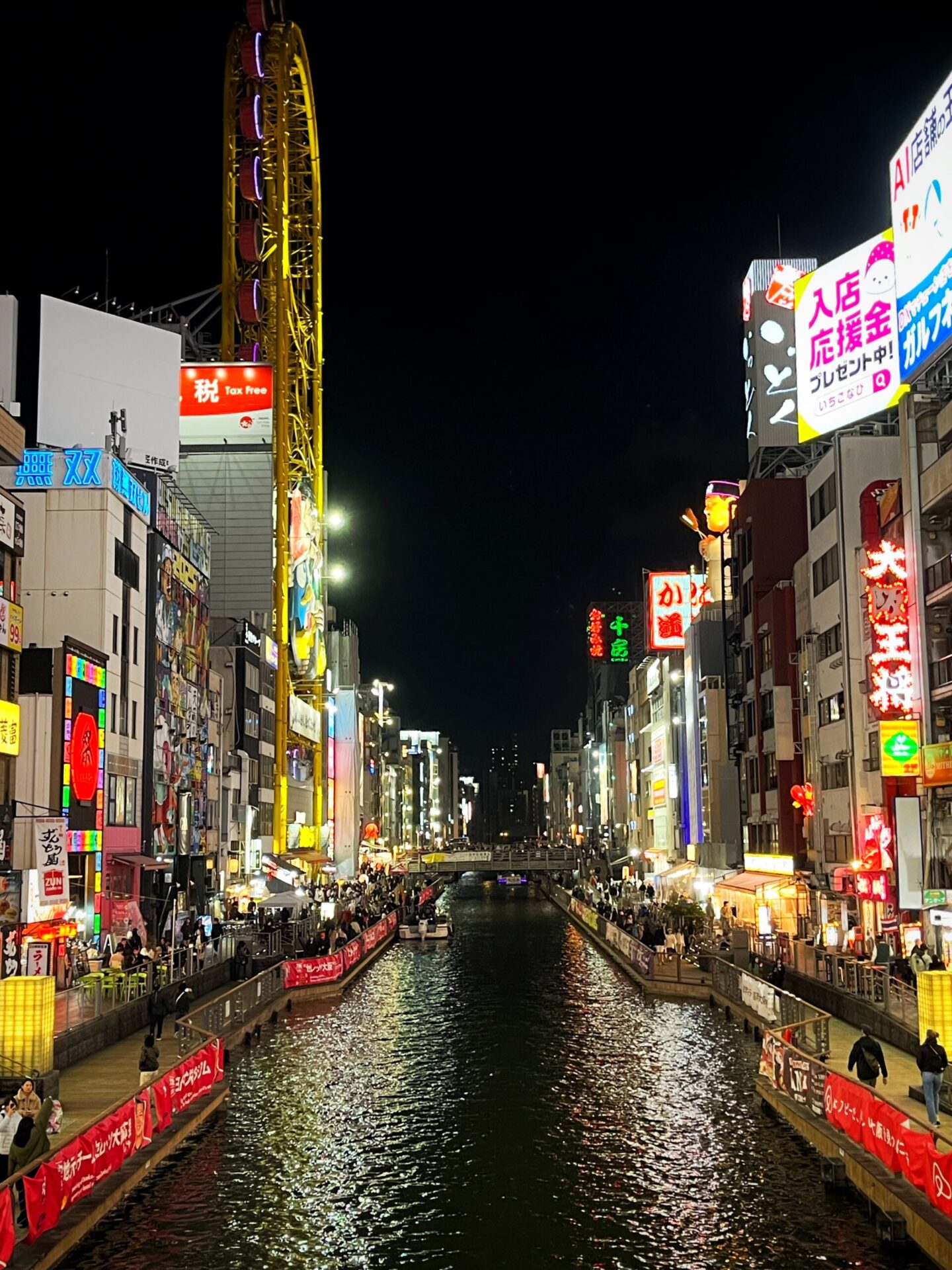
Arrival Day in Osaka
After a little detour for deer-feeding in Nara, we arrive in Osaka at Kintetsu-Nippombashi Station just after 3:30pm. It’s a short 6 minute walk to our Osaka hotel, and we have all our digits crossed that we will be reunited with our luggage.
Where we stayed in Osaka
Hotel Alps was the cheapest of the hotel’s we stayed at in Japan, but the location was perfect for our 48 hours in Osaka. It’s safe to say it wasn’t the most fashionable or elegant of our holiday, but it was certainly the largest room – and largest bed – we’d had. In fact, there are so many mirrors in our room I’m starting to wonder if this is one of those Japanese love hotels where you can rent rooms by the hour.
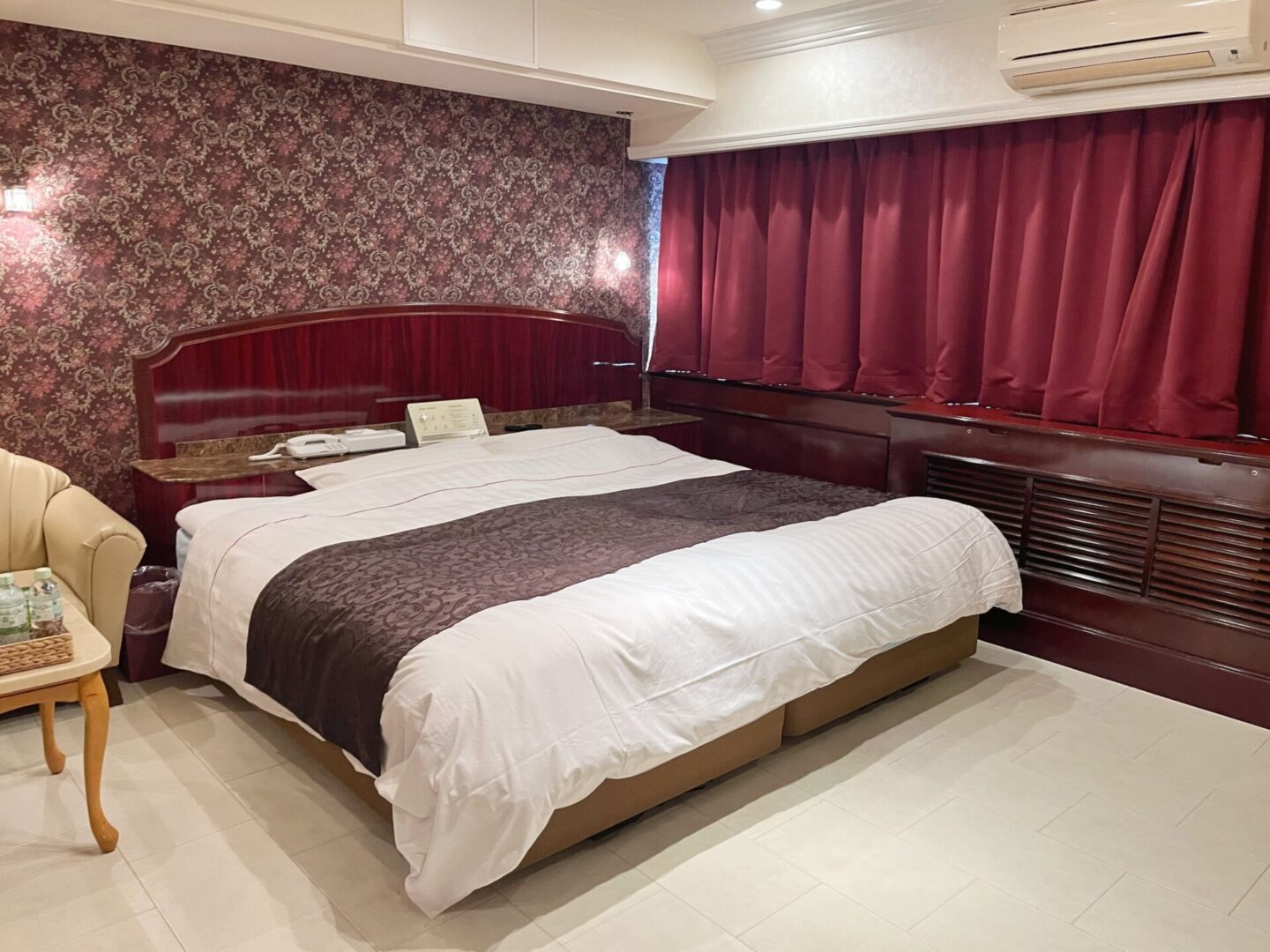
However – much to our joy and relief – our suitcases have arrived, unscathed. We are thankfully reunited with the rest of our clothes.
Luggage forwarding is commonly used in Japan and it’s an excellent way of being able to move around the country by public transport without lugging suitcases. Because there are A LOT of steps at train and metro stations. It’s convenient, cost-effective and reliable – we dropped off our bags at a Yamato desk in Tokyo and our suitcases were waiting for us on check-in day in Osaka.
Dotonbori and a little oasis of calm
After Mr Fletche’s little solo sojourn, we head out to explore together. We only have to step out the front of our hotel and we are in the hustle, bustle and noise of Sennichimae Doguyasuji Shopping Street which leads all the way directly to Dotonbori, Osaka’s famous canalside entertainment district.
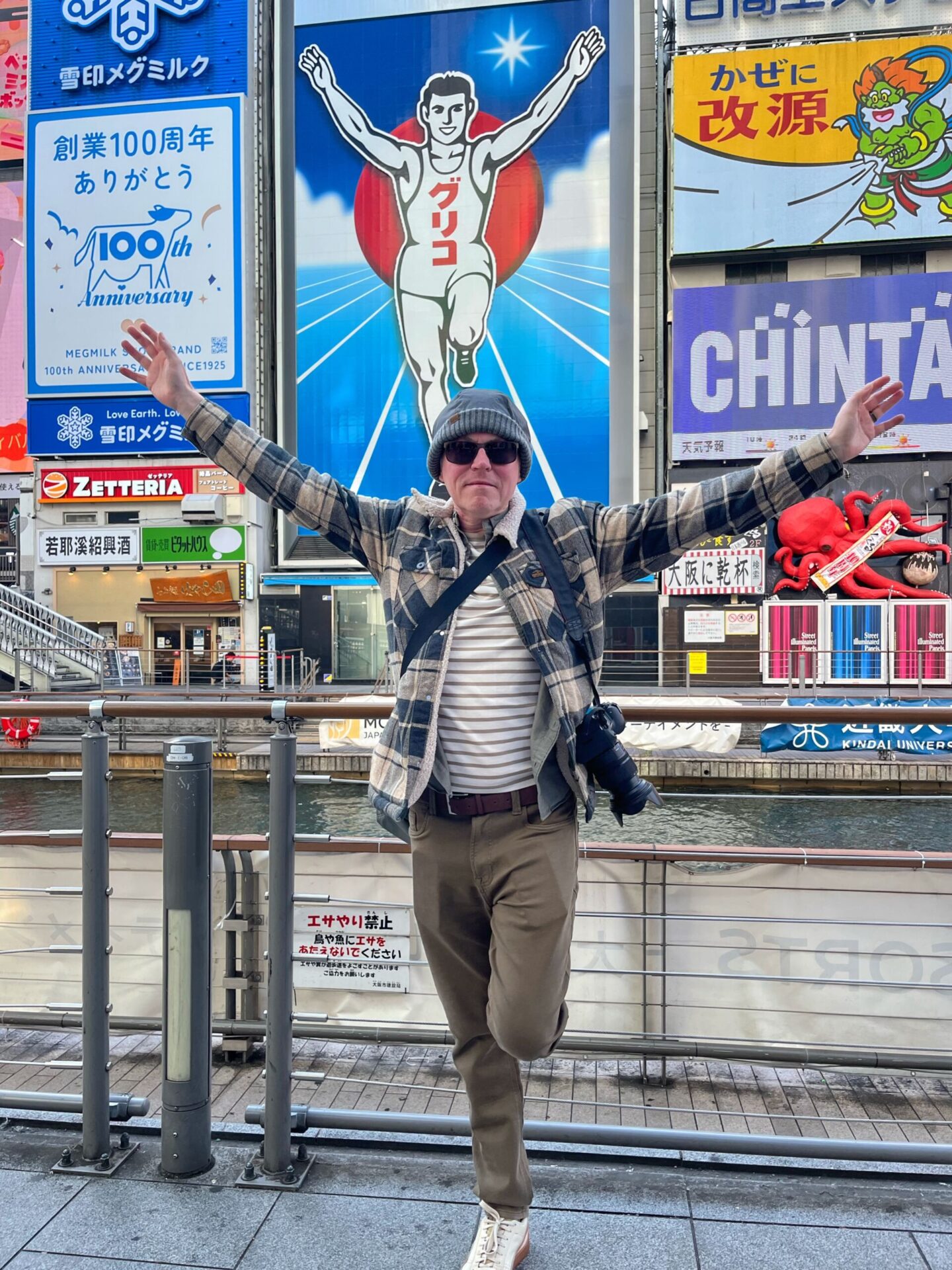
In Tokyo all the neon and noise seemed a little further away, but here in Osaka it is all around you and all-encompassing. And I love it. Dotonbori was mostly destroyed during World War II, but now it is vibrant and bustling, with bars and restaurants lining the walkways along the Tonbori. We make a beeline for the iconic Glico Running Man sign, which represents energy and vitality. After 7 jam-packed days in Japan, I am not exuding any energy, or indeed, vitality.
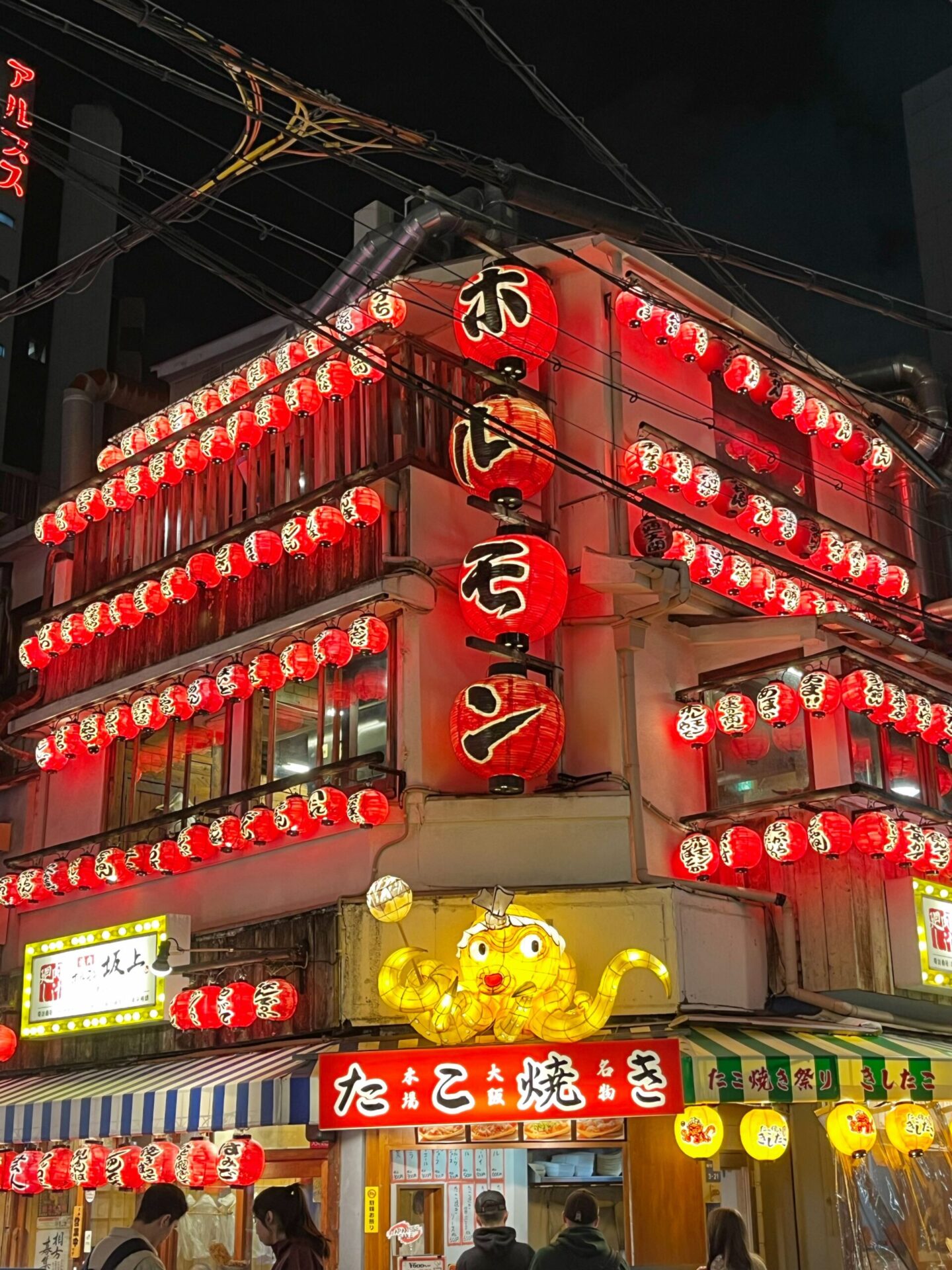
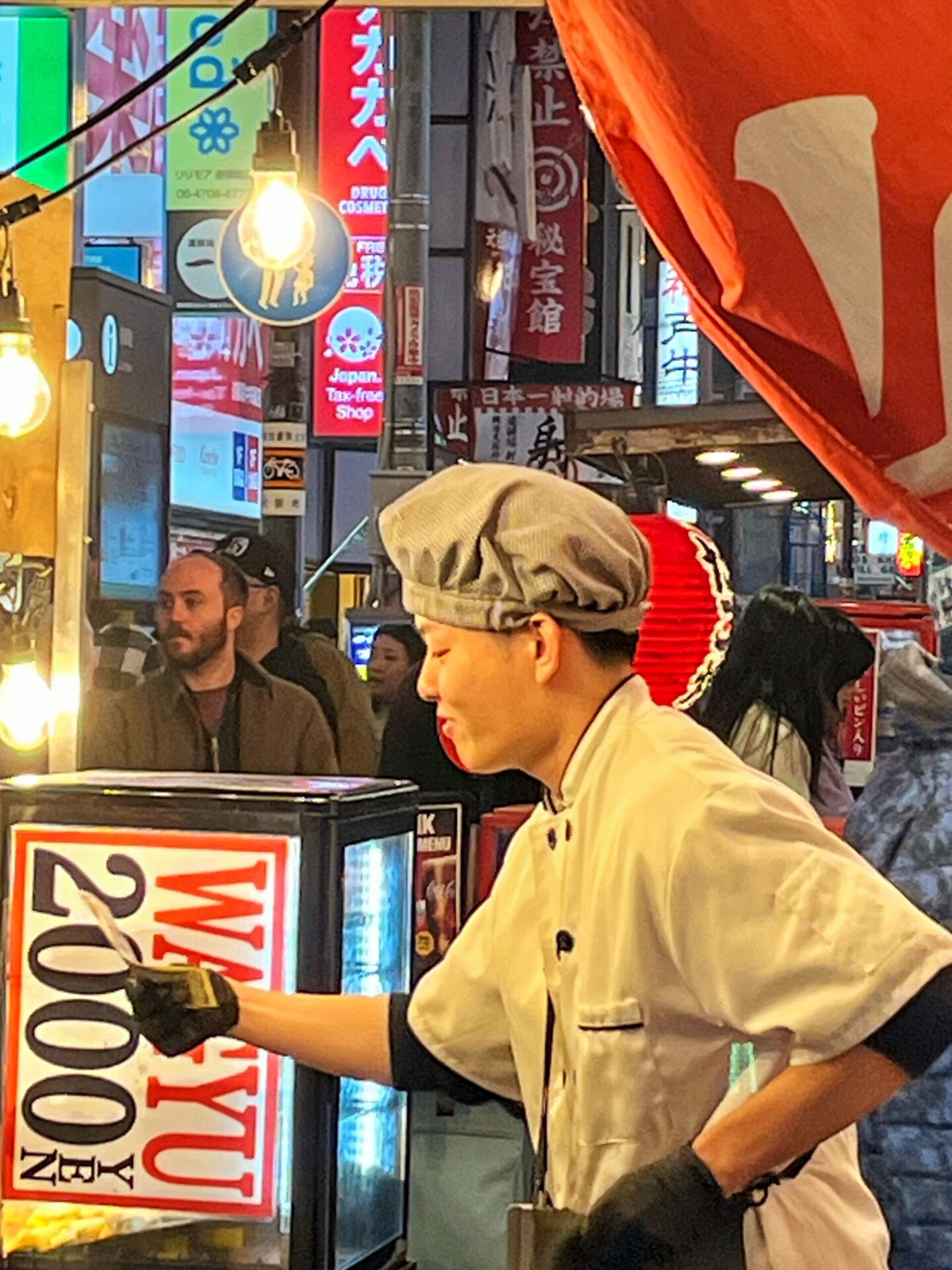
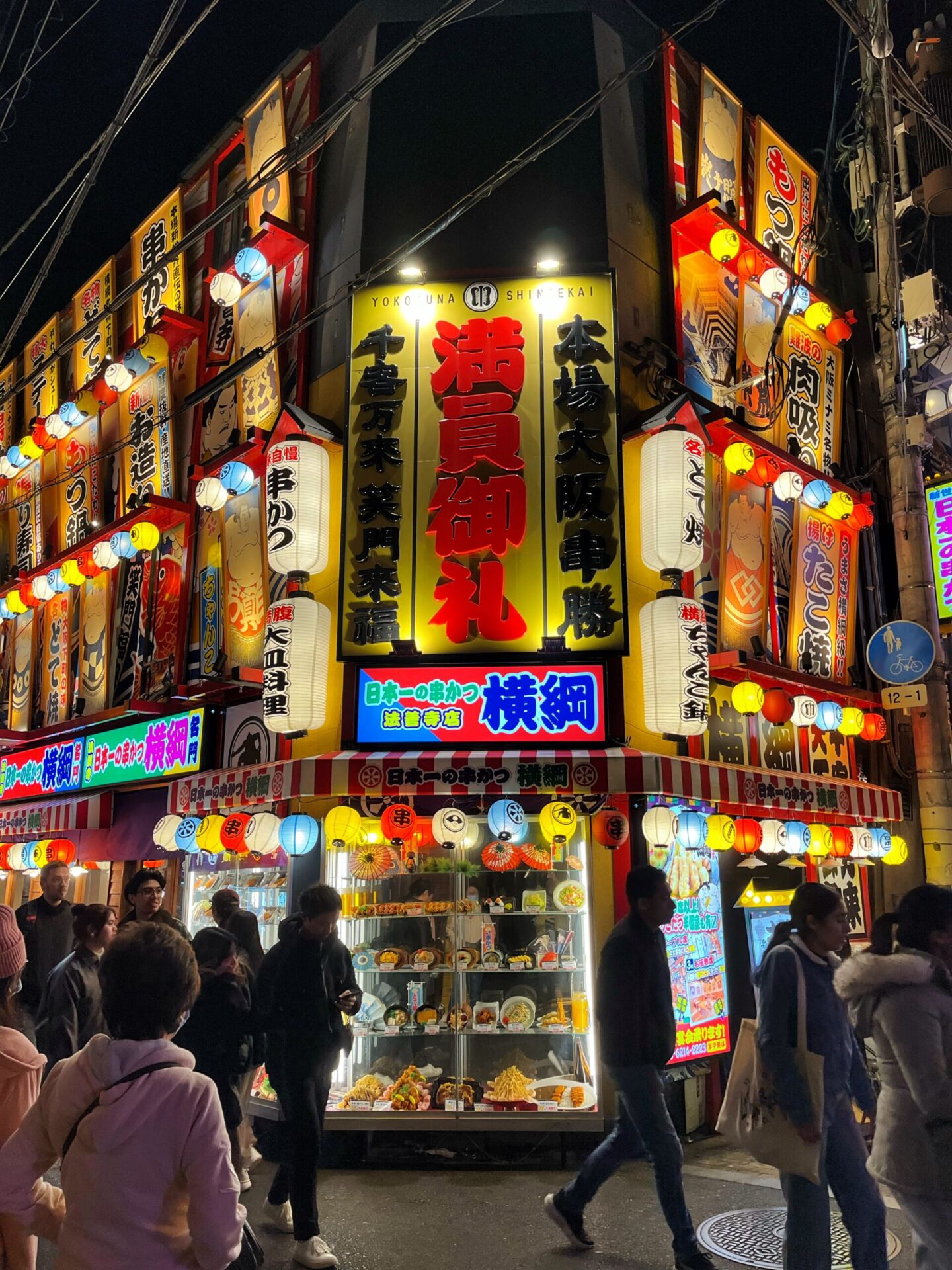
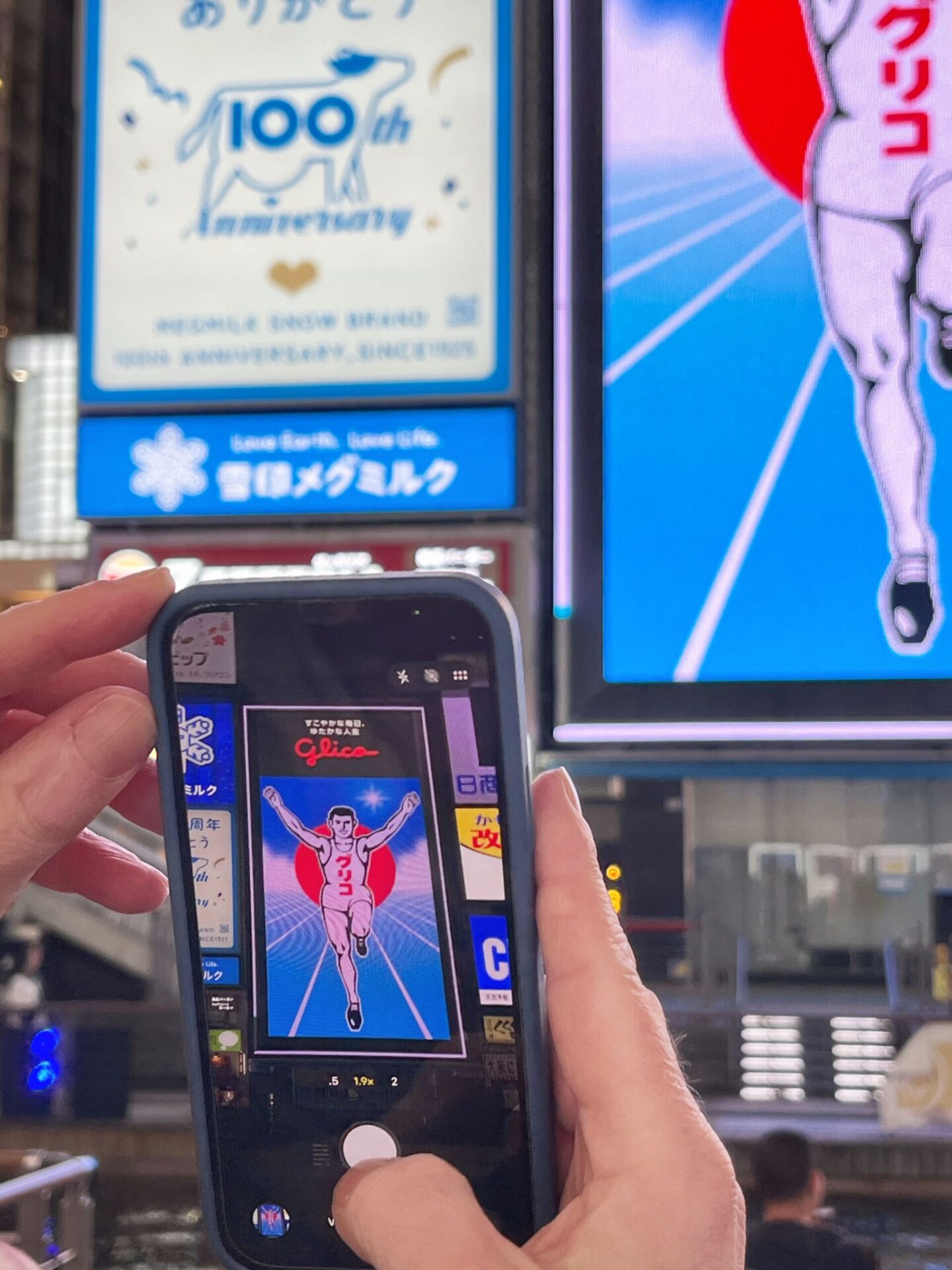
We stroll along the waterside, taking in the sights. We also take in a beer at a little canalside pop-up grill, where a local stout goes down nicely – a break from the big four beer brands Asahi, Kirin, Sapporo, and Suntory. Retracing our steps – and passing one of Osaka’s famous dancing crabs – I accidently march us down a narrow lantern-lit alleyway, which opens up into a tiny 17th century Buddhist temple. Honestly, you never know what you’re going to find next in Osaka. Hozenji temple is a little moss-covered oasis of calm amongst the chaos.
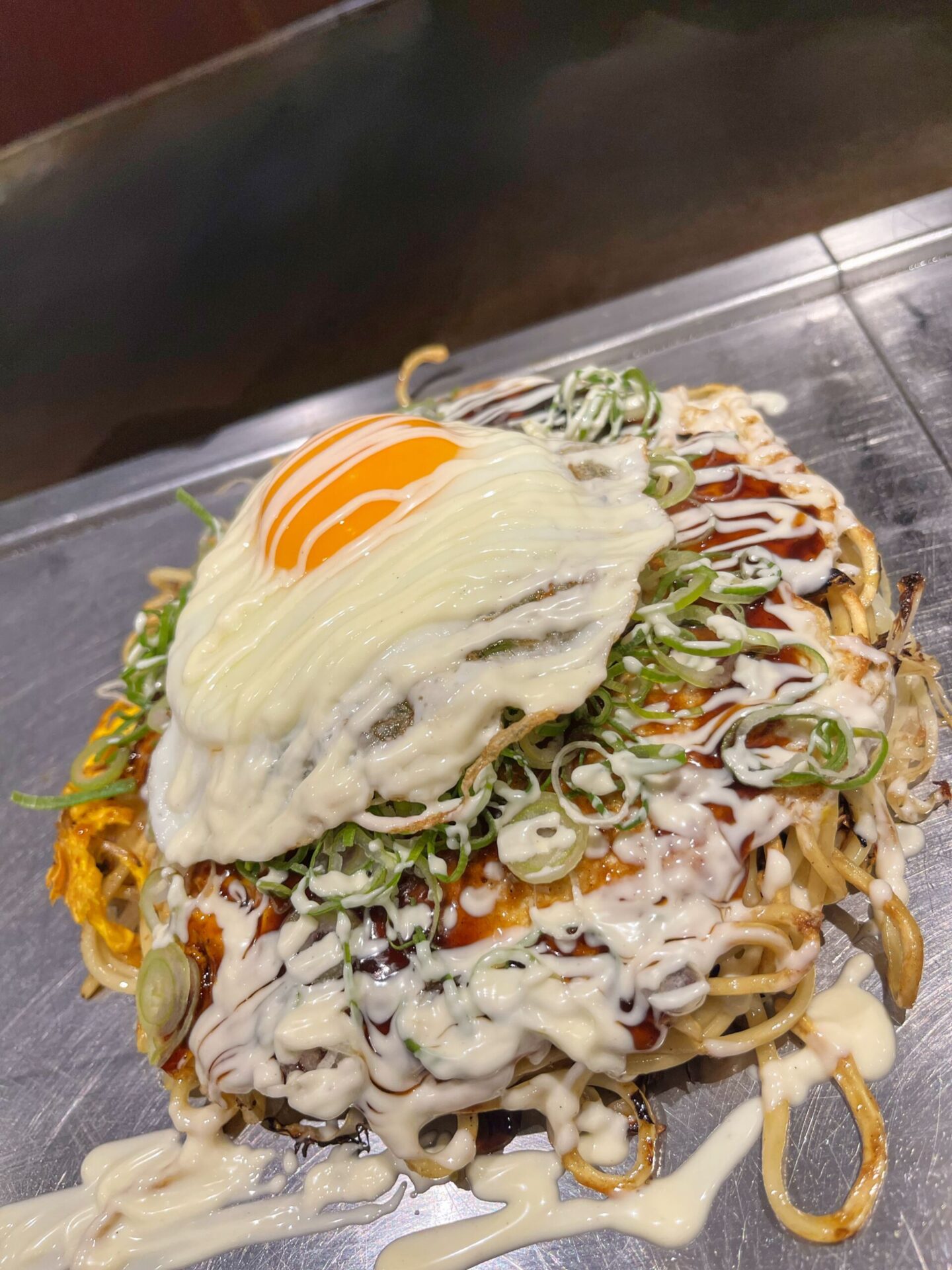
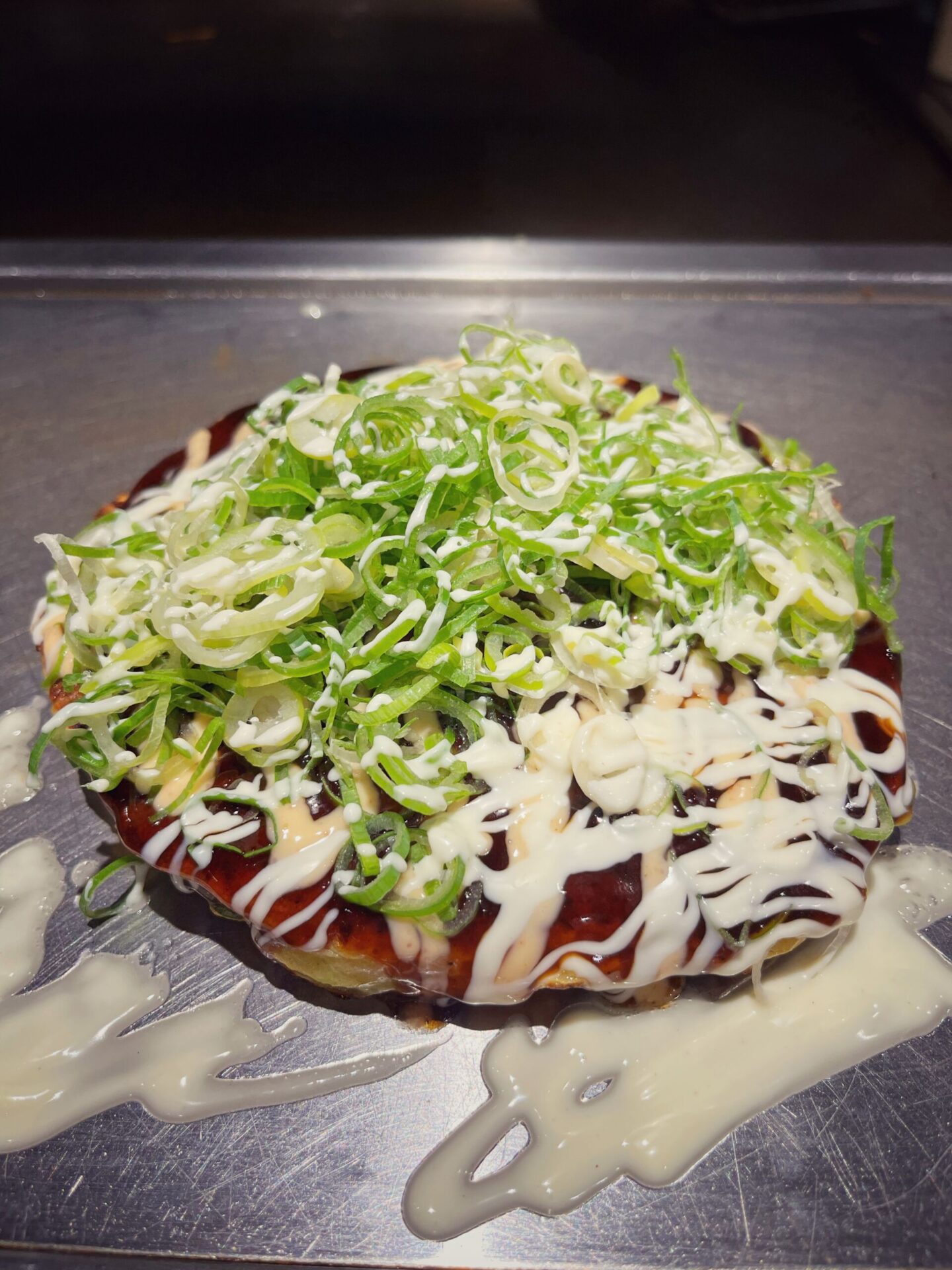
It’s time to eat. We are in Osaka – Japan’s kitchen and street food capital – and I announce that tonight we are eating okonomiyaki. This is fast food, Osaka style, and we’re soon seated at the counter at Okonomiyaki Chibo, watching our fluffy savoury pancakes being cooked from scratch. Mr Fletche’s pancake seems to continue growing in size, whereas mine feels much more manageable. In a bid to eliminate washing-up we eat straight from the iron teppan.
The “teppan” in teppanyaki actually refers to the flat iron griddle used to cook food. It does not refer to the theatrical experience of chefs throwing knives around and setting things alight.
Coins, Cranes and The Little Drummer Boy
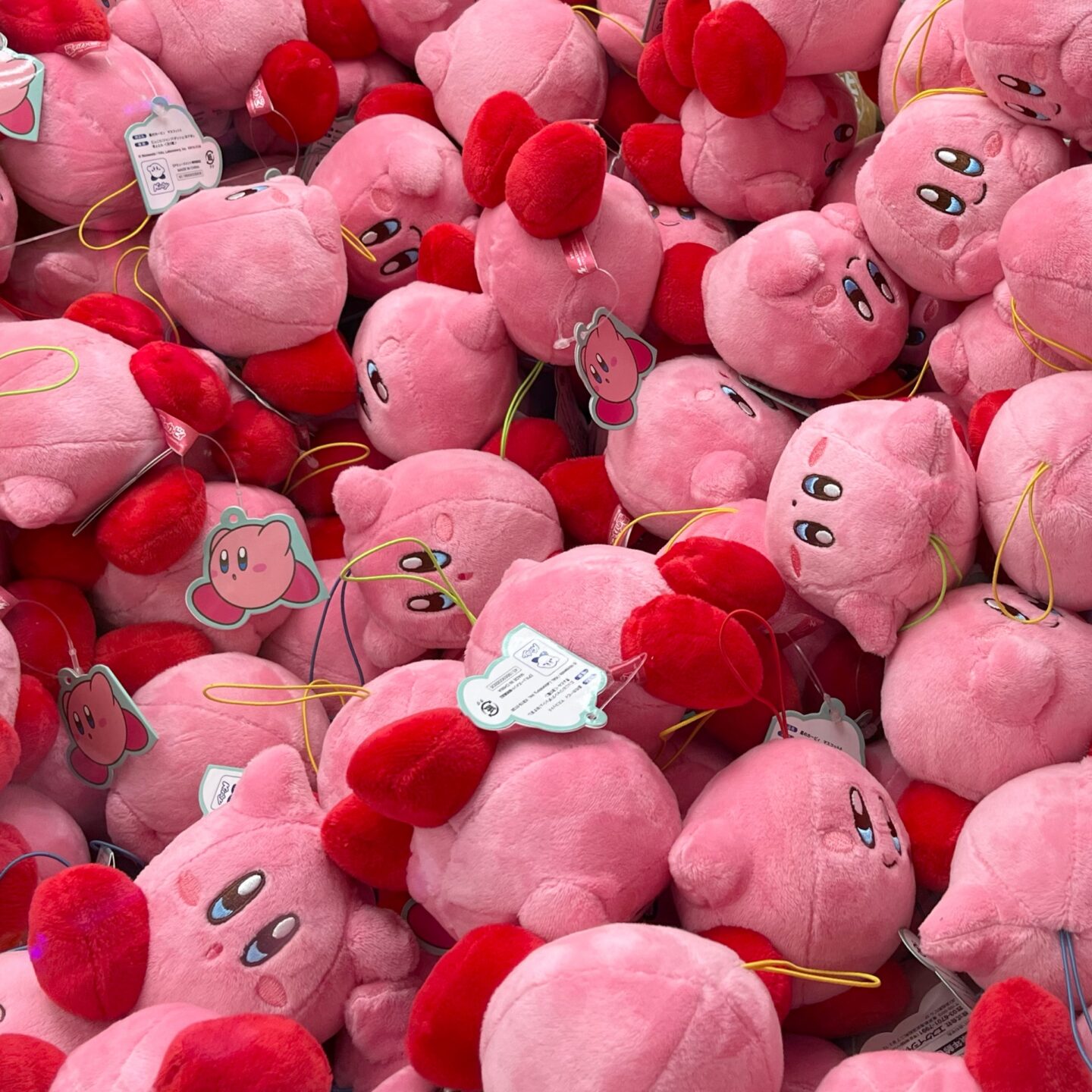
Our coin-holders – an absolute game changer in terms of sorting and storing our small change – are full. Which means that it’s time to find an amusement arcade to spend them. Japanese amusement arcades aren’t like the ones you find on an English seaside promenade. No, these are multi-level entertainment centres, similar in size to a department store. In fact, our arcade of choice, Round1 Sennichimae, is actually a games stadium.
There are two floors of crane machines. TWO WHOLE FLOORS. There’s a floor of more traditional arcade games. The rattle of small steel balls rushing through Pachinko machines. Multiple floors with bowling lanes, batting cages, basketball hoops, karaoke, darts, racing games. The inevitable Mario Kart. It’s an assault on the senses. We make our way to the floor which is full of rhythm and music games.
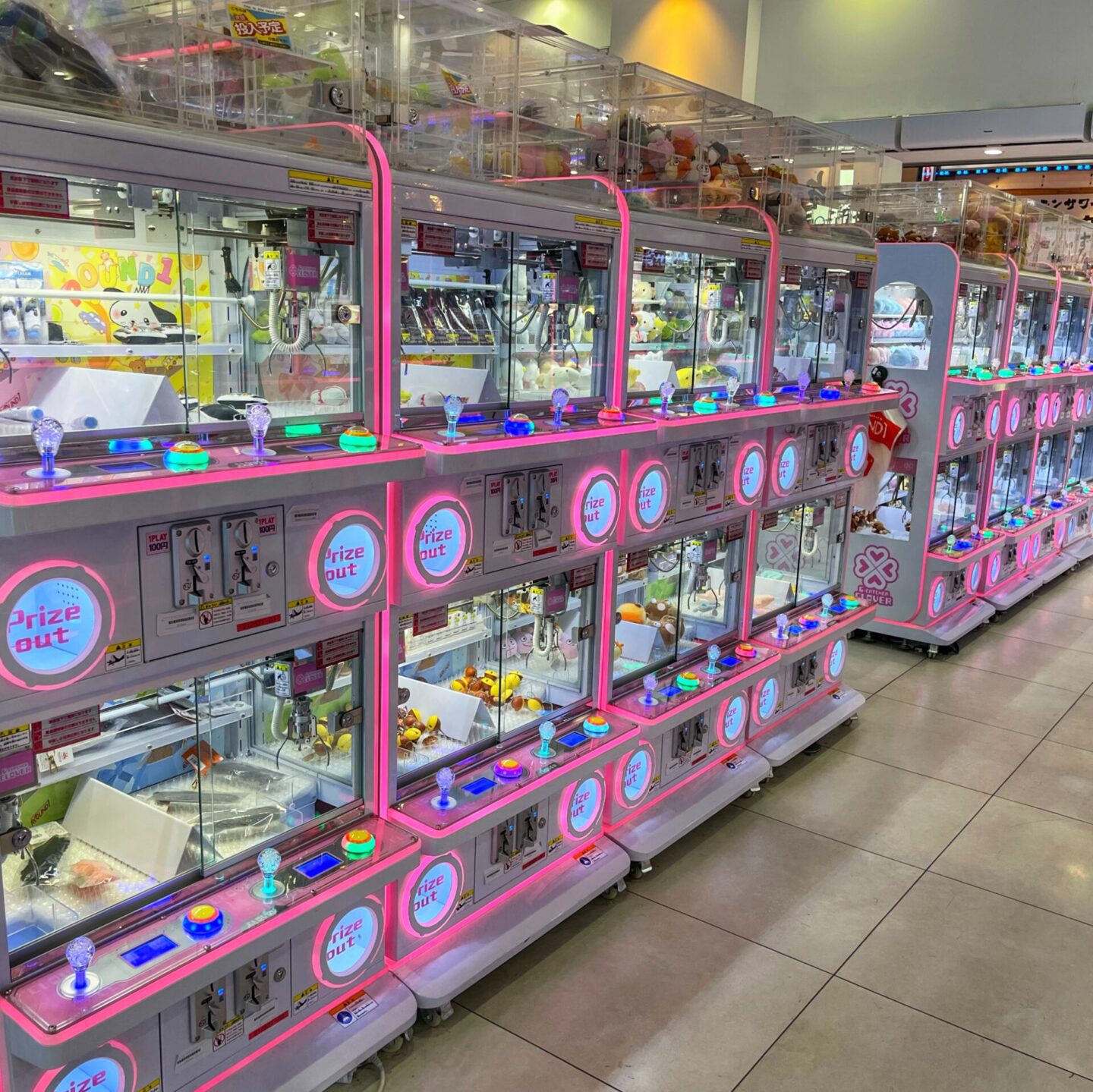
I am enthralled by a young woman who looks like she’s popped straight in from the office. Laptop bag at her feet, she follows an advanced level sequence of lights across a screen, never missing a beat. If this were an Olympic Sport she would be clutching a haul of gold medals. Mr Fletche meanwhile is giving the same machine a try, on beginner level.
There’s also a drumming game, Taiko no Tatsujin. This is a two-person game so I gamely take up my drumsticks. And fail to hit every single beat. Apart from those ones when I continually hit one area of my drum, hopeful that it will be correct at some point. Mr Fletche somehow finds a way of increasing the difficulty level. And then can’t switch it back. We’ve lost access to the English instructions, and it’s all now in Japanese. I concede, exhausted, with sore shoulders and blisters on my fingers.
You can find Round1 Stadium Sennichimae between Namba and Kintetsu-Nippombashi Stations (Google Location 📍). You can play per game, or you can pay a flat fee for the sporting challenge (spo-cha) activities. Round1 is open 24 hours – perfect if you’re jet-lagged! There are plenty of family-friendly activities but Round1 is child-free after 10pm.
There’s a blog post ALL about our day at Universal Studios Japan HERE but for now, read on and skip to our final day in Osaka and Japan!
48 Hours in Osaka: Katsuo-ji, Minoh Falls and Shinsekai
After an exhausting day of running around USJ like small children, wearing Super Mario themed headwear, it’s time to soak up a final day of temples and nature. We’re escaping the metropolis and heading an hour north of our Namba base, to Katsuoji Temple and Minoh Park.
Getting around Osaka
Navigating Osaka is pretty straightforward in Japan terms. There’s an extensive public transportation network with overground and underground trains as well as buses. All handily have signs and announcements in both Japanese and English.
The Osaka Metro connects the major attractions, and the JR Osaka Loop Line is another convenient option. We used our digital Suica IC card on Osaka’s public transport network – it’s easy to tap in and out on the metro and trains and top up using Apple Pay.
How to get to Katsuoji Temple from Osaka Namba
We catch the Midosuji Line from Namba Station to Minoh-Kayano station; it takes about 35 minutes. At Minoh-Kayano, we transfer to bus #30 on the Hokusetsu Cemetery Line which drops off directly outside Katsuoji Temple. The bus fare is ¥800 (around £4); we use our digital Suica cards to pay. A full bus was just leaving as we arrived and we thought we’d have to wait for the next bus 30 minutes later, but with Japanese efficiency they have a second bus waiting.
You can get the return bus directly back to Minoh-Kayano station; we grabbed a taxi from outside the temple instead as we wanted to visit Minoh Falls whilst in the area. The taxi was ¥1300 (about £6.50) – but worth every penny to save our aching feet 😉
As we descended on foot from Minoh Falls, we caught bus #23 from outside Hankyu Mino Station back to Minoh-Kayano for the Kita-Osaka Line back to Namba.
Katsuo-ji Temple (勝尾寺)
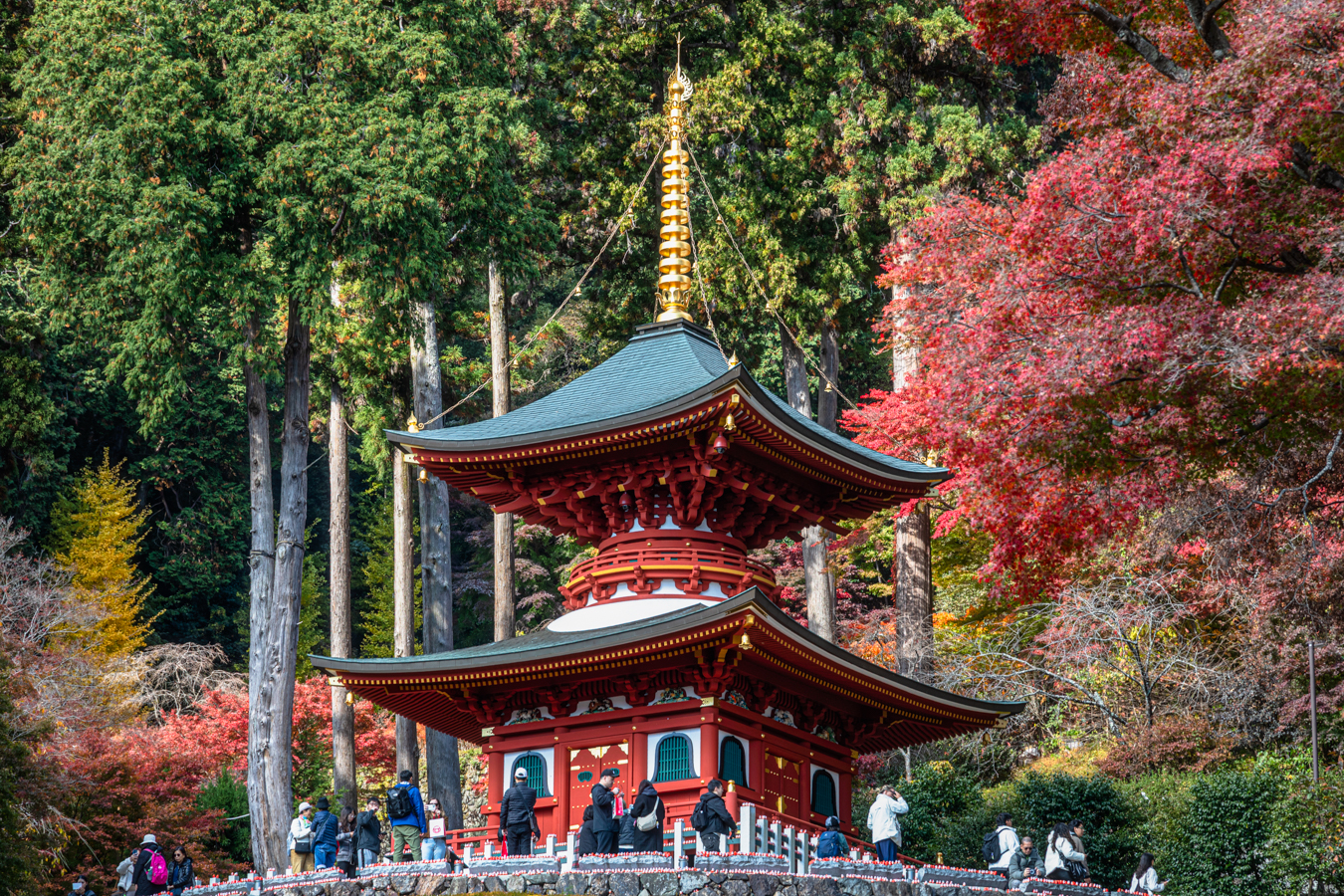
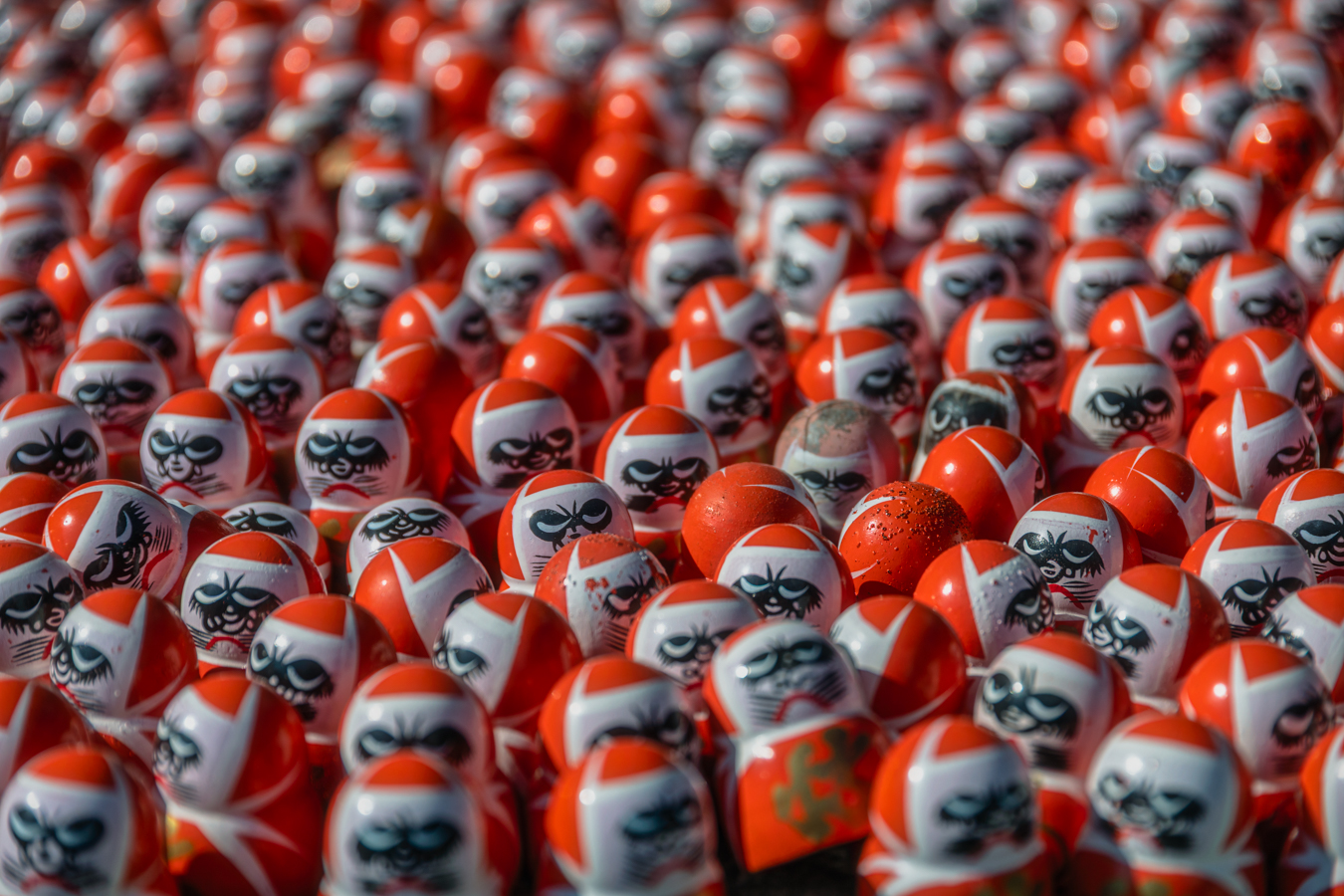
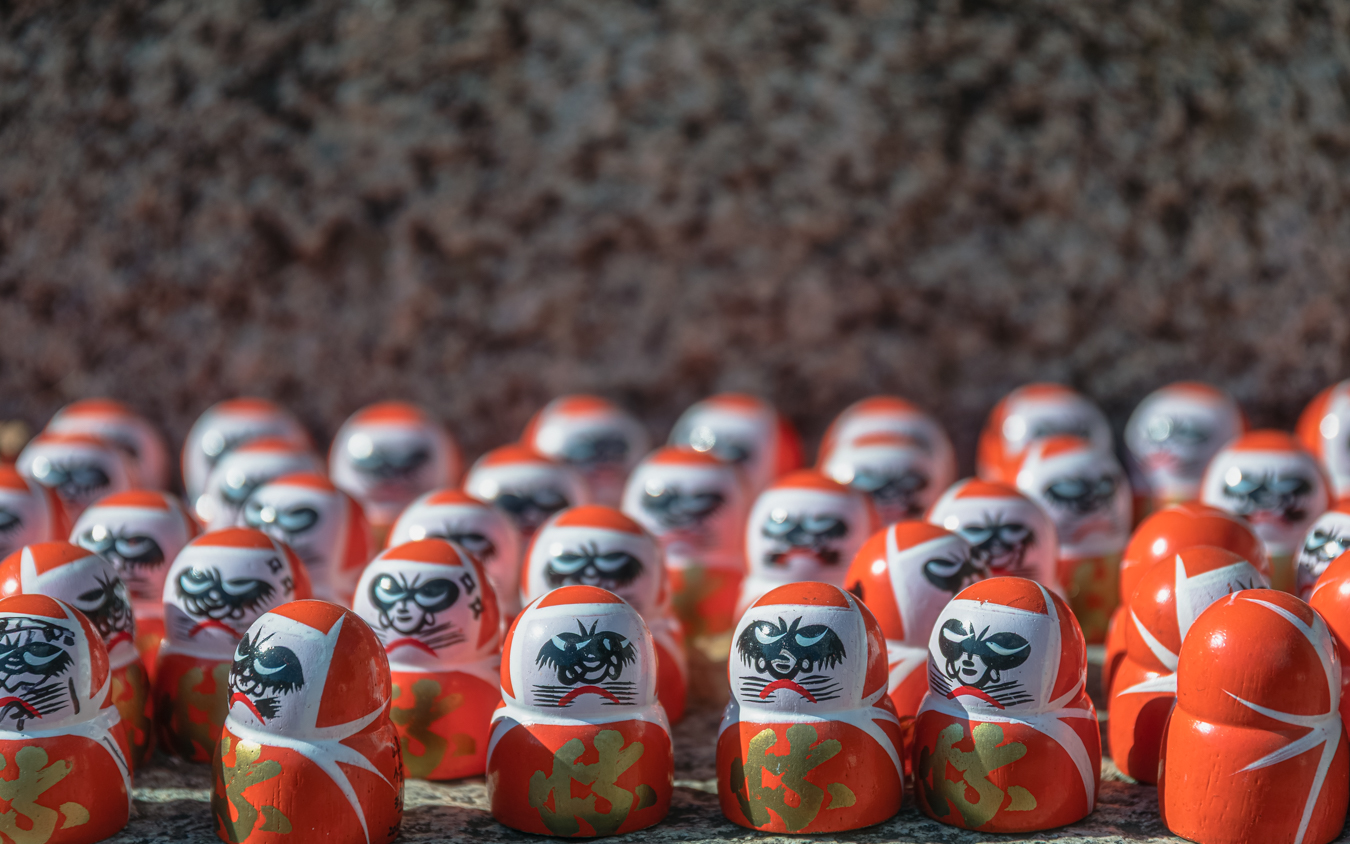
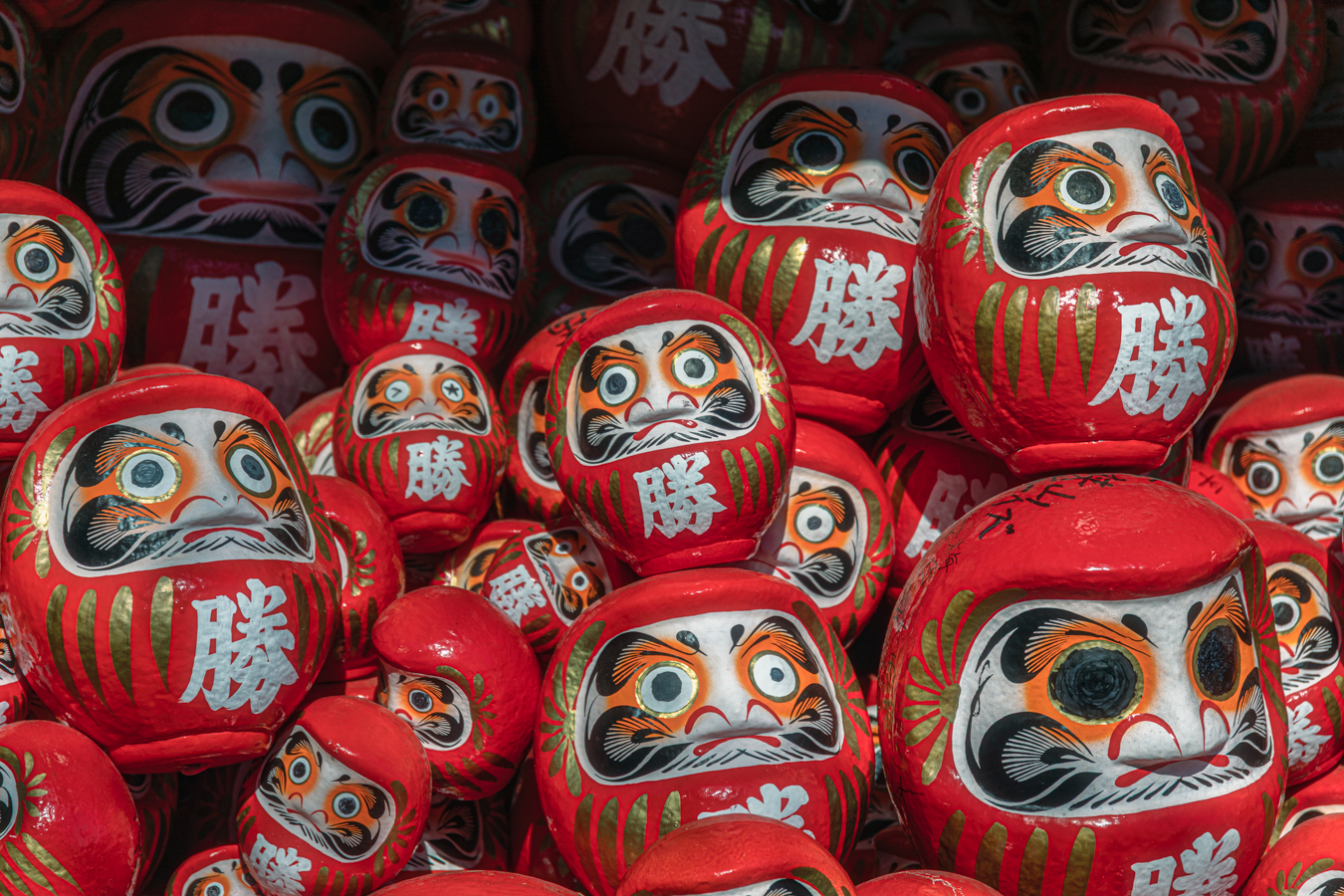
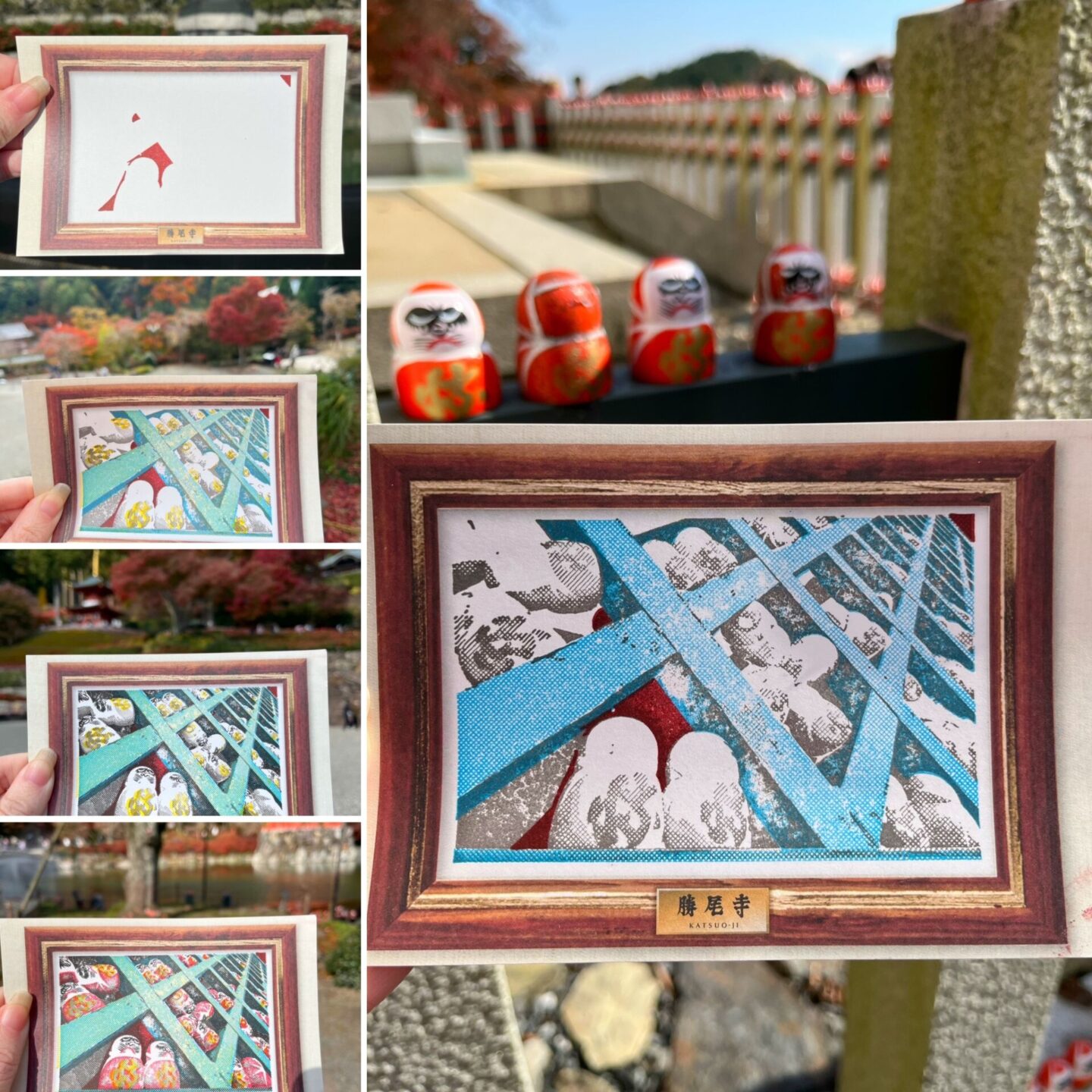
Tucked away in forested mountains, Katsuo-ji is a Buddhist temple founded in the 8th century, although the current grounds were built in the early 17th century. It’s famous for being home to thousands of bright red Daruma dolls, traditional Japanese talismans symbolising good luck. In fact for 1300 years the temple has been associated with perseverance and overcoming challenges. People visit to seek blessings and clarity before important life transitions.
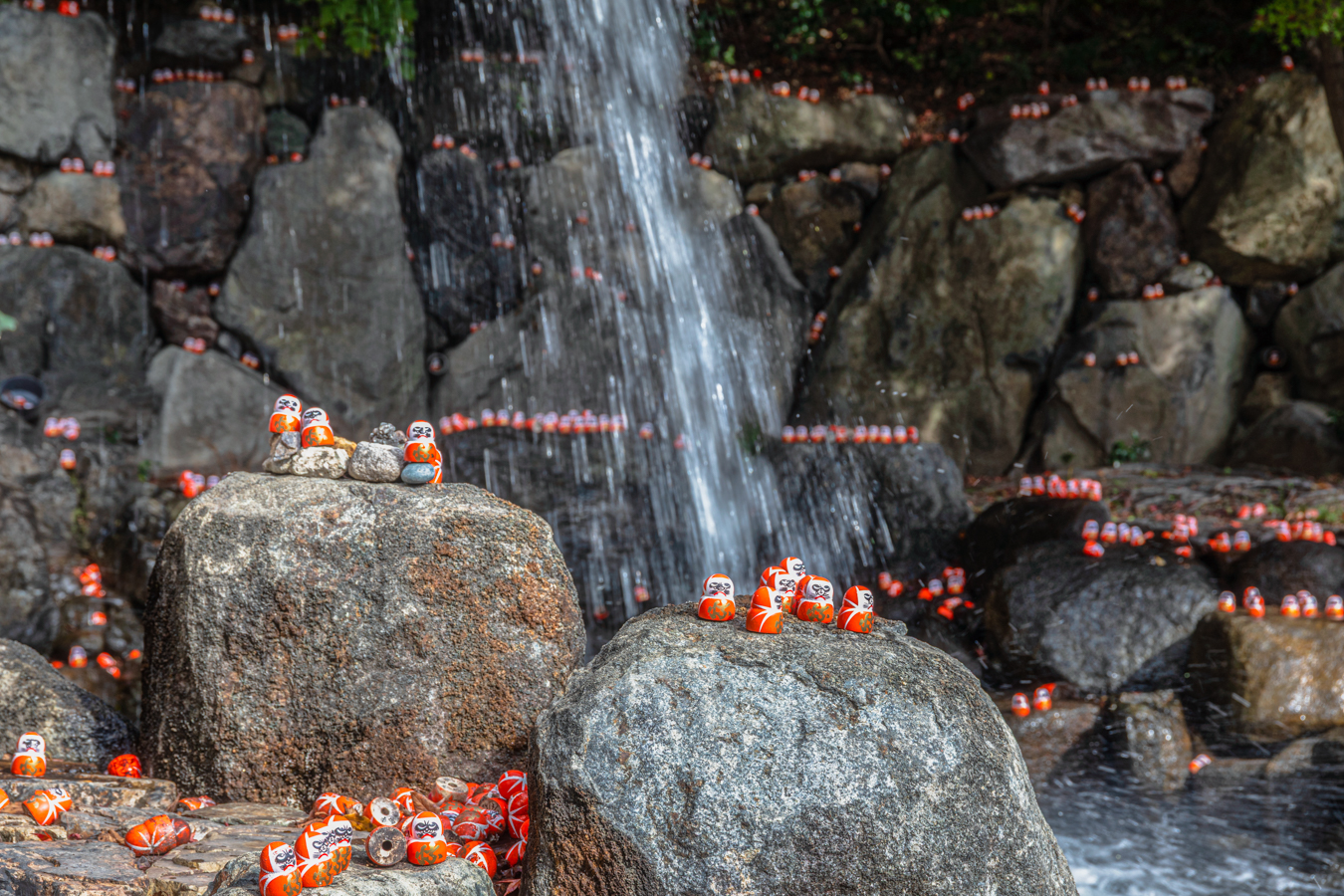
The Daruma dolls cover every surface imaginable, balancing on tree branches, lining pathways, hiding in crevices, even taking a dip in the water features. Mr Fletche and I like attributing stories to them, and how they came to their final resting places.
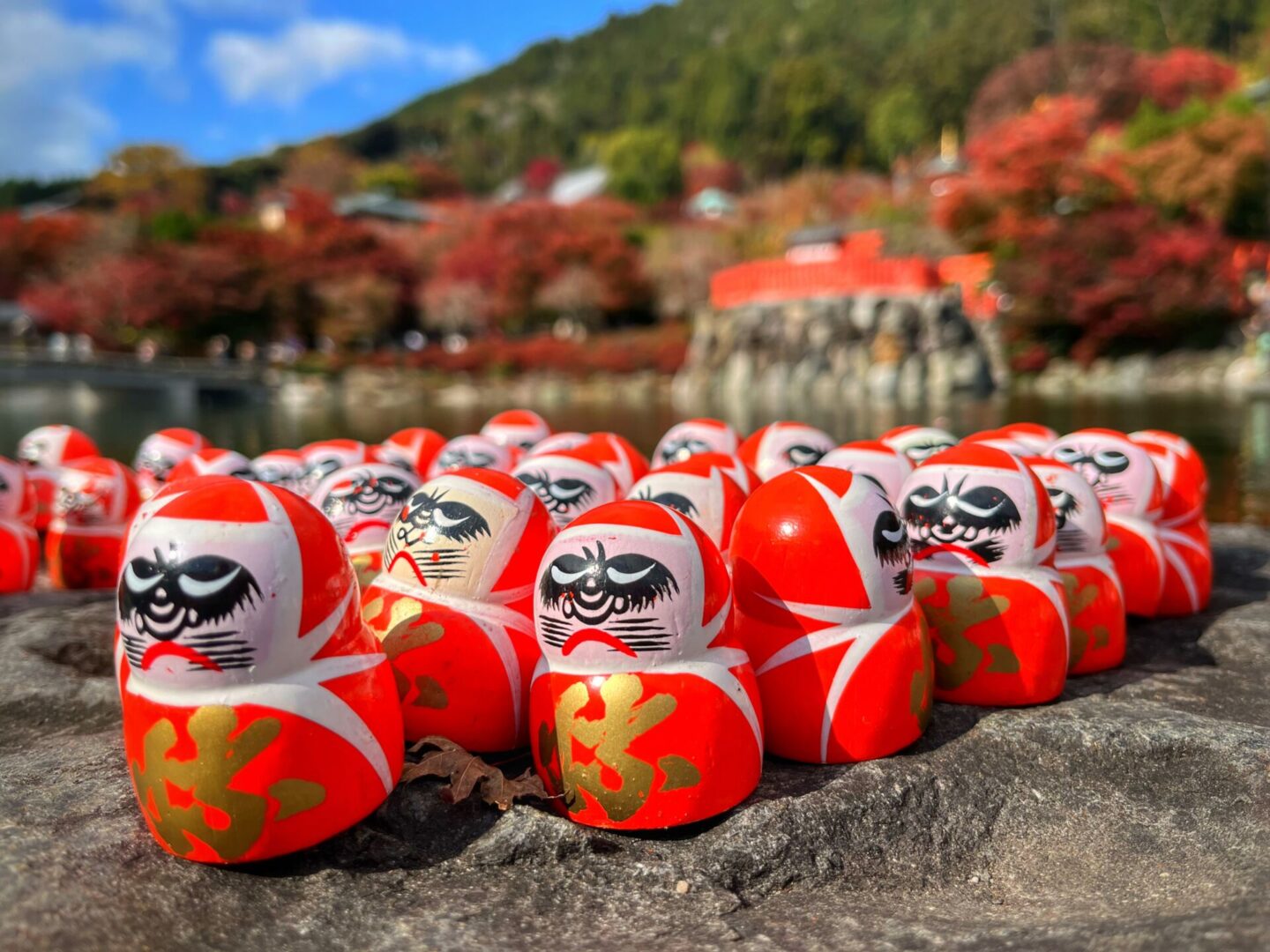
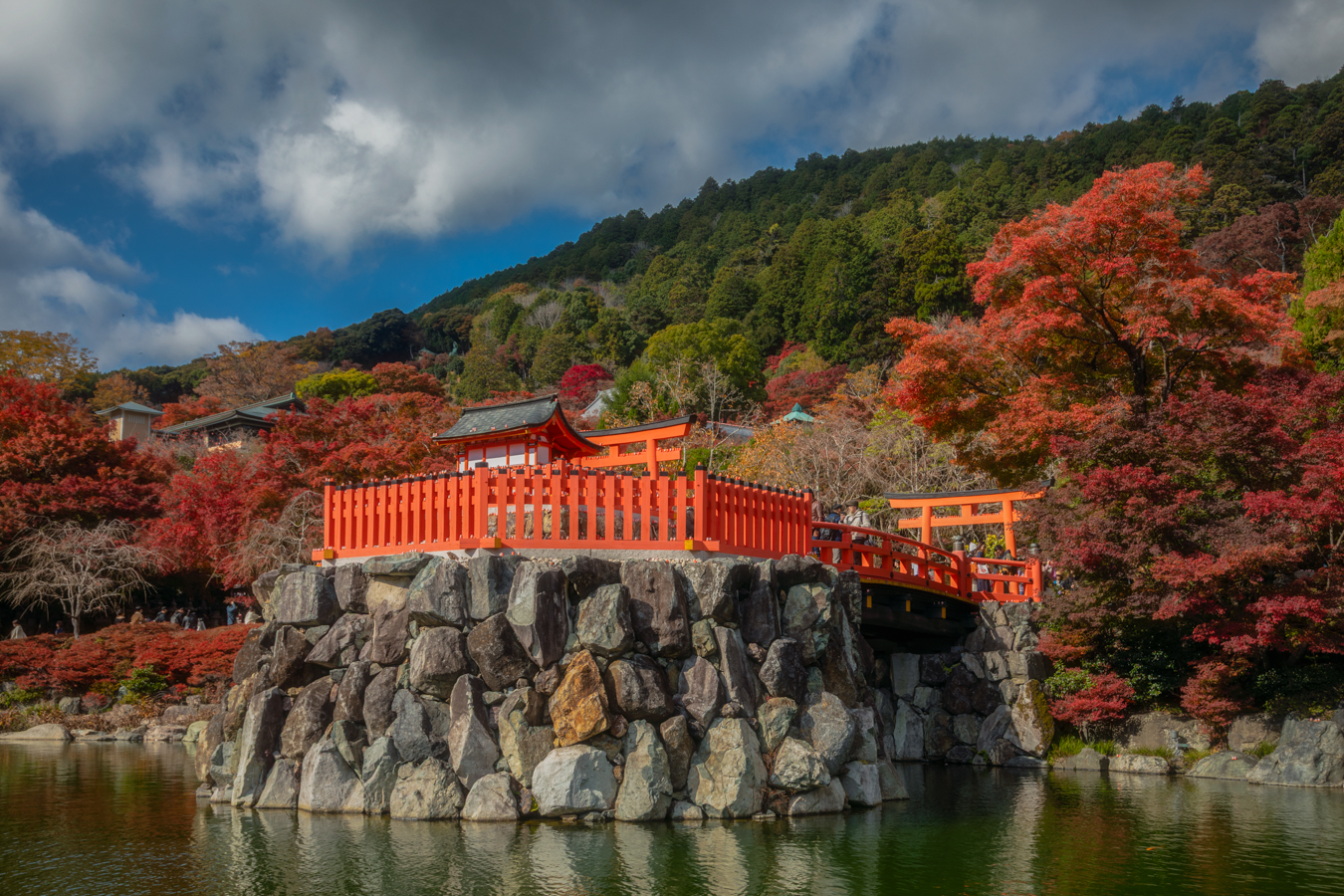
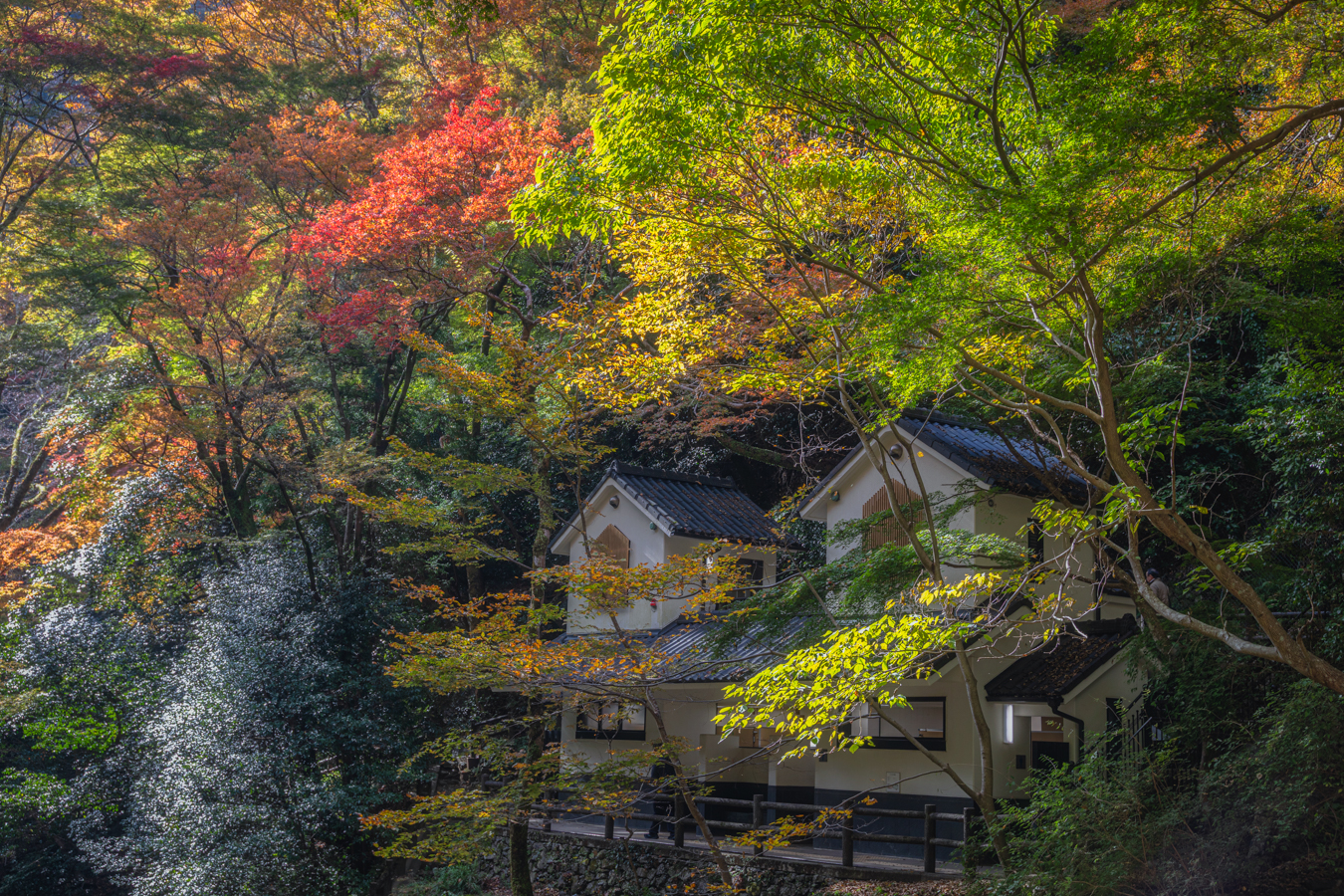
The extensive grounds are also a stunning spot for autumn foliage – Katsuo-ji was putting on quite the show for our mid-November visit. Well paved stone paths connect with wooden bridges and koi ponds. It’s quite hilly so it’s definitely one for comfy waking shoes
You can purchase your own daruma doll at the temple. A daruma does not grant your wish; instead it encourages you to “face yourself and overcome your weak heart.” You write your intention on the bottom, and then paint one eye to signal commitment and accountability. Once the goal has been achieved, the other eye is filled in, marking completion.
One of the cutest things about Katsuoji is the temple stamp that comes to life as you make your way around the temple grounds. We get a blank postcard each when we enter, and there are 6 different stamping stations, each of which fills in a piece of the picture. The completed multi-coloured postcard makes a fab souvenir!
Katsuo-ji is open from 8am-5pm; admission is ¥500 (around £2.50). You can purchase tickets online here or from the onsite ticket office.
Minoh Park and Waterfall (箕面大滝 Minō Ōtaki)
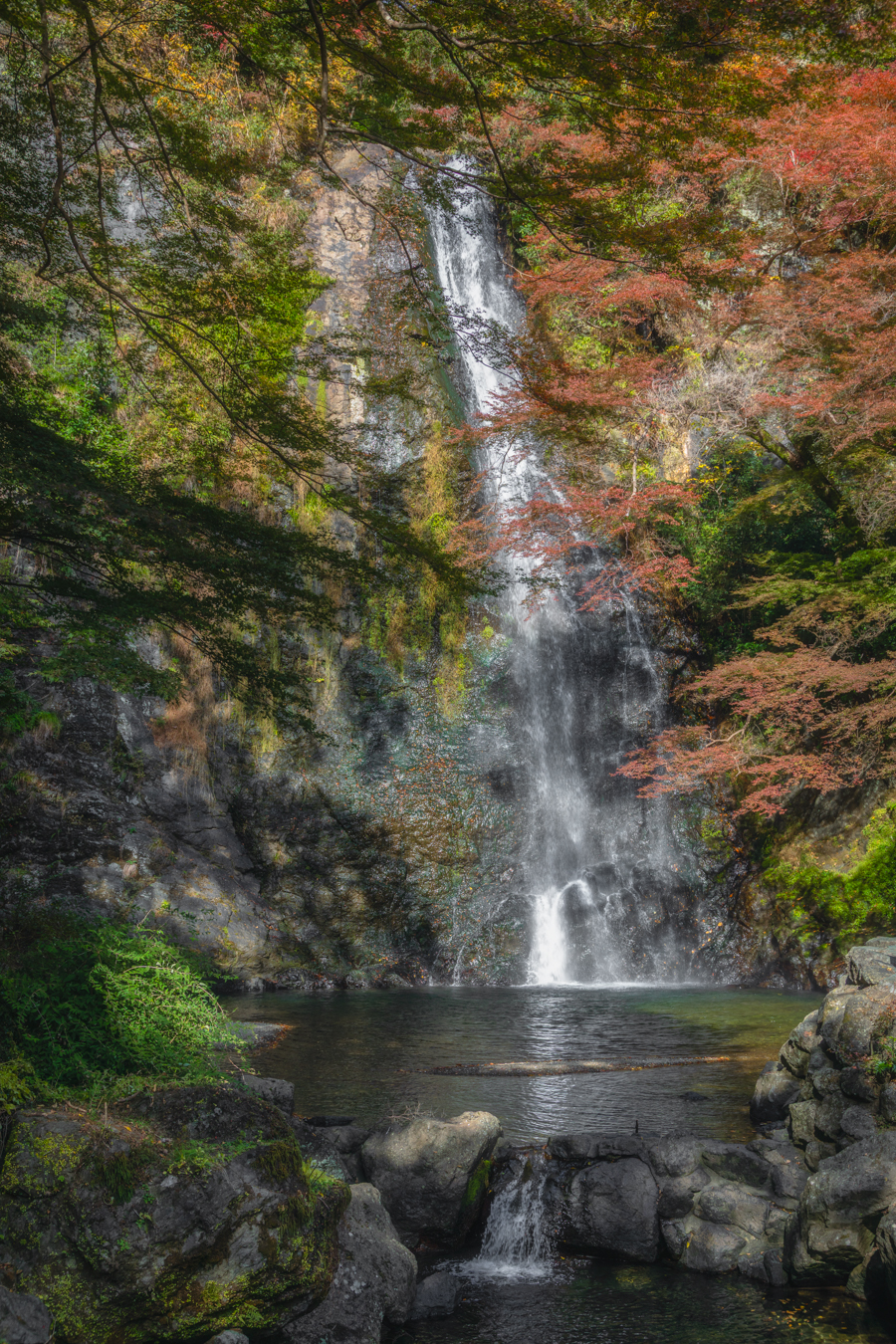
We leave Katsuoji and the daruma dolls behind – apart from my own daruma doll, nestling in a paper bag – and head to our next destination. It’s a 10 minute taxi ride to Minoh Falls; from the drop-off point it’s a short walk to the 33m high waterfall. It’s quite a steep descent, but luckily we don’t have to retrace our steps to pick up the scenic forest trail.
There are public toilets, vending machines and street food stalls at the waterfall, and all along the Minoh Park forest trail
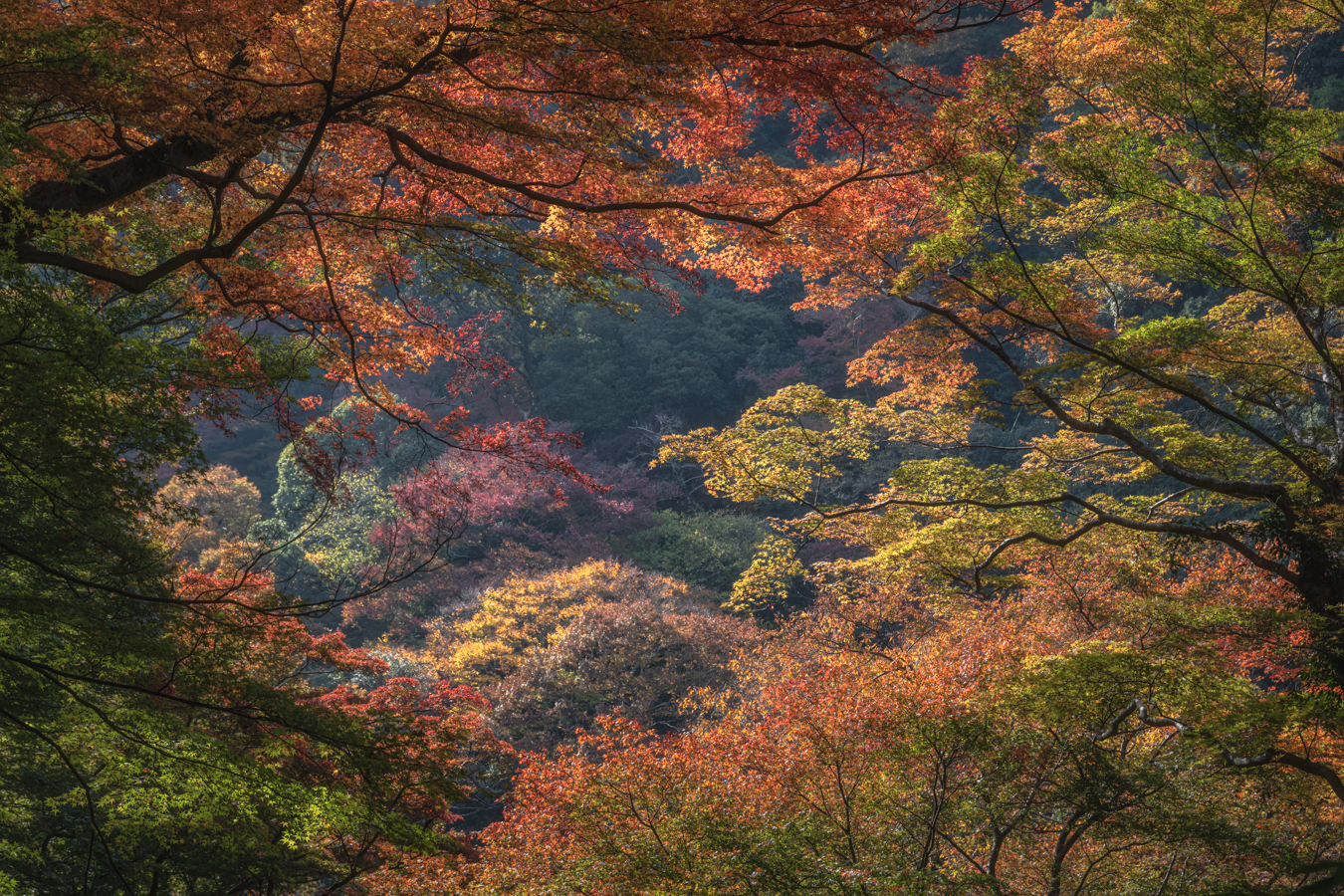
Minoh Park is a National Park, and is home to a number of walking trails. It’s also one of the best spots in Osaka for fall foliage. We very much enjoy the fresh mountain air and getting back to nature after time in the city. It takes us around 40 minutes to reach Minoh from the waterfall, unsurprisingly with multiple photo stops. If you’re not all templed out you can visit Ryuan-ji Temple on the way. or if you fancy something a little different there’s also an Insectarium for all your bug and butterfly needs.
It’s easy to visit Katsuo-ji and Minoh Falls independently but if you’d prefer a guided tour from Osaka, this Full day tour from Osaka Station is highly rated on Get Your Guide. It takes in Katsuoji, Minoh Falls and Ryuan-ji, and you will have a guide to help you fathom out Osaka’s public transport system
Kurumon Market
By the time we arrive back in the city, we’re hankering for some food. Luckily, our hotel is just steps away from Kurumon Market. If Osaka is known as Tenka no Daidokoro – Japan’s kitchen – then Kurumon Market is where the magic happens.
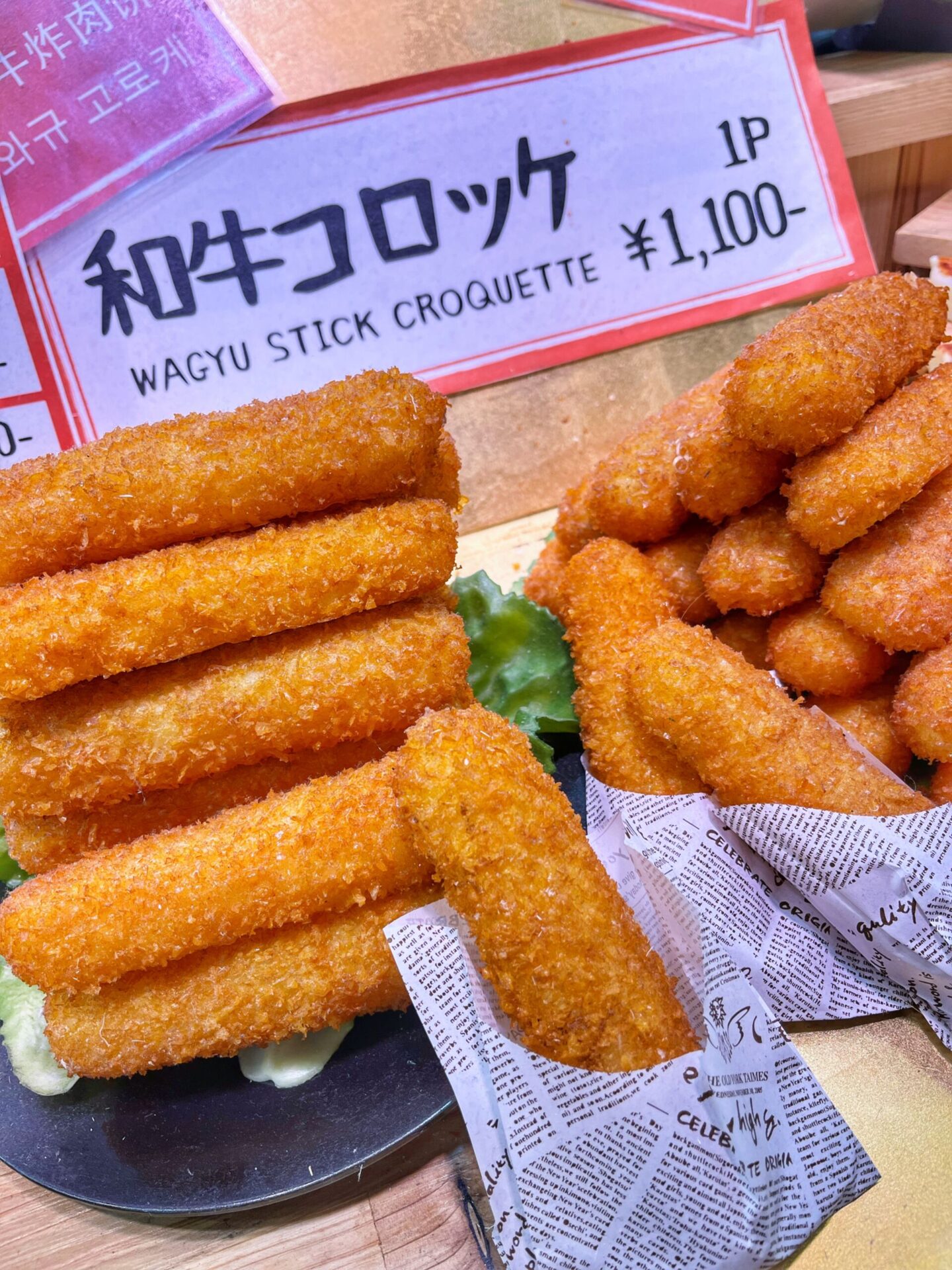
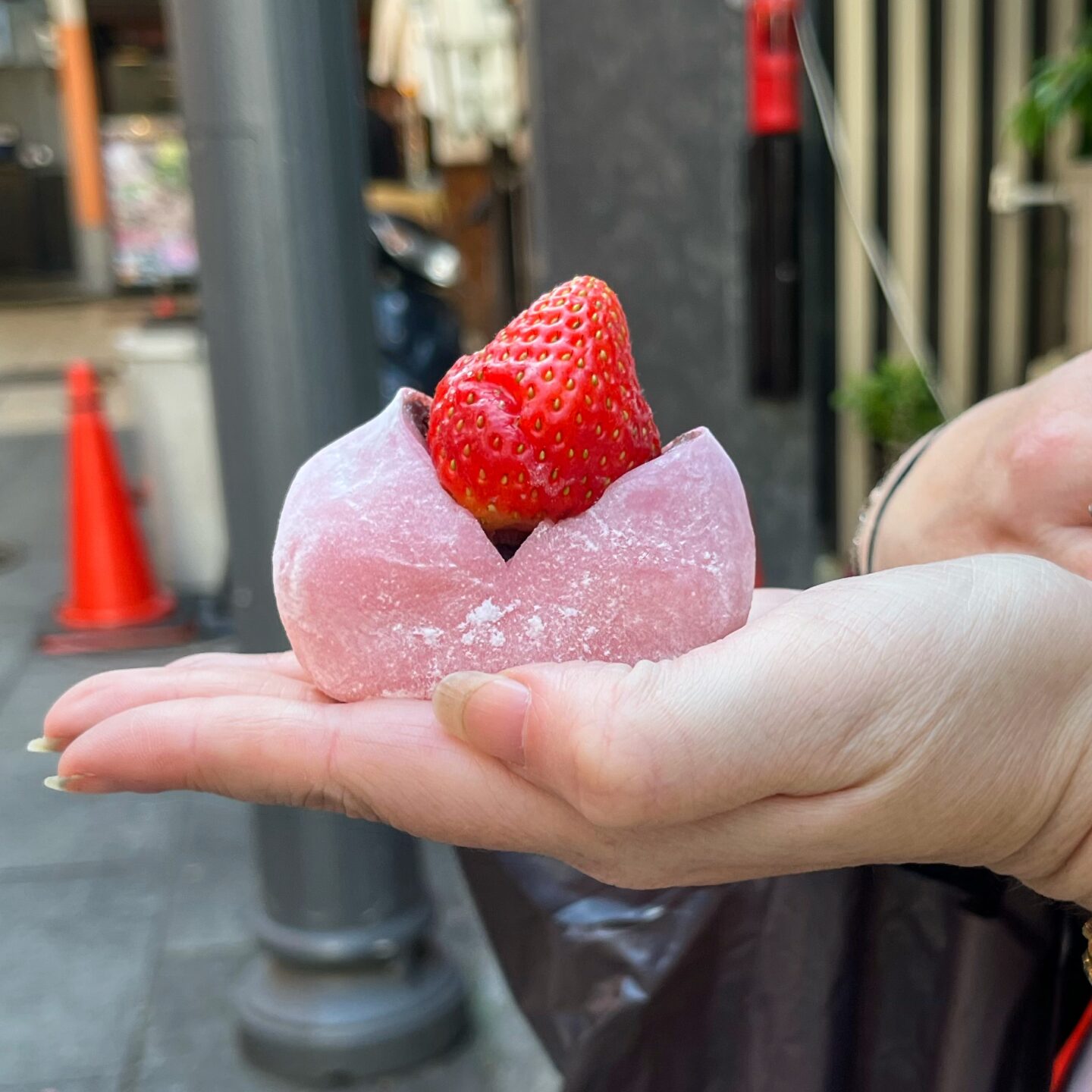
Like Nishiki Market in Kyoto, this is a foodie’s dream with lots of stalls offering fresh local produce. I get stuck into a wagyu croquette and a pint-sized beaker of fried chicken. For dessert, it’s a raspberry and dark chocolate KitKat. Japan LOVES an unusual flavoured KitKat. I draw the line at a sweet-potato flavour KitKat though. We have a little time to rest back at the hotel, and I make a rudimentary attempt at re-packing my suitcase.
Harukas 300
In a city so full of neon lights and skyscrapers, it’s time to get up high for night-time cityscapes. After all, as this was how we’d started our Japan trip in Tokyo, it was a nice bookend to finish in the same manner. The best places to do this in Osaka are the Umeda Sky Building and Harukas 300. We wanted to end our evening in Shinsekai so we opted for Harukas 300, Japan’s second-tallest skyscraper.
🎟️I didn’t pre-book tickets for this one, but managed to secure digital tickets on the day via Klook. Adult admission tickets are ¥2,000 (around £9.50) 🎟️
With typical Japan hospitality we are handed off from one helpful staff member to another, like a relay race where we are the baton. The admission desk is on the 16th floor – there’s also an outside terrace on this floor which is completely free of charge. We’re whisked up in a futuristic lift to the 60th floor in just 50 seconds. I’m still trying to unpop my ears as we exit.
The observation deck located at the top of the Abeno Harukas building gives breathtaking views across Osaka. There are floor to ceiling windows, and some glass sections of the floor around the edges. The sprawling metropolis shimmers in a dazzling spectacle of light. My photos don’t do it justice so here are some shots from the lens of Mr Fletche:
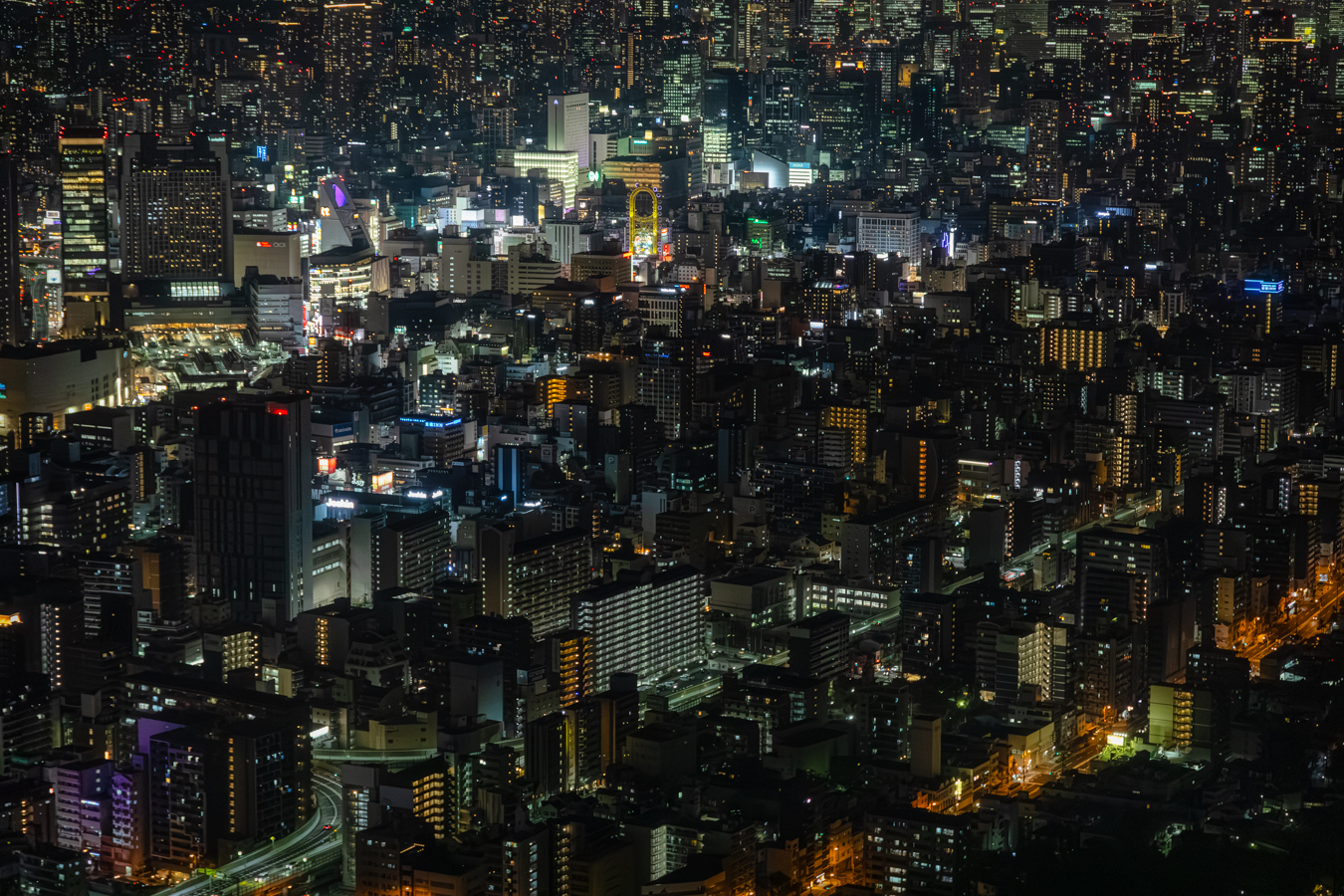
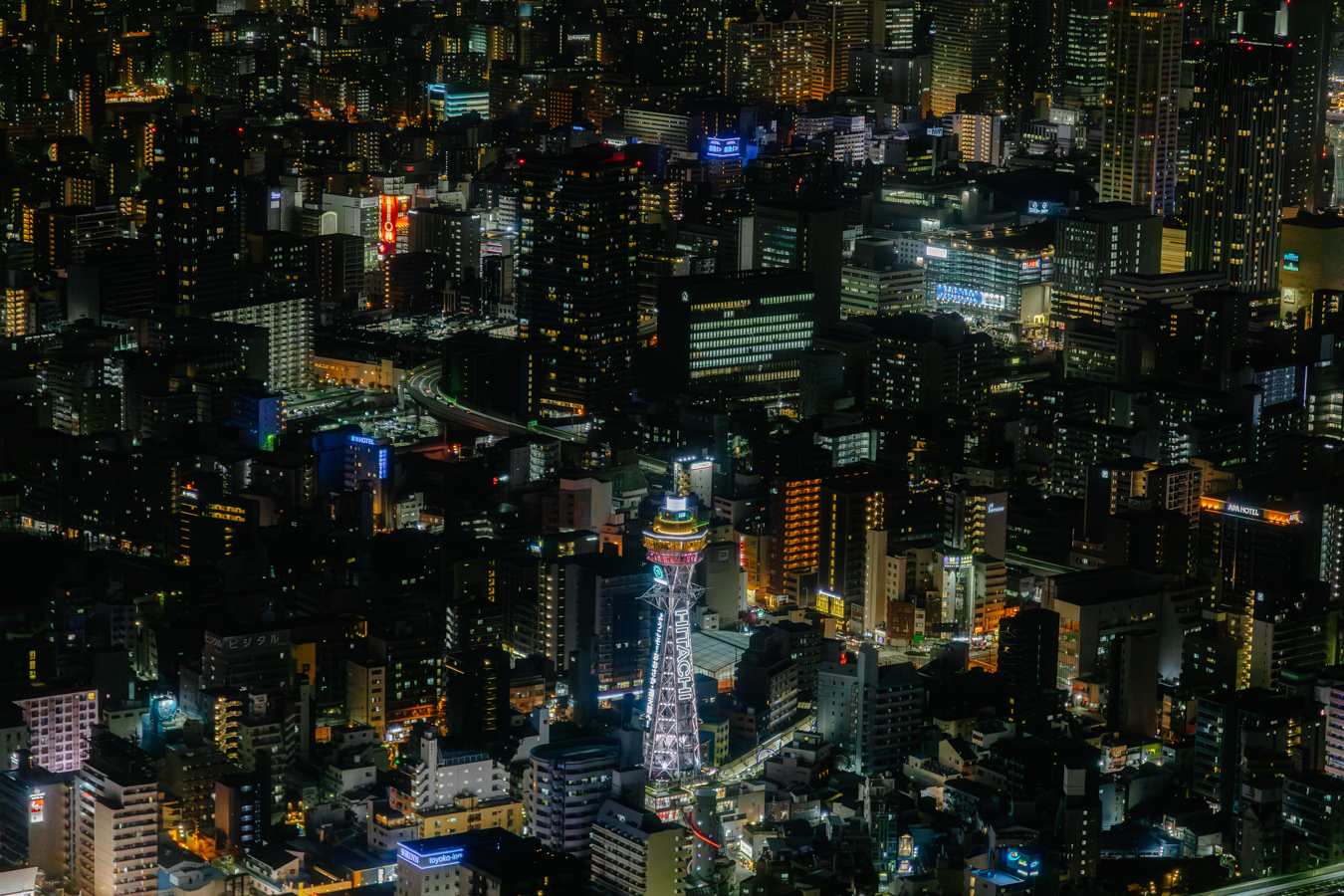
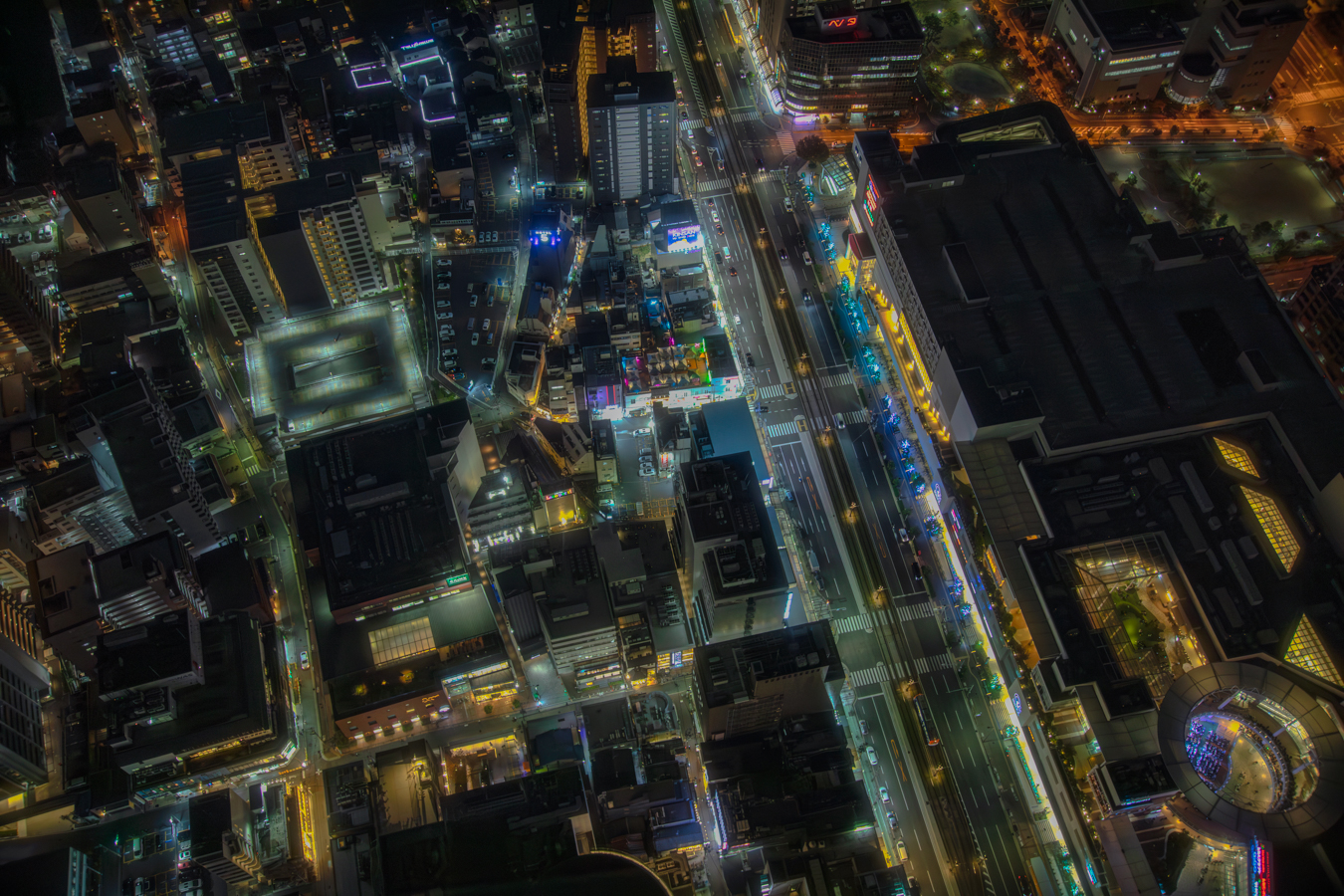
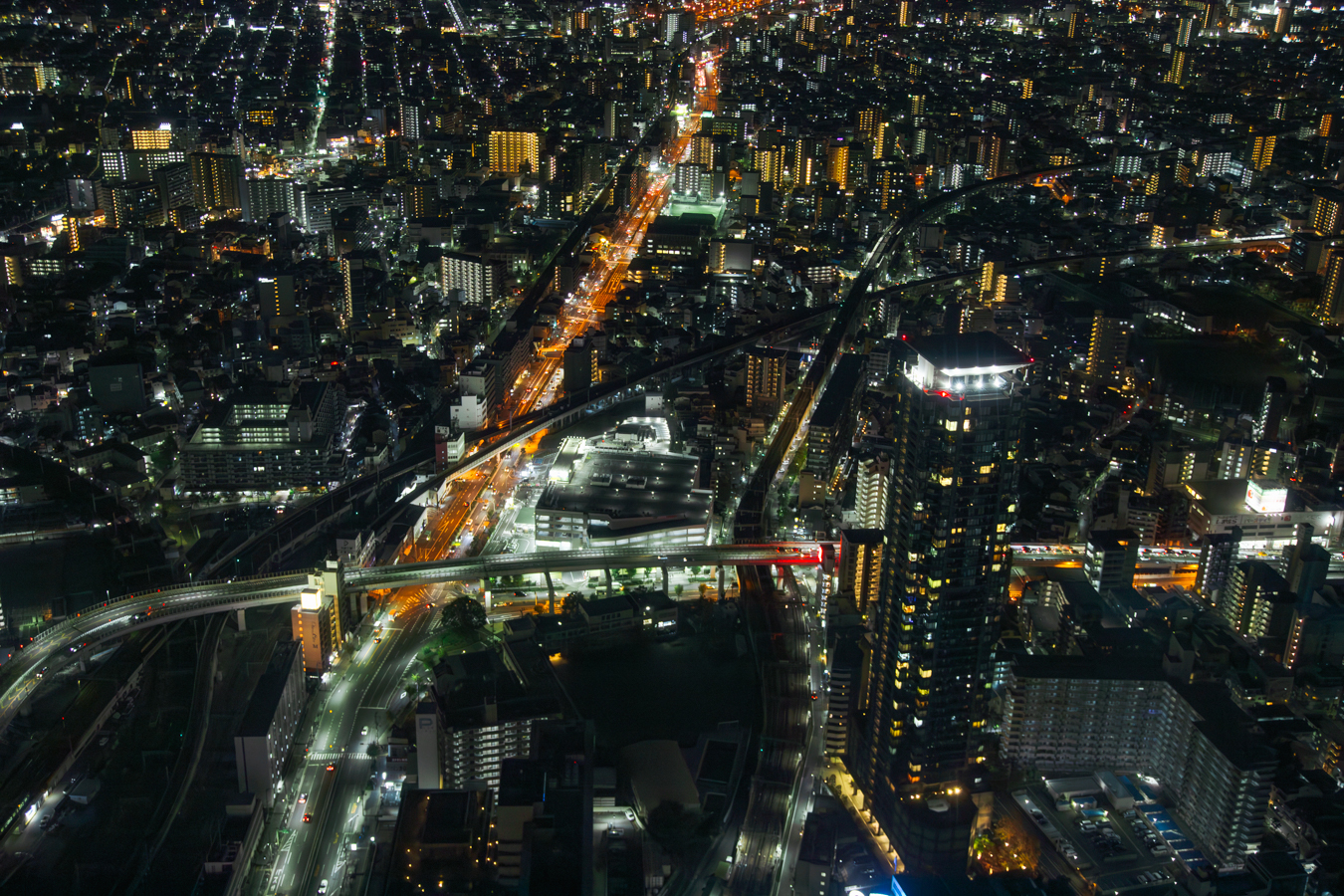
The observation deck is located over three floors. Naturally we gravitate towards the 58th floor cafe bar with it’s open roof for a beer-with-a-view. We have a wander around the gift shop where you can buy souvenirs depicting Harukas 300’s blue mascot Abenobea. And I make sure I visit the loos before leaving where the floor-to-ceiling windows continue. Thankfully modesty is preserved by the walls and doors on the cubicles!. We spent just over an hour at Harukas 300, and its well worth the money.
Getting to Harukas 300: We caught the Midosuji Line from Namba Station to Tennoji Station, just a few minutes walk from Harukas 300. If you’re travelling from Umeda, you can get the Midosuji Line or the Osaka Loop.
🔗 You can find out more about visiting Harukas 300 here, including up-to-date admission fees and opening times 🔗
Shinsekai
Our final stop on our final evening is Shinsekai, a 20 minute walk from Harukas 300 or one stop on the Midosuji Line. It’s the home of that tower you can see in the photos above – Tsutenkau Tower.
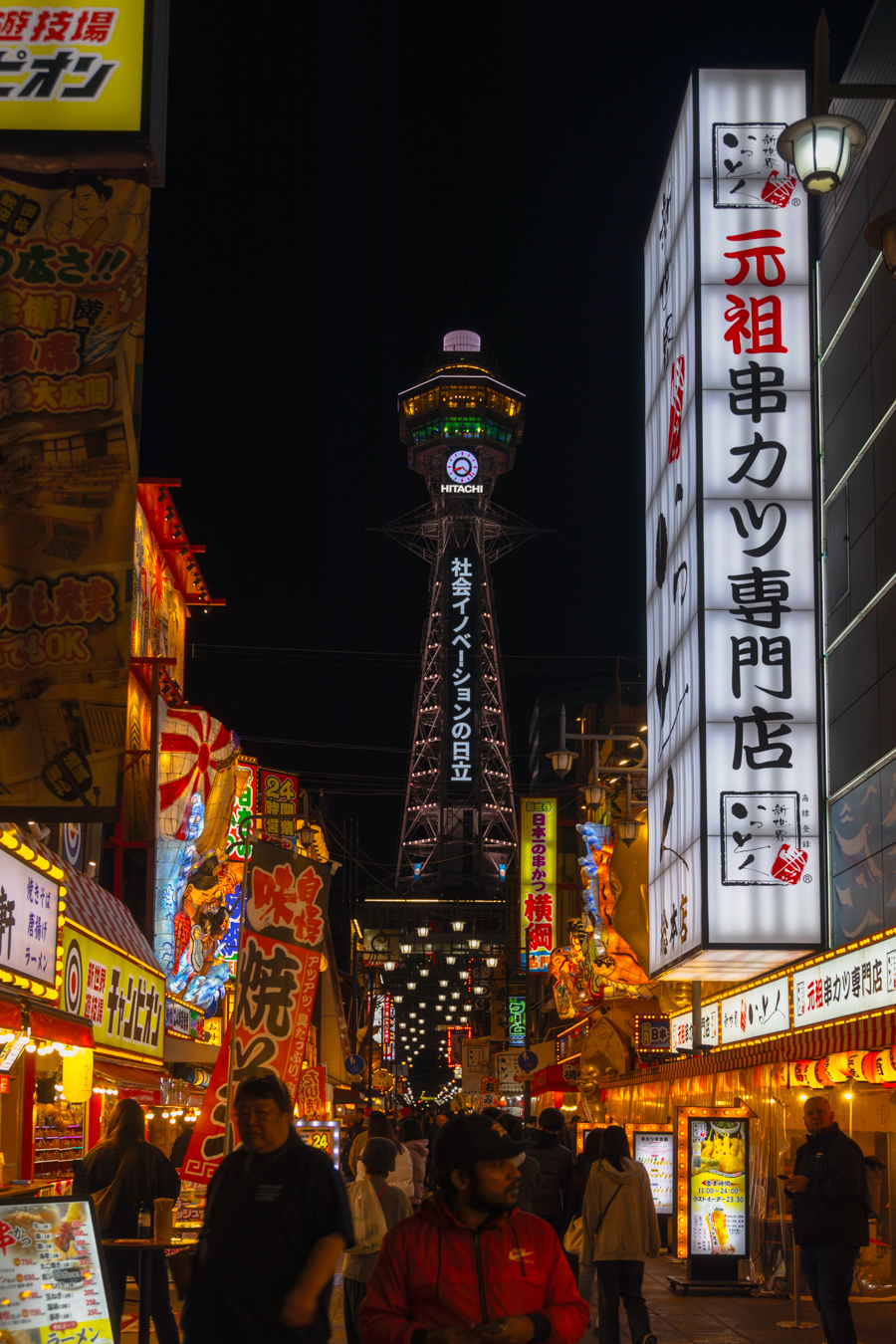
Shinsekai means “New World”, yet this neighbourhood is decidedly retro. Flashing neon illuminates the streets and the aroma of takoyaki, doteyaki and kushikatsu fill the air. Shinsekai is where you can find the very best of Osaka’s street food. Tsutenkau Tower dominates the skyline and is the heart of Shinsekai. Retro game arcades and nearby Tennoji Zoo mean that this entertainment district is also surprisingly family-friendly.
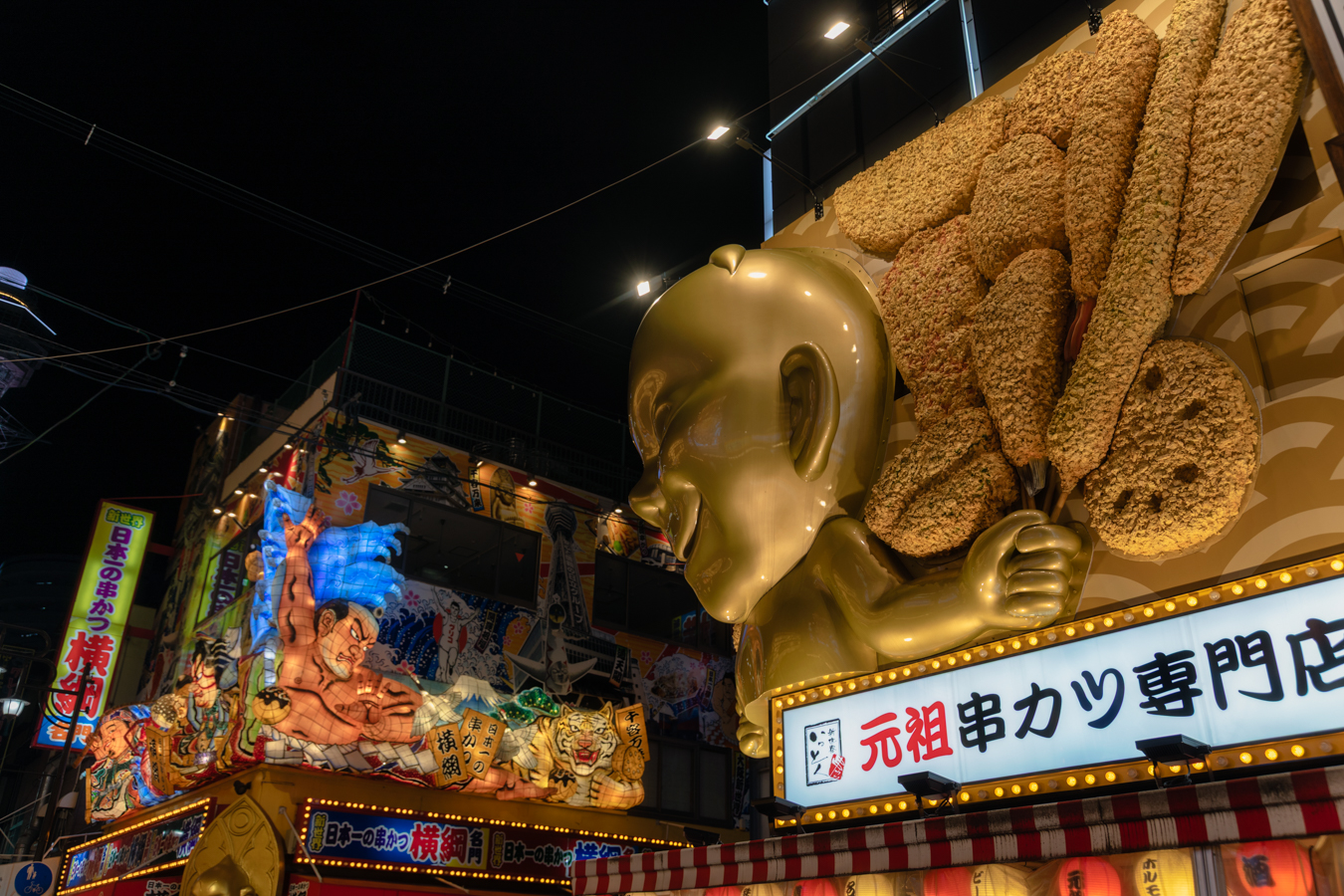
We spot “Billiken” everywhere – a fat baby statue that is the symbol of Shinsekai. It would be rude not to stop for kushikatsu – breaded, deep-fried meat, fish or vegetables on skewers. Mr Fletche and I order a pick-n-mix platter so we can try a selection – remember the golden rule of “no double-dipping” in the sweet accompanying sauce.
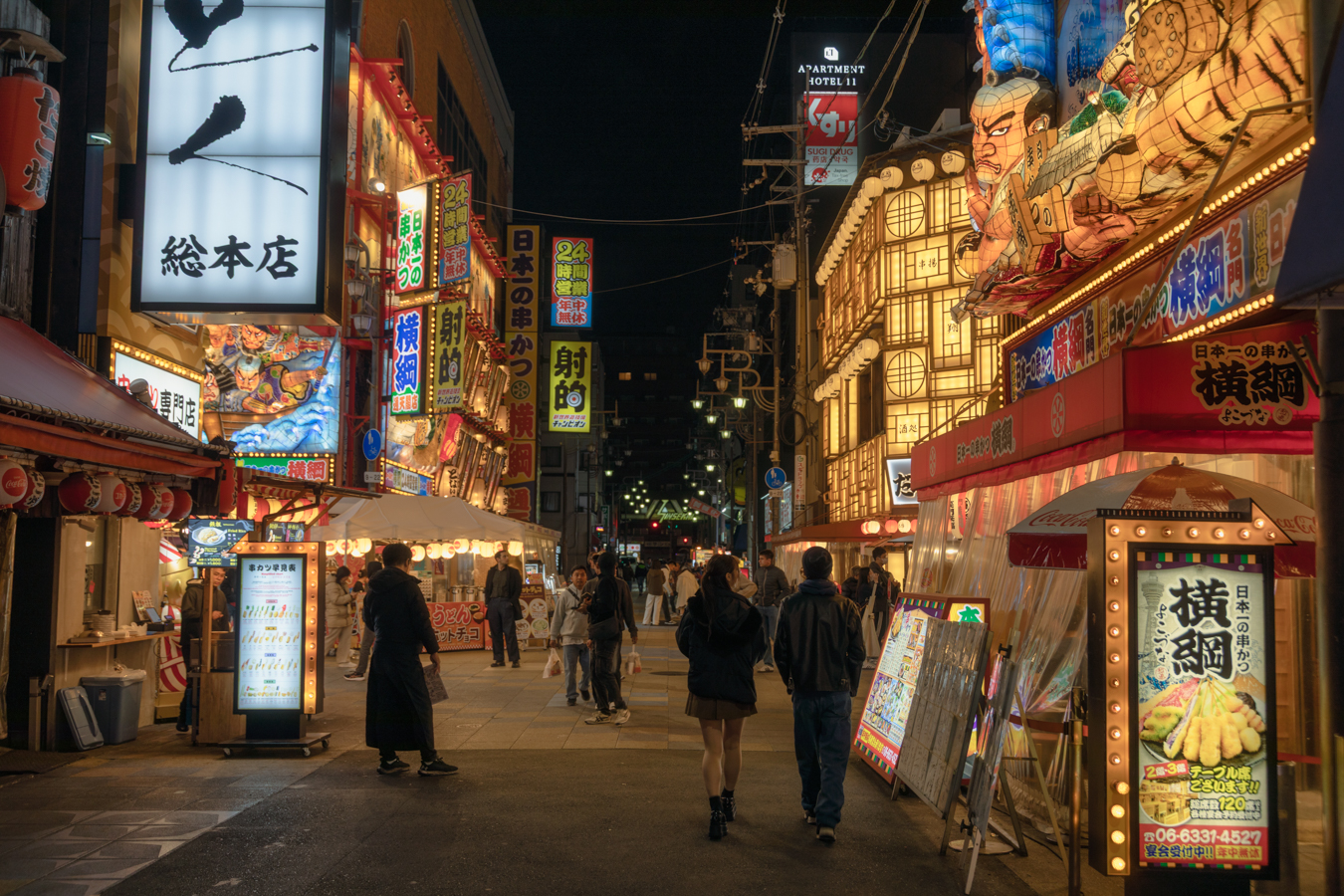
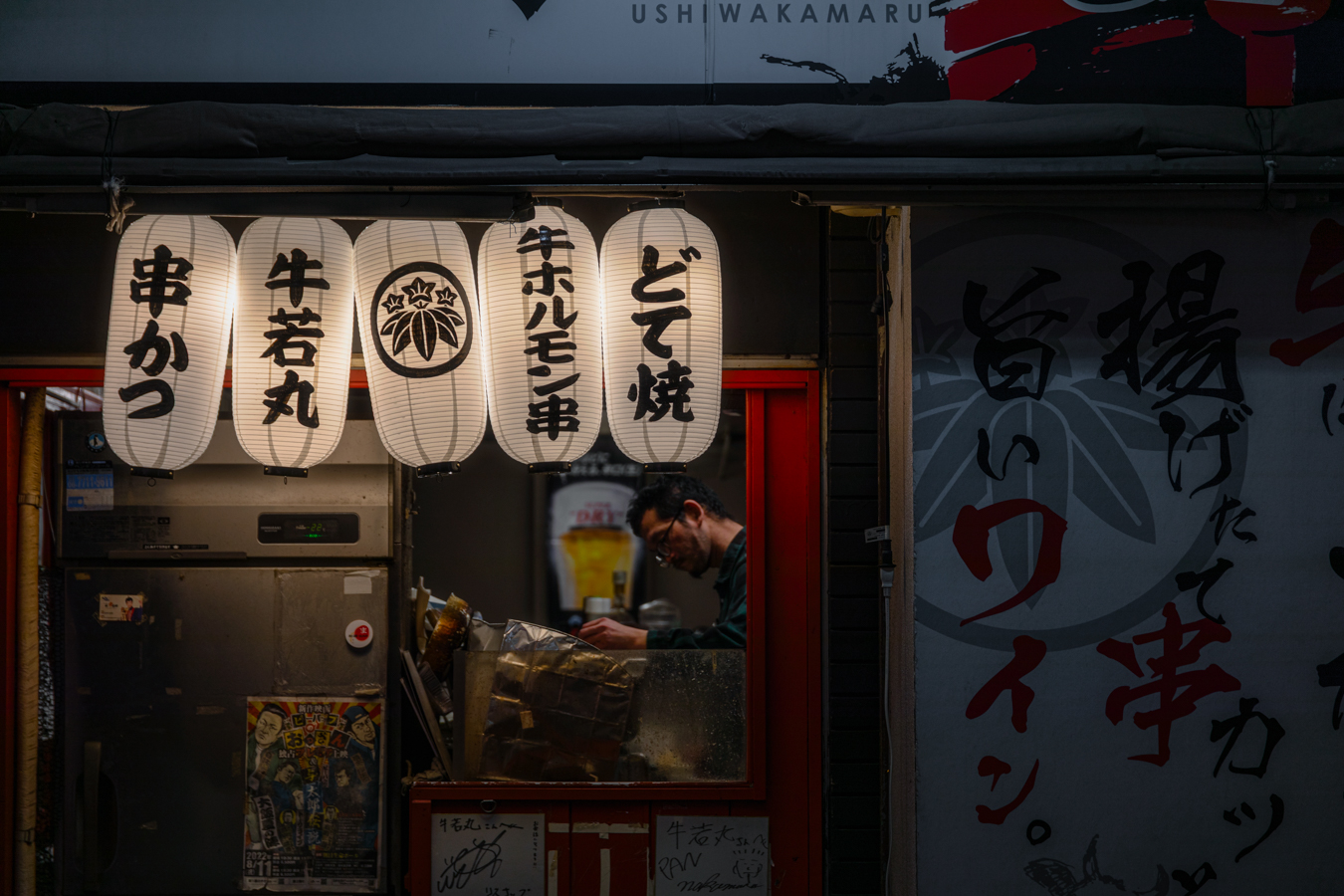
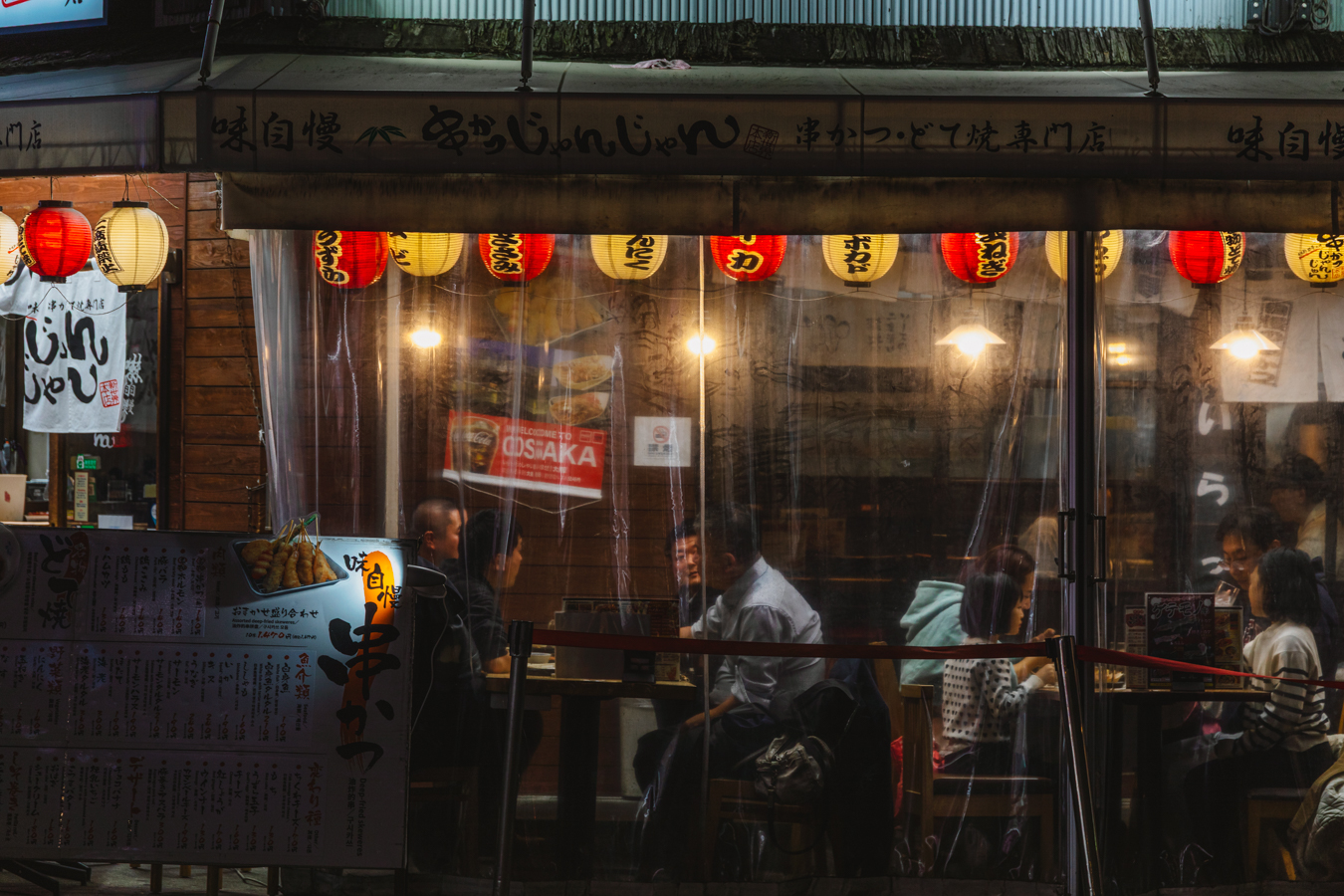
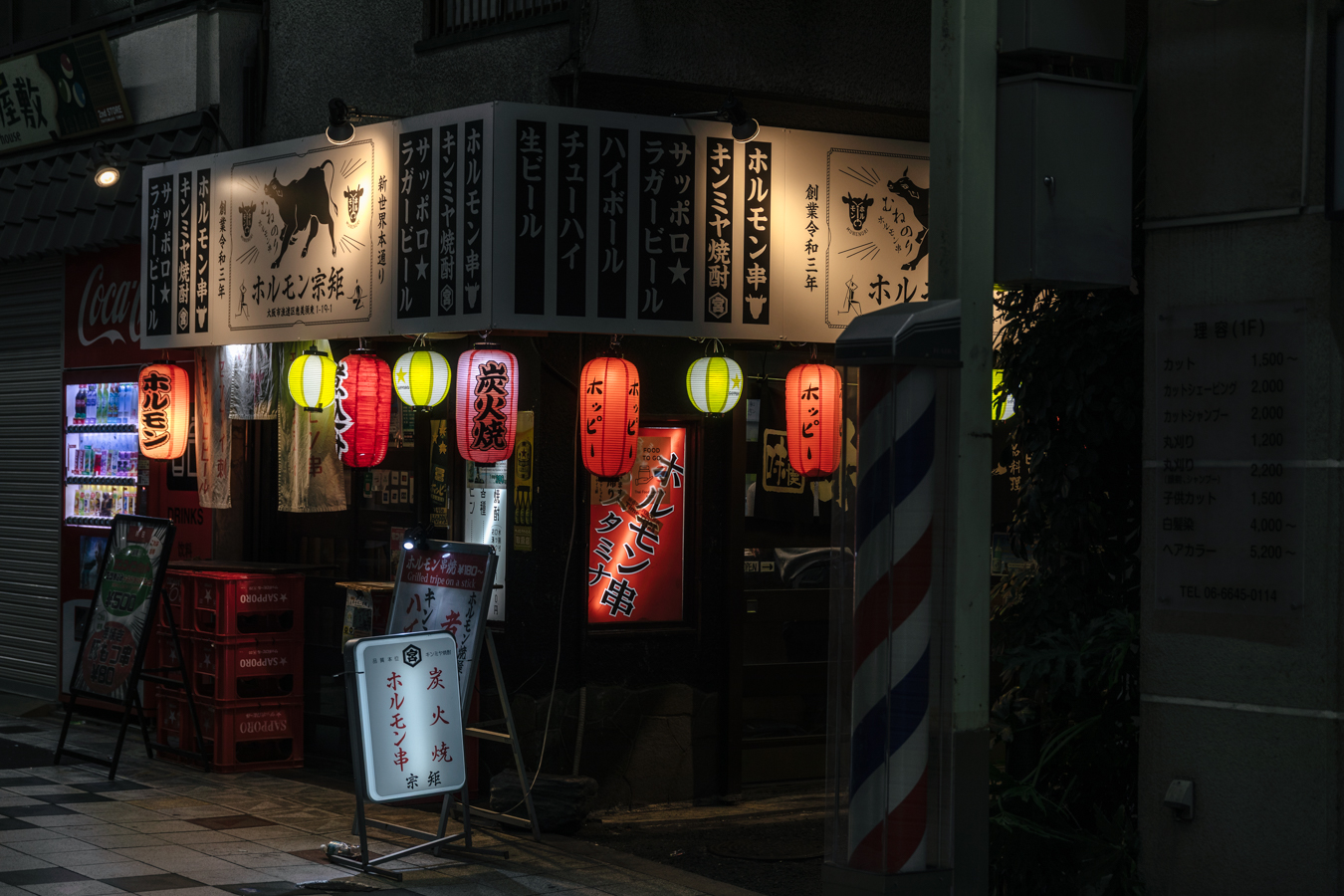
It’s a 15 minute walk from Shinsekai to Hotel Alps but I don’t think I can walk another step, so we take the Sakaisuji Line to Nippombashi from Ebisucho station. For nostalgia, retro gaming and an abundance of cheap eats, Shinsekai beats Dotonbori hands down. After another long long day – and another long travel day ahead of us tomorrow – its time to turn in to our dated redwood hotel room for one final time.
A final morning in Osaka (and in Japan)
As Andrea Bocelli and Sarah Brightman once said, “It’s Time to Say Goodbye”. Our hotel check-out is at midday, which gives us time for final morning strolls around Dotonbori.
Namba Yasaka Jinja
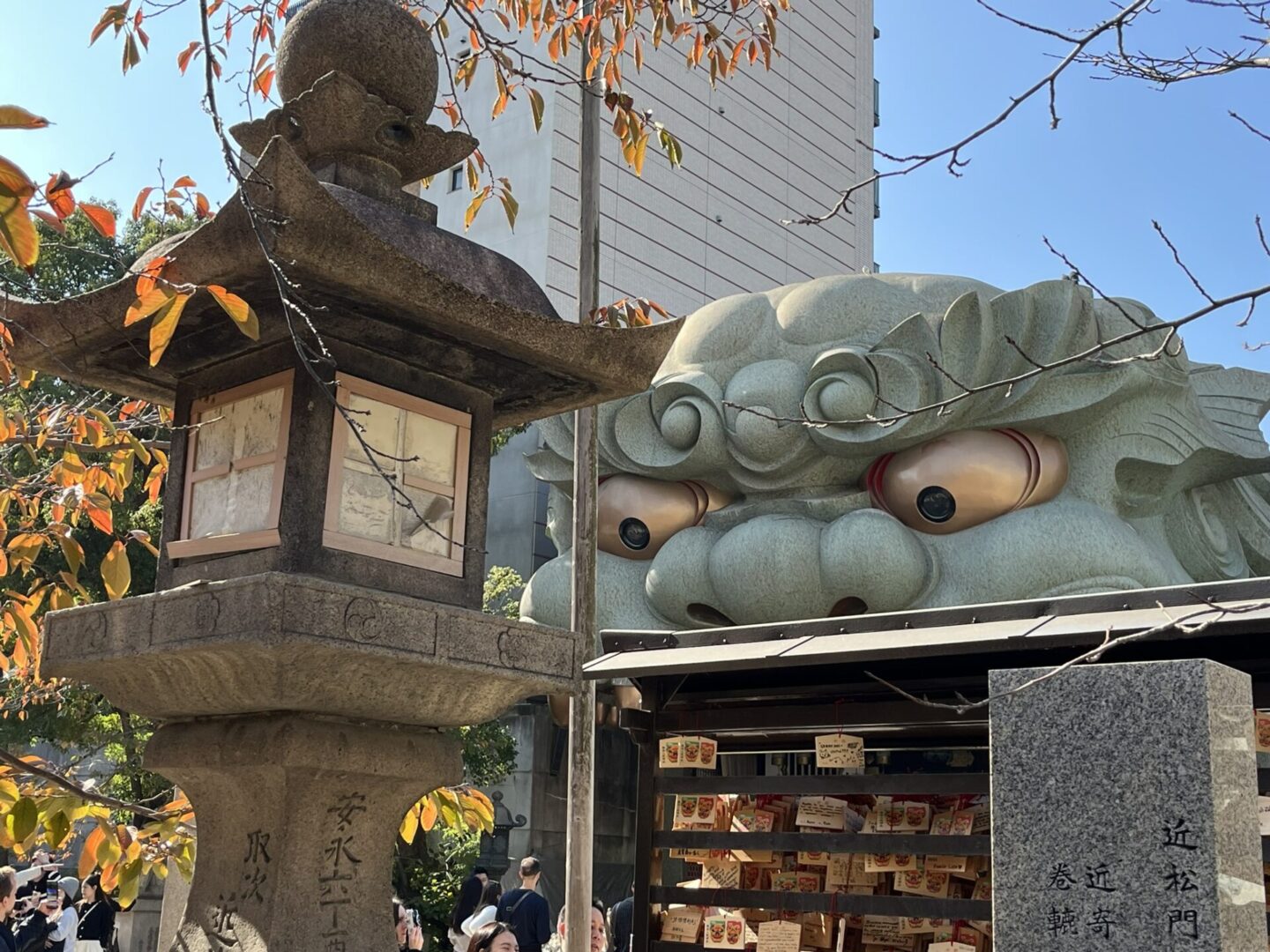
We have a little time to kill before getting the airport bus to Kansai. After checking out of Hotel Alps, we pay a quick visit to Namba Yasaka Jinja, a striking Shinto shrine in downtown Osaka. The 12m tall hand-carved lion head apparently devours negative energy if you stand before it. I wonder if it can sense we’re going home today, exuding all kinds of sad vibes.
In all honesty, you won’t require too much time here. The shrine is small, tucked away in a courtyard between neighbourhood businesses. But its worth a quick visit if you’re exploring the area and transiting via Namba station. Like Hozenji, it is a little oasis of calm in a chaotic city.
Final thoughts: 48 hours in Osaka
Did we have enough time in Osaka? Definitely not. Our day spent at Universal Studios Japan meant we were left with limited time in Osaka, although I don’t regret making time for it in the itinerary. We were pretty exhausted by the time we reached Osaka – it had been a full on 10 days with barely any downtime built in. A fresher Brummie Home and Abroad may have been seeking out the vibrant nightlife that the city is famous for. Who am I kiddding – a fresher Brummie Home and Abroad would have been perfecting her drumming skills in Route1 🥁
I try my hardest to keep the information in this travel guide up to date; however if you notice anything has changed please let me know! Happy travels, Emmalene
📸 Thank you to Mr Fletche for kindly sharing all his photos with me so that I can share them with you! The slightly fuzzy, out of focus ones are all mine 😉



Osaka looks absolutely amazing! And that food – drooooool 🙂
My only regret in Osaka is not making it over to Shinsekai, so I’m glad you did! I know the feeling of not wanting to take another step, and I hit that brick wall in Osaka, so I think that’s why we didn’t get there.
I only found out about that temple & waterfall AFTER our visit, though looking at your photos I think perhaps it’s somewhere best saved for autumn! Our friends went back on their honeymoon around the same time as you and actually went there as well and said the same thing about the autumn colours. It’s definitely somewhere on my “next time if that ever happens” list!