Tokyo Travel Diaries: Arriving in Tokyo and Exploring Shinjuku, Shibuya and Asakusa
Where better to start our long-awaited Japan trip – postponed from March 2020 – than Tokyo, the biggest city in the world? Home to 13 million people, we are swelling its population by two. With just three and a half days in the city – and one of those days earmarked for a Mount Fuji daytrip – we have A LOT to pack in.
Tokyo was the first stop on our long-awaited Japan trip. You can view all the rest of my Japan content here – and there’s a lot to share!
**This blog post may contain affiliate links. This means that if you go on to make a purchase or booking after clicking through one of my external links, then I may make a tiny bit of commission, at no extra cost to you!**
From Narita Airport to Shinjuku
Narita Airport is located around 60 km (37 miles) from the city. I’m sure some people wing it, but I didn’t want to be figuring out how to get to Shinjuku from Narita on arrival. So we opted for the Narita Airport Limousine Bus.
Once we’d cleared customs and picked up our suitcases (about 45 minutes in total) we booked our bus at the Airport Bus kiosk in the arrival hall, right opposite the exit. There were seats available on the next bus to Shinjuku Station West Exit as long as we didn’t mind sitting apart. After 16 hours sitting next to each other on the plane, our marriage could definitely survive an hour and a half journey seated in different rows. Our journey took just under 70 minutes from airport to Shinjuku West.
If you need mobile data on the go – and believe me, you WILL need it in Japan with all the Google Maps/Translate usage – you can purchase an e-sim through Airalo. If you’d like to use my referral code EMMALE5544 you’ll get £2.50 off your first purchase!
Where we stayed in Tokyo
WPU Hotel is in the heart of Shinjuku yet slightly removed from the madness. It was super easy to find from the Airport Limousine Bus stop, and close to the major transport hub of Shinjuku station. Our room was compact with little storage space, but this is typical of Japan hotels. I made use of available space by storing some clothes in the bath. Which was great until I accidentally turned the wrong tap on.
There’s a morning breakfast offering in the lounge – hot drinks, juice and pastries – which was unexpected but very welcome. Also, the hotel has its own craft beer bar and diner onsite. The bar is open to the general public, but as guests we had a voucher for a free drink which was a nice touch.
First night strolls around Shinjuku
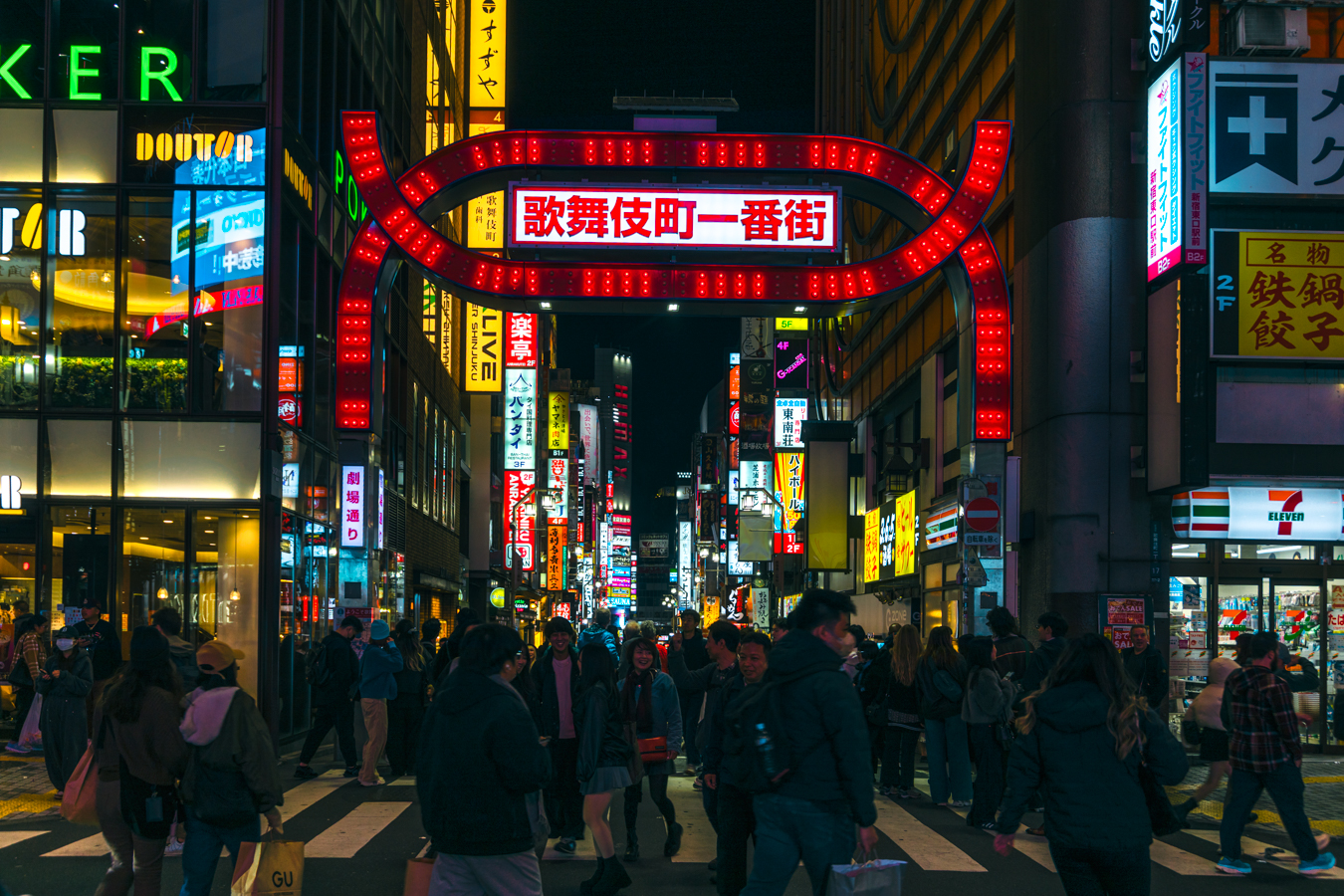
We’re desperately trying to stay awake for as long as possible. It seems an age since we slept so we head out, hoping the blinking neon lights, crowds and noise will keep us energised for a little while longer.
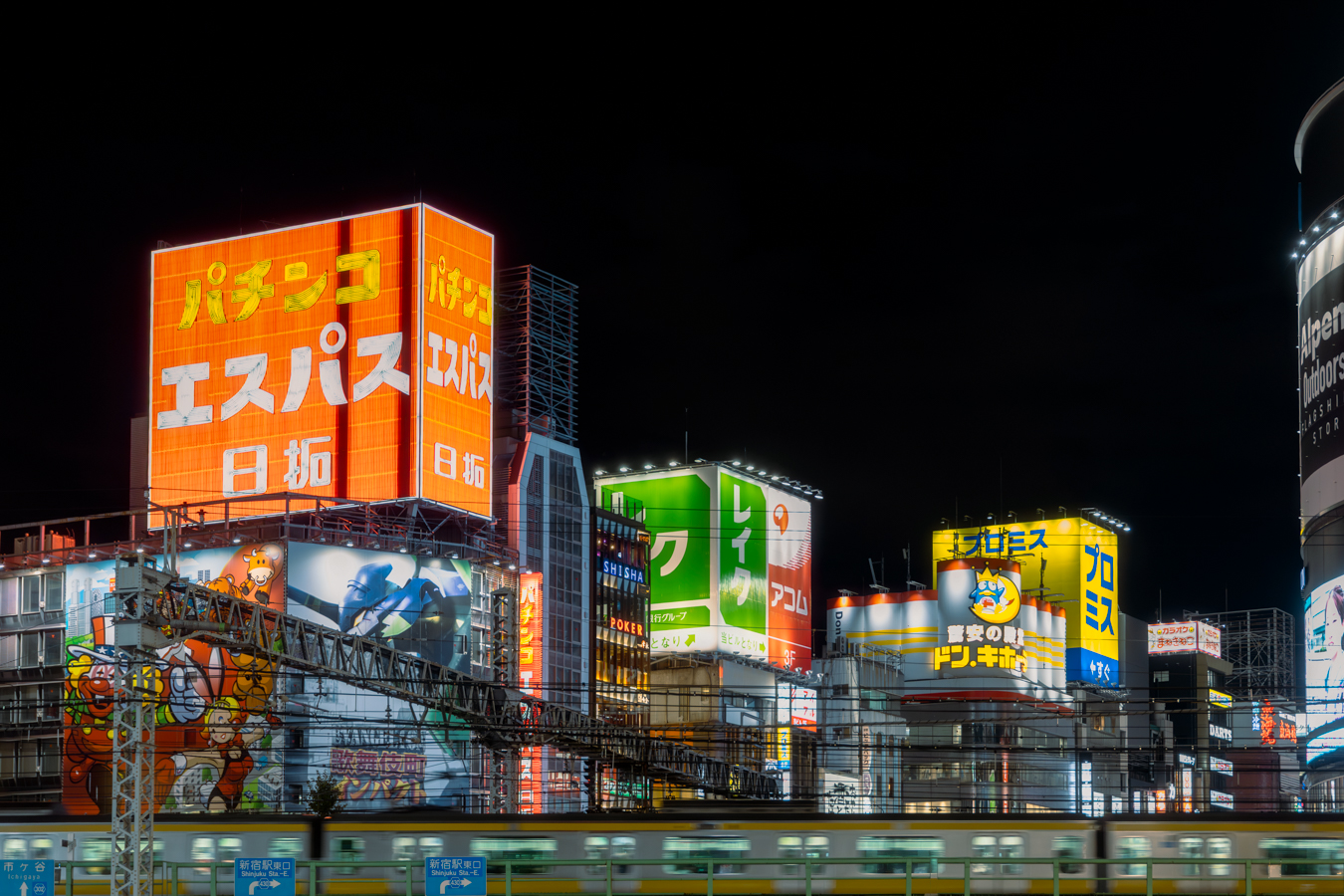
Our first stop is to the Tokyo Metropolitan Government Building, a 15 minute walk from our hotel. I worry we won’t be able to find it, only to discover that the building’s after-dark projection show makes it visible from quite a distance. Before we settle down to enjoy the light show – best seen lying down from the viewing area in the plaza – we join the queue to visit the free observation platform at the top of the South tower.
From up here we can see just how sprawling Tokyo is. Distracted by the views, we don’t notice that the queue for the lifts to descend is getting longer and longer. Turns out only one of the two lifts is now working. We end up spending longer in the queue to descend than we do at the top of the tower.
There are other observation platforms in Tokyo, although we chose the free option 😉. There’s Tokyo Tower (from £7pp), Tokyo Skytree (from £10pp) or Shibuya Sky (from £13.50)

A first supper in Omoide Yokochō
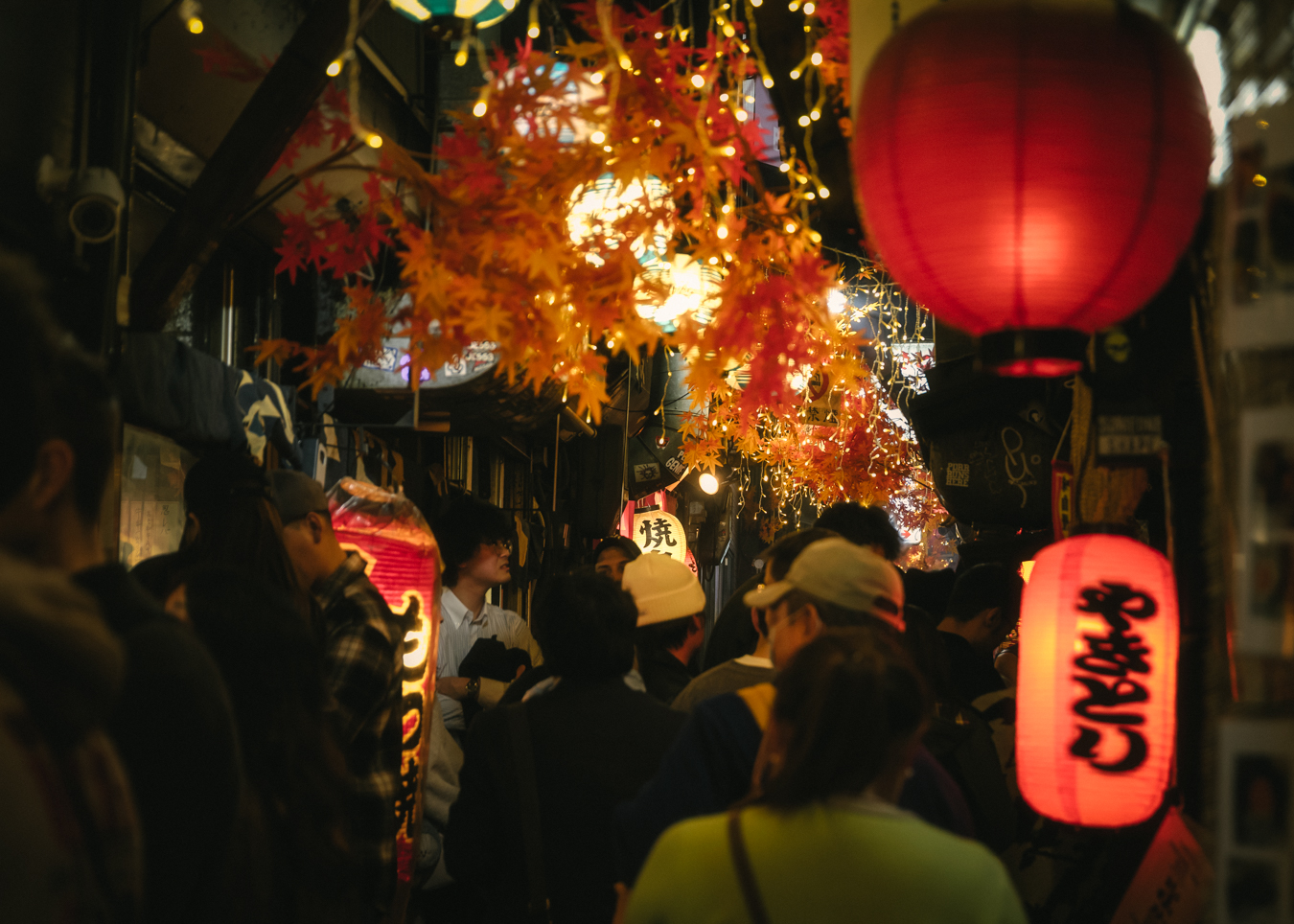
Our last plane meal is a distant memory. Some kind of prawn and noodle combo for breakfast I seem to recall. So we head for the narrow alleyways of Omoide Yokochō; Mr Fletche is seeking ” something on a stick”. We soon find what we’re looking for, a yakitoriya just inside the entrance to the steamy cramped alleyways called Aburi Shimizu. Our host is very excited that we’ve chosen to eat at his izakaya on our first night in Japan. We share a selection of pork skewers, and enjoy our first beer – and then our first sake – in Tokyo. It won’t be our last. Beer or sake.
Omoide Yokochō is roughly translated as “Memory Alley”. It also has the less salubrious nickname of “Piss Alley” 😂
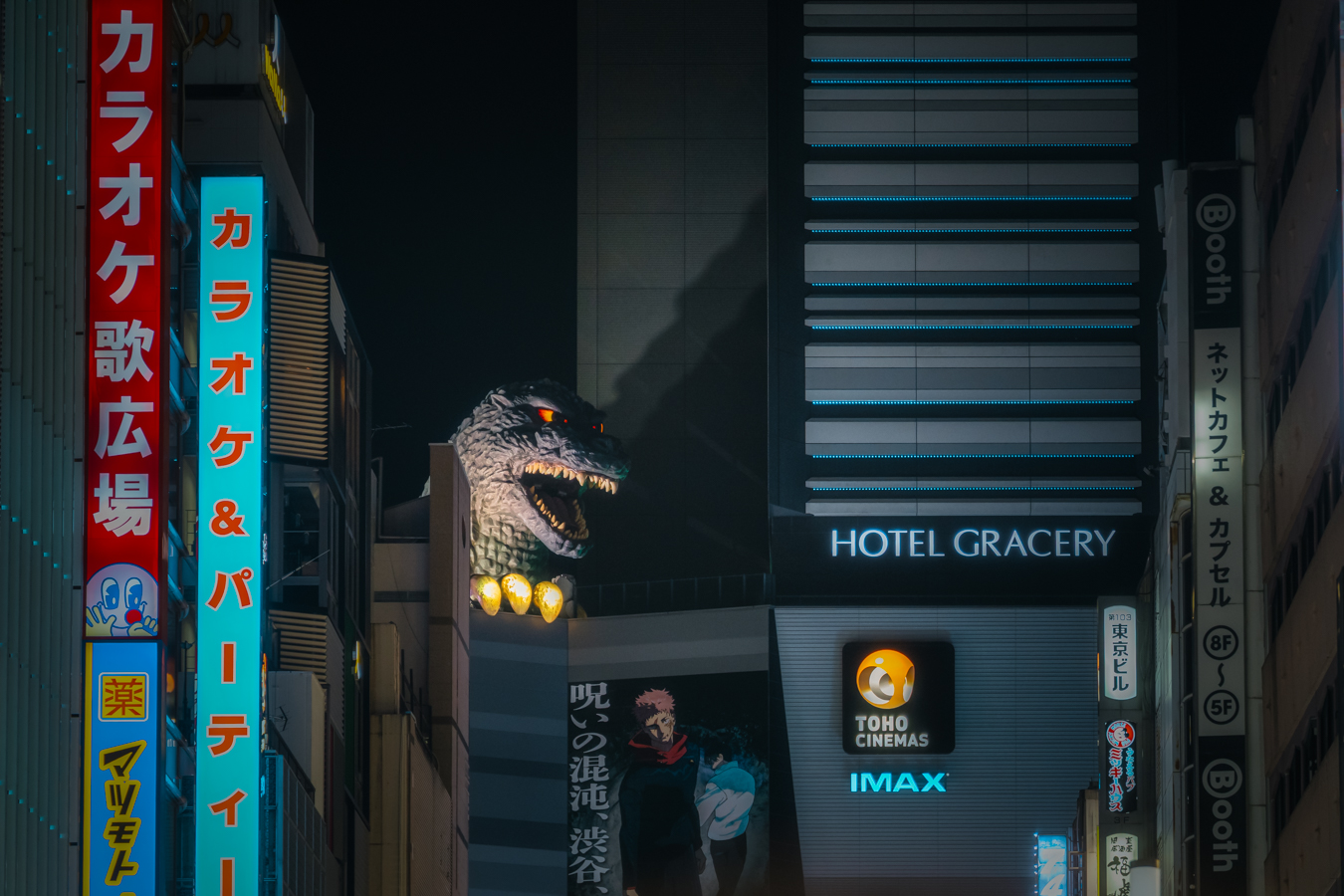
Hunger sated, and still trying to stave off the urge to sleep, we head deeper into Shinjuku. We find ourselves in the infamous Kabukichō area, where lots of pretty young ladies are politely offering their services. However Shinjuku’s red-light district does have plenty of other sights, including the giant Godzilla Head which tops the Toho Cinema.
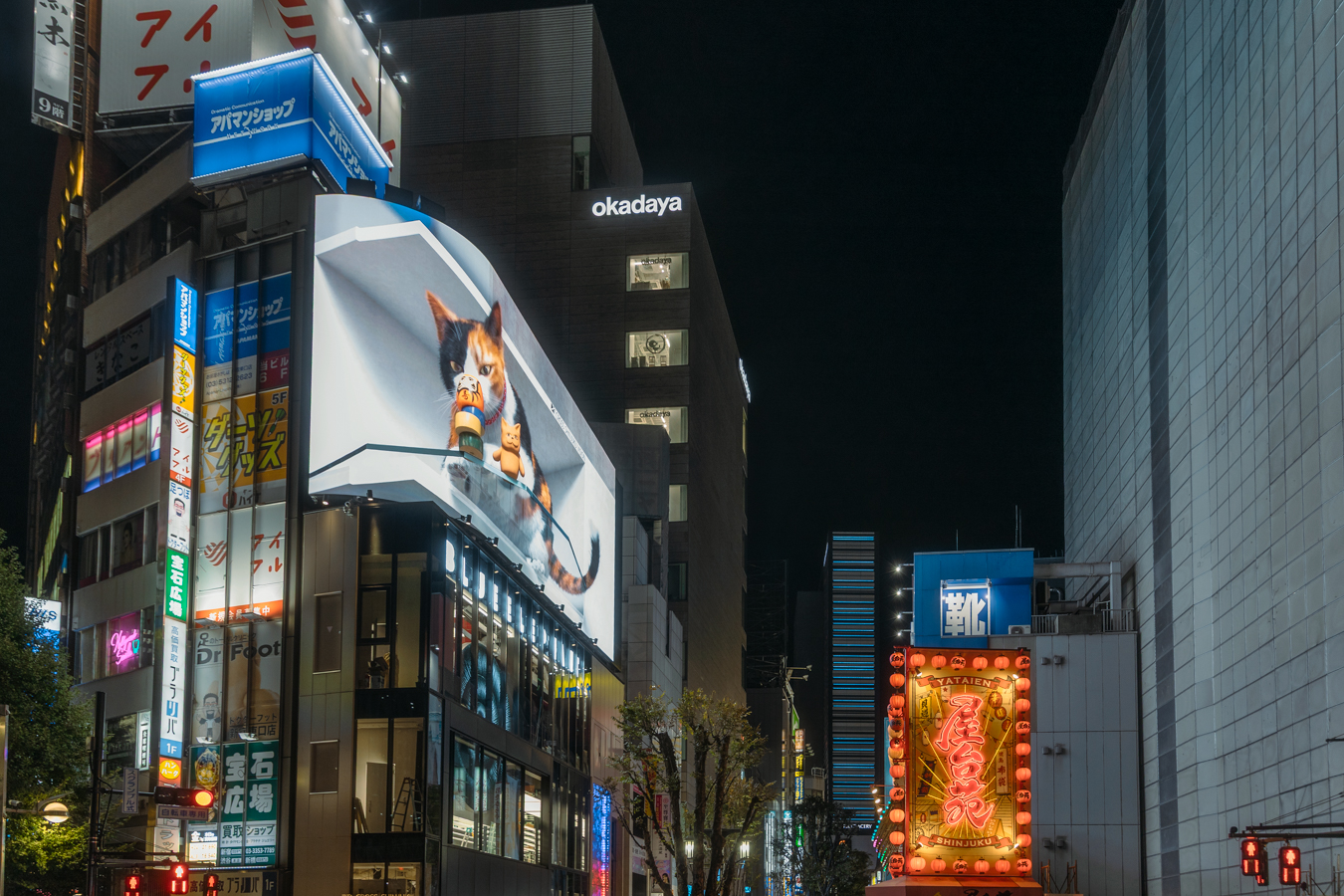
The final thing to tick off the Shinjuku list before finally succumbing to bed is watching the giant 3d cat. We know we’re close when we hear it’s cute miaow. I could spend hours watching the mischievous kitty knock things off a glass shelf. But after a long (long) couple of days, and a 9 hour time jump, we’re ready to call it a night. Tomorrow, we explore.
Tokyo Day 1: Exploring Shibuya and Asakusa
Tokyo Day 1 in a Nutshell: Navigated the Tokyo metro for the first time. Took in the fresh air at Yoyogi Park and Mei-Ji Jingu. Found an excellent free viewing point for the Shibuya Scramble. Asakusa for Senso-ji and sumo.
After only managing to make it to 9:30pm the night before it’s no surprise that an internal alarm clock wakes me somewhere around 4:30am. The kind of awake that kicks in immediately. The kind of awake you NEVER have when your alarm goes off for work. Mindful that if I want to make it to at least 9:45pm tonight, I try and let my body relax a while longer. We’ve used the Timeshifter app to slowly adjust to the new time zone over the last couple of days, and it’s telling me to stay in bed for now. Once the caffeine embargo is lifted though, we’re ready to start our day.
Extremely grateful for the complimentary coffee and pastries in our hotel lounge, we discuss our plan of action for the day. First step, getting out of Shinjuku. After all, the Tokyo subway map looks like someone dropped a plate of multi-coloured noodles on it.
Navigating the busiest train station in the world
If we want to get anywhere in Tokyo, we’re going to have to learn to navigate the public transport system. So, with topped-up Suica cards on our phones, we head to the behemoth that is Shinjuku station.
A Suica (IC) Card is the most convenient way of getting around Tokyo. We topped up direct from our iPhones and were able to simply tap in and out to access rail and subway lines. No waiting in line for ticket machines! We could also use our Suica card in Kyoto and Osaka.
Have you ever tried to find your way out of Birmingham New Street station? Well Shinjuku has over 200 exits. Yes. TWO HUNDRED. Over 16 levels. And has 51 platforms. Google Maps is pretty good at establishing which entrance and exit we needed. Not as though we always pay attention to that. It doesn’t help that there’s construction work going on meaning some entrance/exits are closed off. Yes, just like Birmingham. It’ll be great once it’s finished. There are
We only got seriously lost in Shinjuku Station once. Honestly, I thought we’d never see daylight again.
Meiji Jingu Shrine: calm amidst the chaos
Having finally sussed out Shinjuku station, we hop on the Odakyu Line. This rail line, and the Marunouchi metro line, will become our best friends over the next couple of days Mainly because they are the closest lines to our hotel. We take the train just two stops, to Sangubashi Station at the north-west tip of the leafy woodland surrounding Meiji Jingu Shrine.
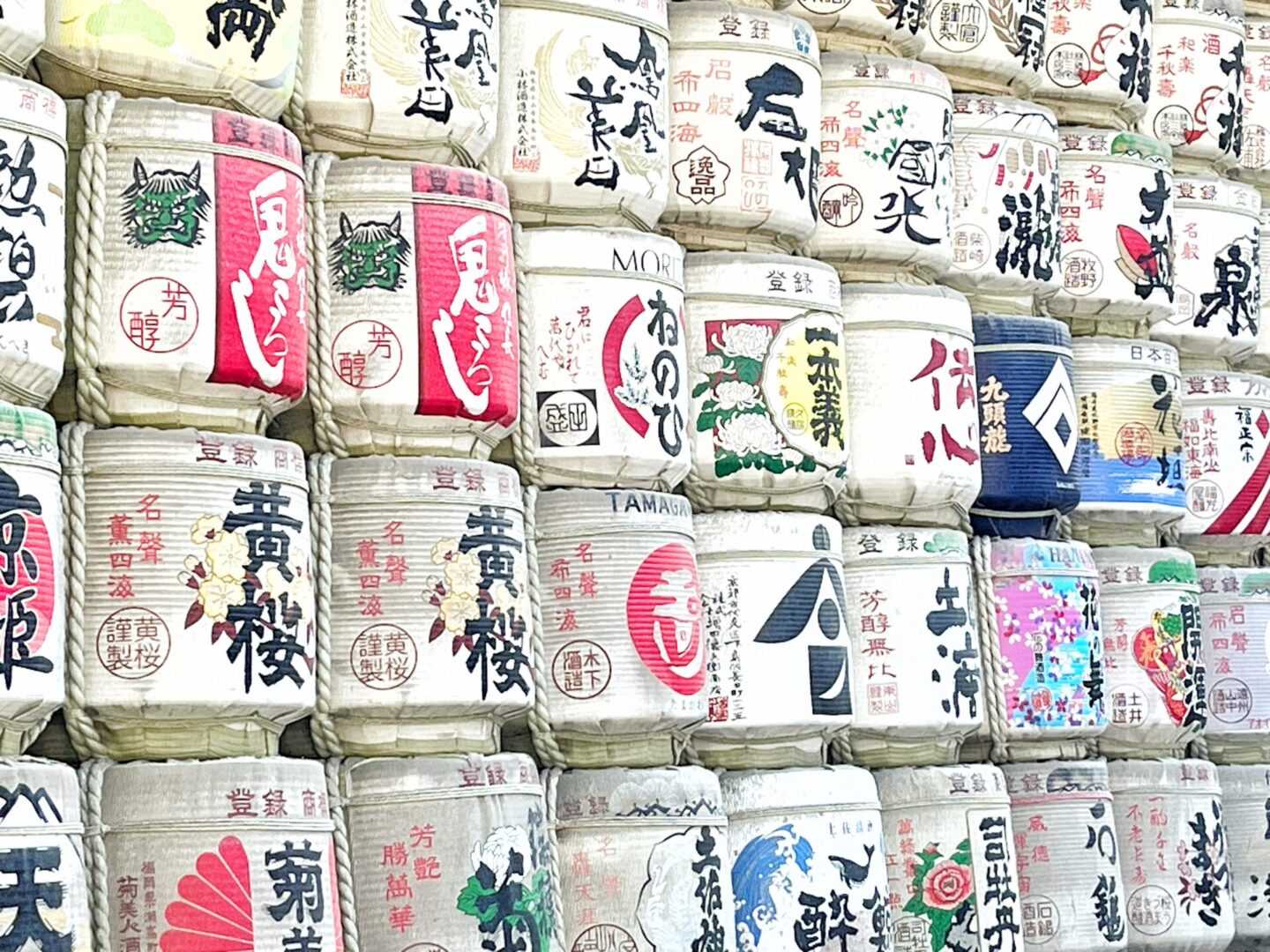
It’s a complete contrast to the noise and neon of Shinjuku. There are a few other people strolling around – probably jetlagged travellers like ourselves – but it’s surprisingly peaceful at 9am. Tree-lined pathways wind towards Meiji Jingu, a Shinto shrine built to commemorate the legacy of Emperor Meiji and Empress Shoken. Walls of decorative sake and French wine barrels line the gravel path on approach to the shrine, offerings to the enshrined Gods.


The hip havens of Harajuku and Cat Street
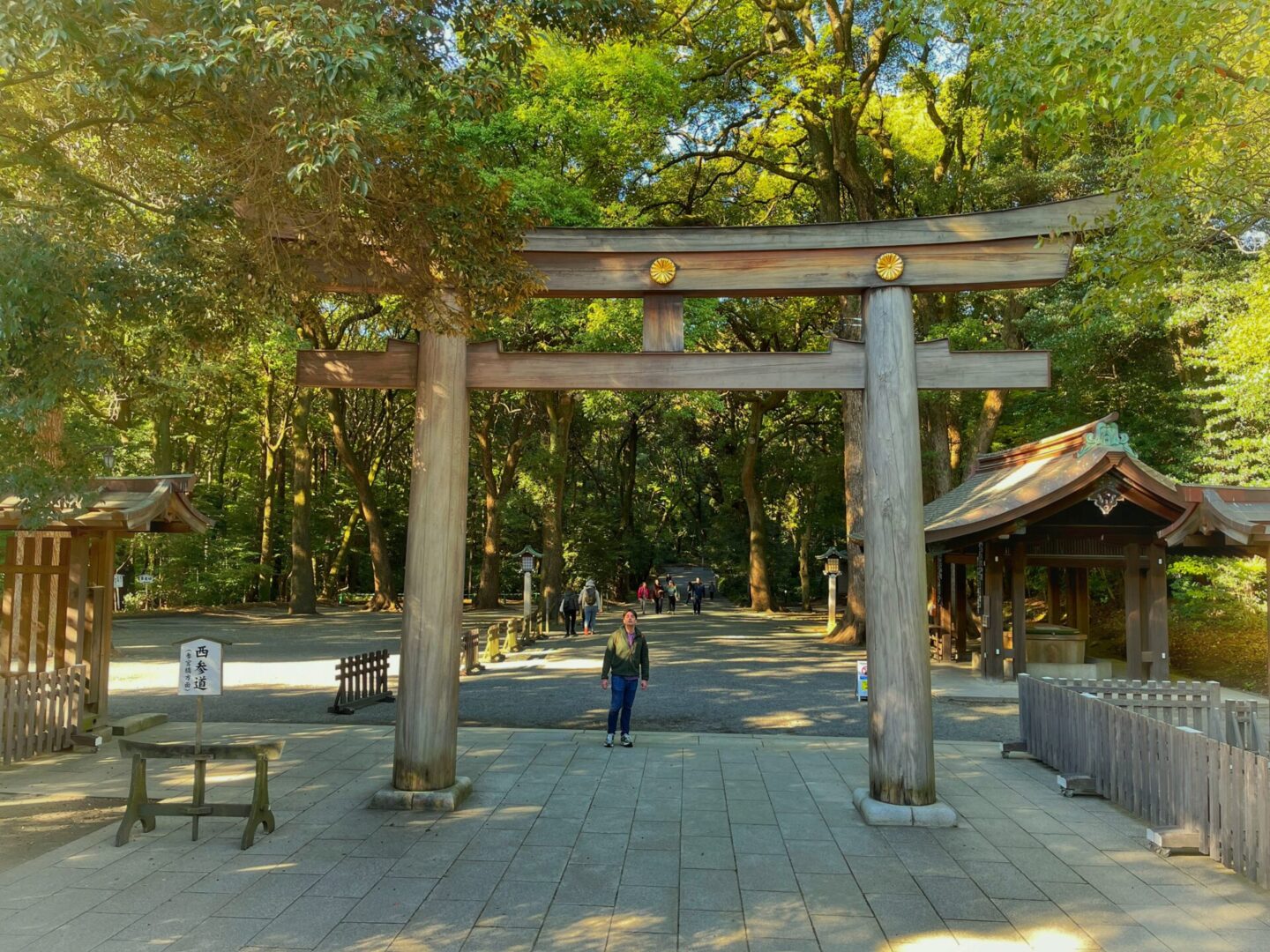
Leaving under the large wooden torii gate at the south east of the park, our sights are set on strolling to Takeshita Street. Except Mr Fletche is distracted by a sing-song jingle emanating from a street food cart. It sounds like an ice cream van. Except its actually a yaki-imo vendor – roasted sweet potatoes. Turns out this is a favourite snack in Japan, particularly in the colder seasons. We decide not to partake, but add the catchy song to our “Japan” urban soundtrack, which includes the peep-peep of the crossing signals and the melodic train doors.
It’s a five minute walk alongside Harajuku Station to the beginning of Takeshita Street. Known for it’s rainbow-coloured junk food, animal cafes, kawaii culture (all things cute) and quirky fashion, it’s all quite subdued when we get there around 10am. Japan mornings don’t really get going til around 11am. We do however visit our first Capsule Lab, where I “win” my first toy of the trip. It may sound like it’s for kids but believe me, they can be quite the collector’s item. As long as you can open your capsule. Mr Fletche had to open mine to release my little Hello Kitty prize.
I have strong feelings about the animal cafes in Japan. Is it ok when the animals are bred to be domesticated, like cats and dogs? How about owls? Or micro-pigs? Capybaras? Otters? Hedgehogs? It feels like profit is being prioritised over the well-being of the animals so we gave these a swerve.
Instead of jumping back on the subway, we decide to walk to Shibuya via Cat Street. The famous mirrored escalator at Tokyu Plaza Omotesando Omokado is sadly emblazoned with advertising hoardings and there appears to be some kind of private event going on, so we continue our stroll. We break up our wandering with a stop for our first matcha latte at Osushiyasan no Pork Tamago Onigiri. Their onigiri sets looked very tempting but we decide to wait a while before lunch.

Cat Street (Kyu-Shibuya-gawa Yuhodoro) is a mixture of upmarket stores, off-the-wall Japanese boutiques and second-hand clothing stores. It’s a paradise for fashionistas and shoppers alike. Oh, and us. Who are neither. There are disappointingly no cats. Maybe our visit means that we are cool cats. Or maybe not. We emerge near Miyashita Park, where we pay a well-timed visit to the loos at the shopping centre.
A not-so-funny story: we return to Miyashita Park three nights later, also to use their loo. Only to find the shopping centre – and thus the public restrooms – is closed. On our way back down the stairs, I trip, twist my ankle, and spend the next two days limping sadly around Tokyo and Kyoto.
Shibuya: Scramble, Statues and Sushi
It’s just a short stroll from here to the heart of Shibuya district, Shibuya Crossing. This iconic crossing, known as the Shibuya Scramble, is one of the busiest intersections in the world, famed for its diagonal pedestrian walkways. There’s a frenetic flurry of activity every time the lights turn green, and pedestrians perform an intricate dance. Naturally we cross, even when we don’t need to. We just want to be part of the estimated 260,000 people that cross daily. I assume some of those are multiple crossers, trying to get that perfect shot for Instagram.
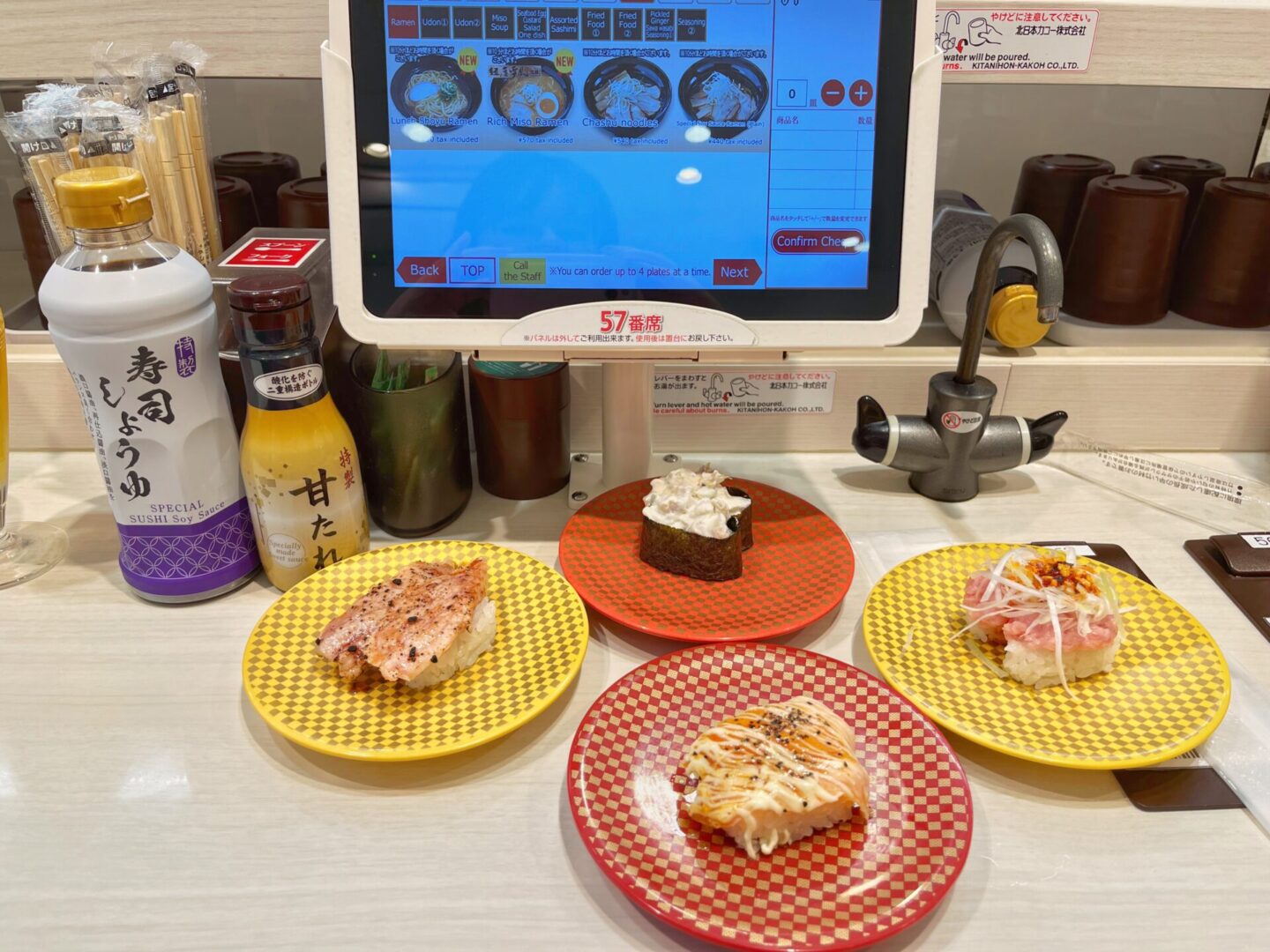
It’s definitely time for lunch now. Conveyor belt sushi is on my to-do (or to-eat) list. A quick Google Map search and we’re standing outside Uobei Shibuya. We’re each given a unique QR code and we’re assigned a seat. There’s a dazzling array of sushi on the tablet menu in front of us; I take a bit of a pot luck approach and hope I can catch my dishes as they whizz past. I envision a pile of sushi on the floor at the end of the conveyor belt. Turns out that the dishes do actually stop right in front of you. At the end of the meal, we simply take our QR Codes to the cashier to pay.
Appetite sated, it’s back to Scramble Square; this time we cross with a purpose to get a glimpse of Hachiko. This statue commemorates the faithful pup who would wait at Shibuya station for his master to return home from work every day, and continued to do so for a decade after his owner’s death. There’s a huge queue of sentimental dog lovers queuing for a photo; I content myself with sneaking a pic from the side
Tickets for Shibuya Sky sell out well in advance; instead we content ourselves with two free viewpoints, the Shibuya Mark City Walkway (look for the Myth of Tomorrow mural by Taro Okamoto), and the Shibuya Hikarie 11th floor Sky Lobby.
Here are some other recommended Shibuya observation points:
- Starbucks, Shibuya Tsutaya (purchase required)
- Mag8 @ Magnet by Shibuya 109 shopping mall – ¥1800 (£9.00) pp includes a drink)
- L’Occitane Cafe (purchase required)
- Share Lounge, 4th floor of Shibuya Tsutaya (above Starbucks) ¥1870 yen per hour per person (£8.90) with hot beverages, soft drinks and snacks (or ¥3300 (£15.65) with alcohol)
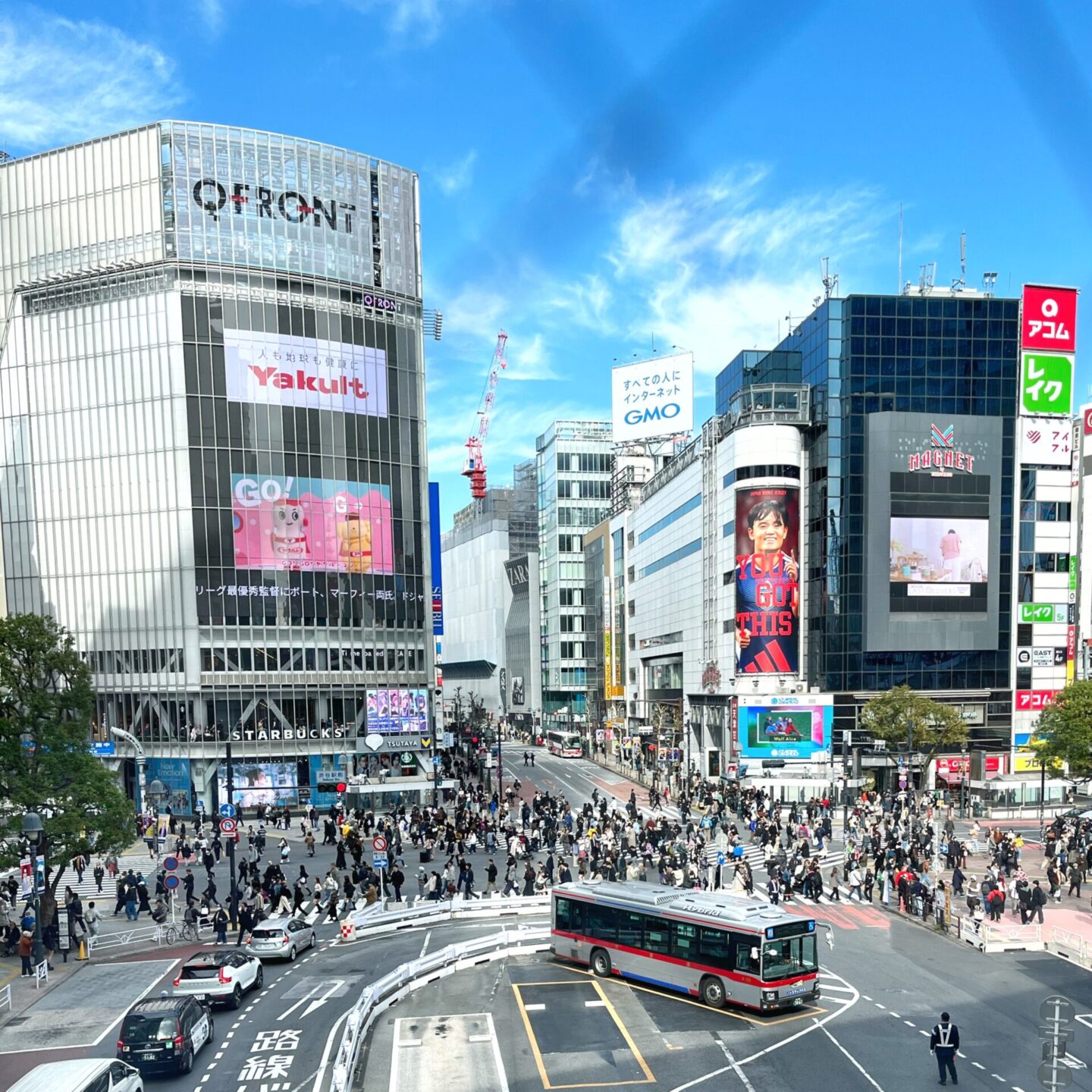
From Shibuya Hikarie, we make our way back to Shinjuku. This time we jump on the Yamanote Line at Shibuya, less than a 10 minute ride. We have an evening date with some sumo wrestlers.
Asakusa: Tradition, Temples and Sumo!
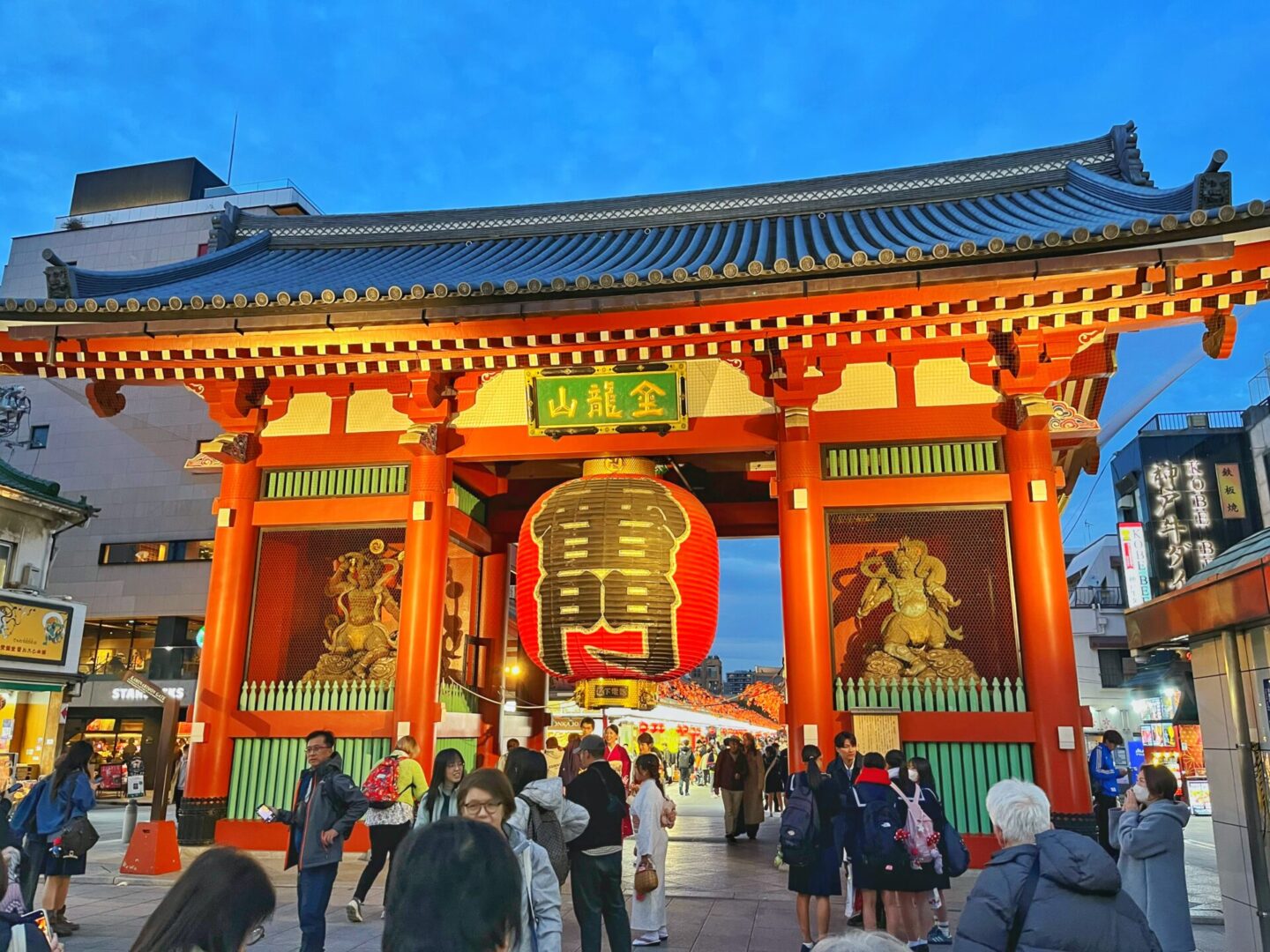
After a quick freshen up, we head back out. From Shinjuku, it’s quite a long ride to Asakusa, on the Marunouchi and Ginza lines via Akasaka-Mitsuke Station, around 35 minutes. Asakusa is a historic area of Tokyo, best known for Senso-ji temple and Nakamise-dori shopping street.
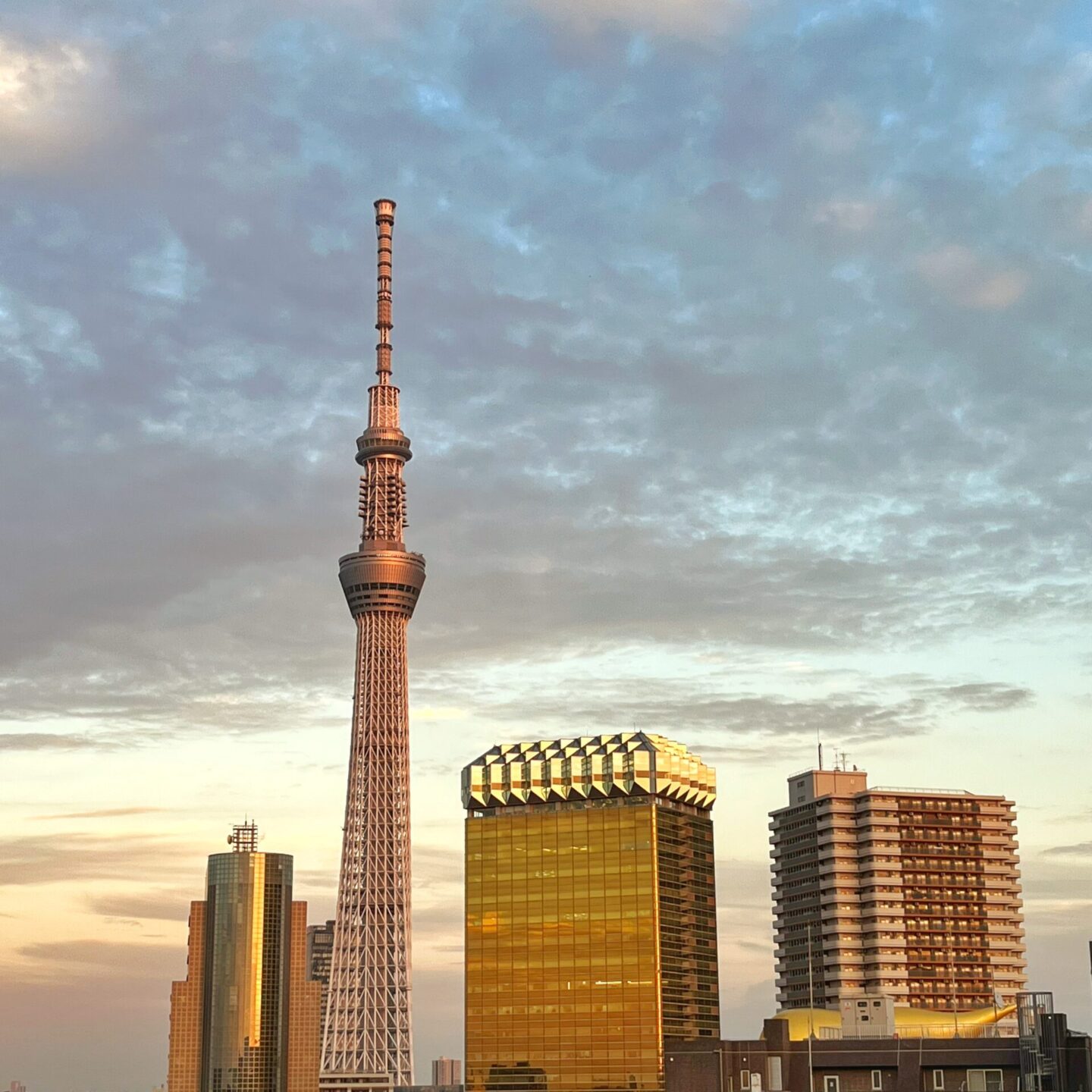
We have a couple of hours before our Sumo Show Experience; our first stop in Asakusa is the Asakusa Culture Tourist Information Centre. I’m not here for the culture particularly, or for the tourist information. Instead we make our way to the lift which whisks us up to an 8th floor observation deck and cafe. Open from 9am-10pm, this is another free viewpoint which looks out over Nakamise-dori and Senso-ji Temple in one direction, and the Tokyo Skytree and the Golden Poo (sorry, the Asahi Beer Hall) on the other.
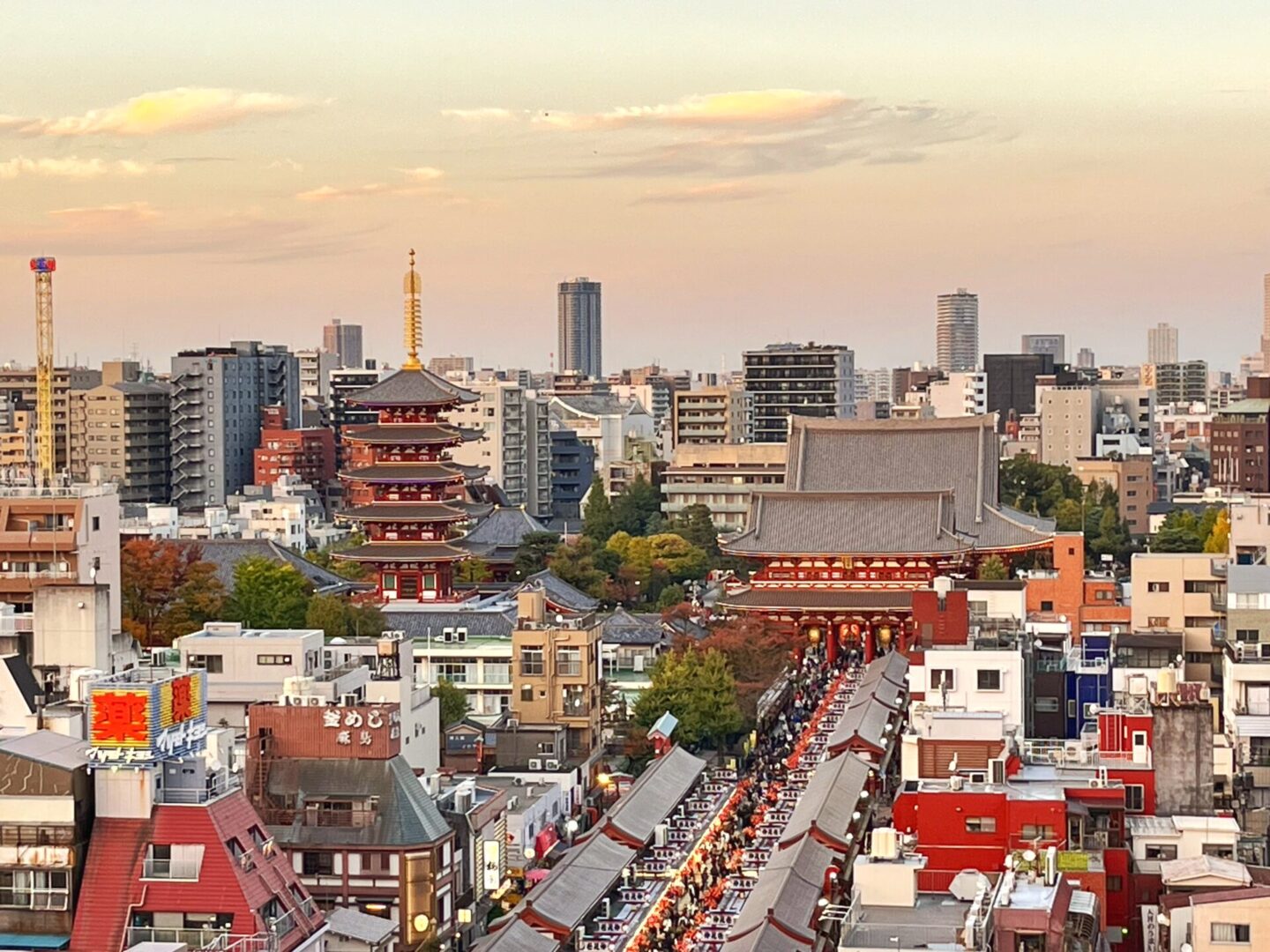
The famous Kaminarimon gate is a stone’s throw away from the Visitors Centre. This is the busiest place we’ve encountered so far in Tokyo by far. In fact it’s hard to even see the shops and stalls lining Nakamise-dori. It’s just before 5pm on this November evening; I can only imagine how busy this famous stretch leading up to Senso-ji gets in the daylight. A quick stroll off the main stretch though reveals almost empty streets, little oases of peace.
Senso-ji is Tokyo’s oldest Buddhist temple, dating back to 645. As the temple is open from 6:30am until 5pm we’ve just missed the opportunity to go inside. There are fortune stations where you can pop 100 yen into a box and draw a numbered bamboo stick from a metal tube. These correspond to a drawer containing a fortune (omikuji). Senso-ji is regarded as the temple with the highest number of bad-luck fortunes so I give it a miss. Although this doesn’t stop me getting an unlucky fortune later in our trip at Mount Fuji.
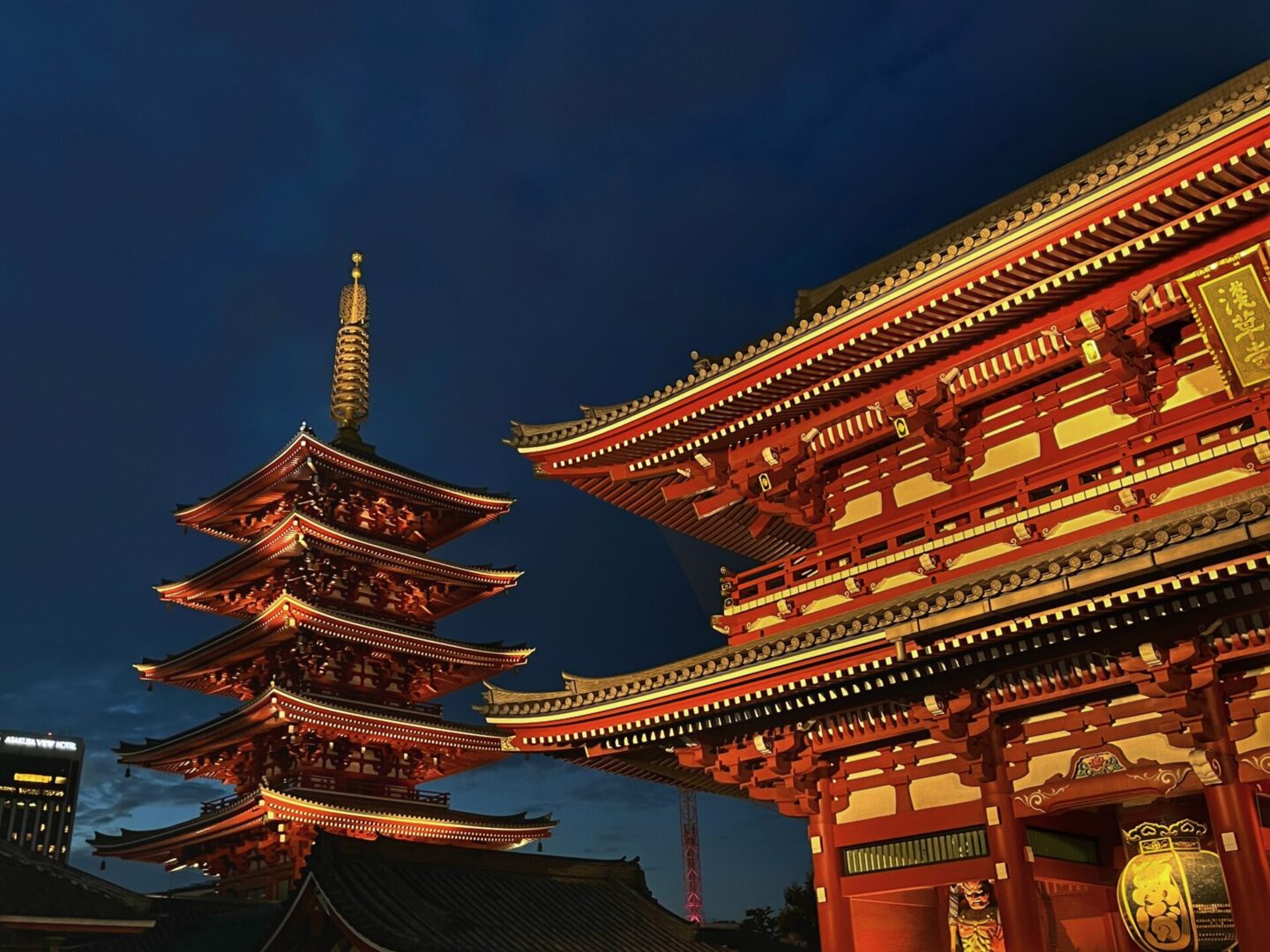
Sumo o’clock
I have a separate blog post here all about our Sumo Show Experience at Asakusa Sumo Club Annex. All I can say is, if you want to experience sumo tradition, learn about the rules and history, enjoy a chanko-nabe (a hot-pot dish eaten by sumo wrestlers before a tournament) and “maybe” get to grips with a big sweaty man yourself, then THIS is definitely the experience for you! Spoiler alert: one of us got involved in the ring, and one of us was cheerleader and chief videographer. I’ll let you decide which was which.
We booked our Luxury Sumo Show Experience through Get Your Guide. It was £79 per person, but worth every penny for the excellent food, entertainment and hospitality. Not to mention a packed goodie bag too!
Post-sumo strolls
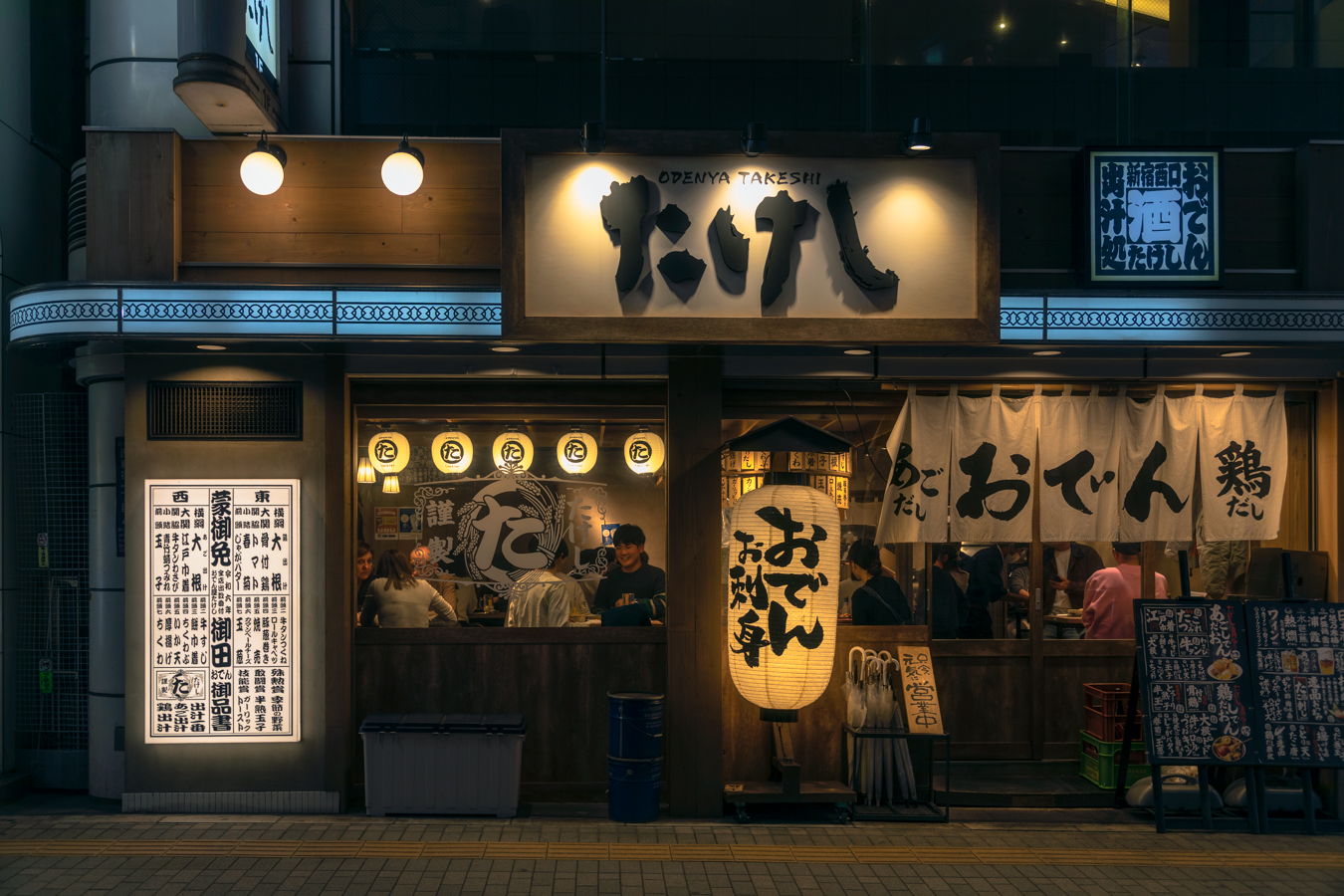
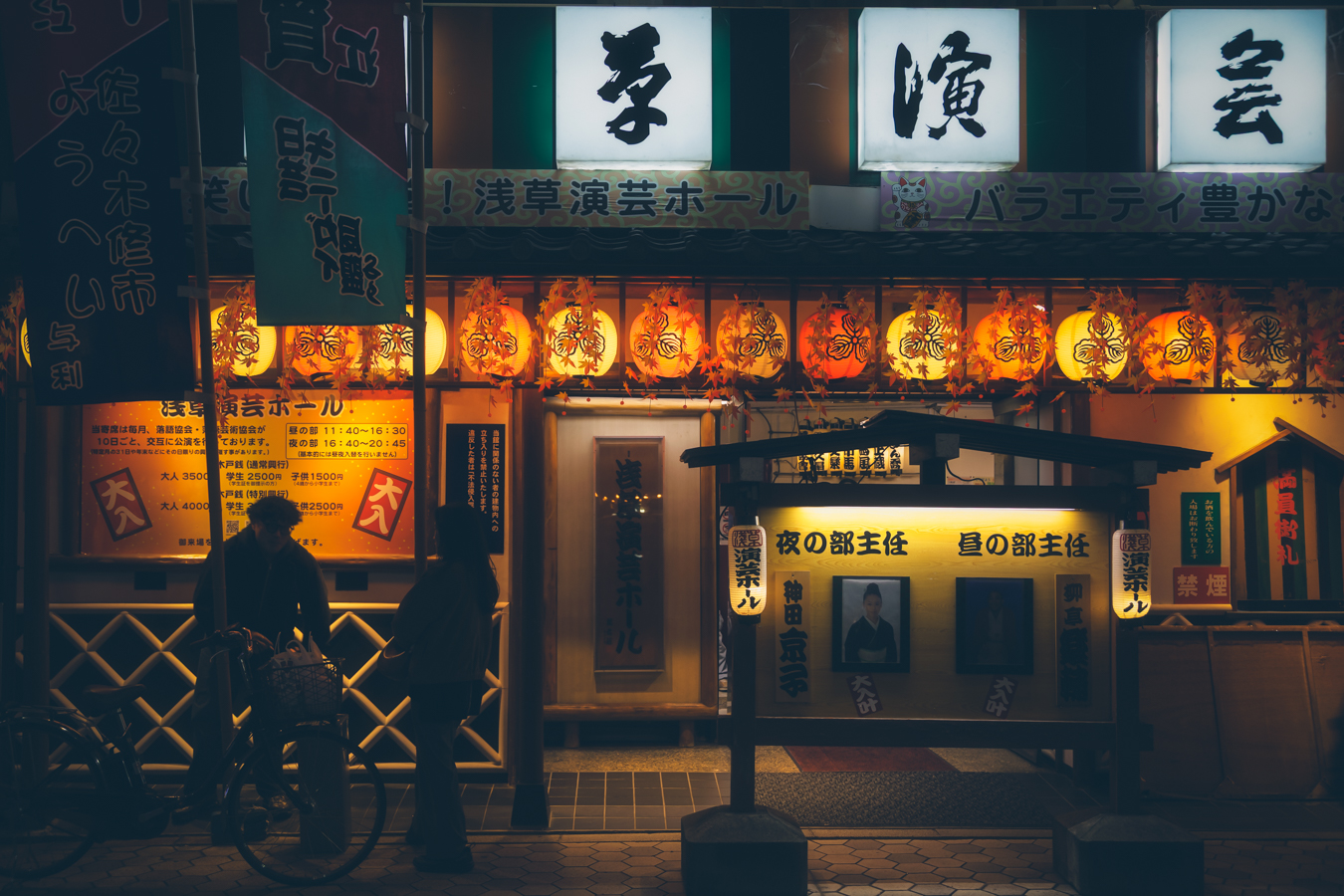
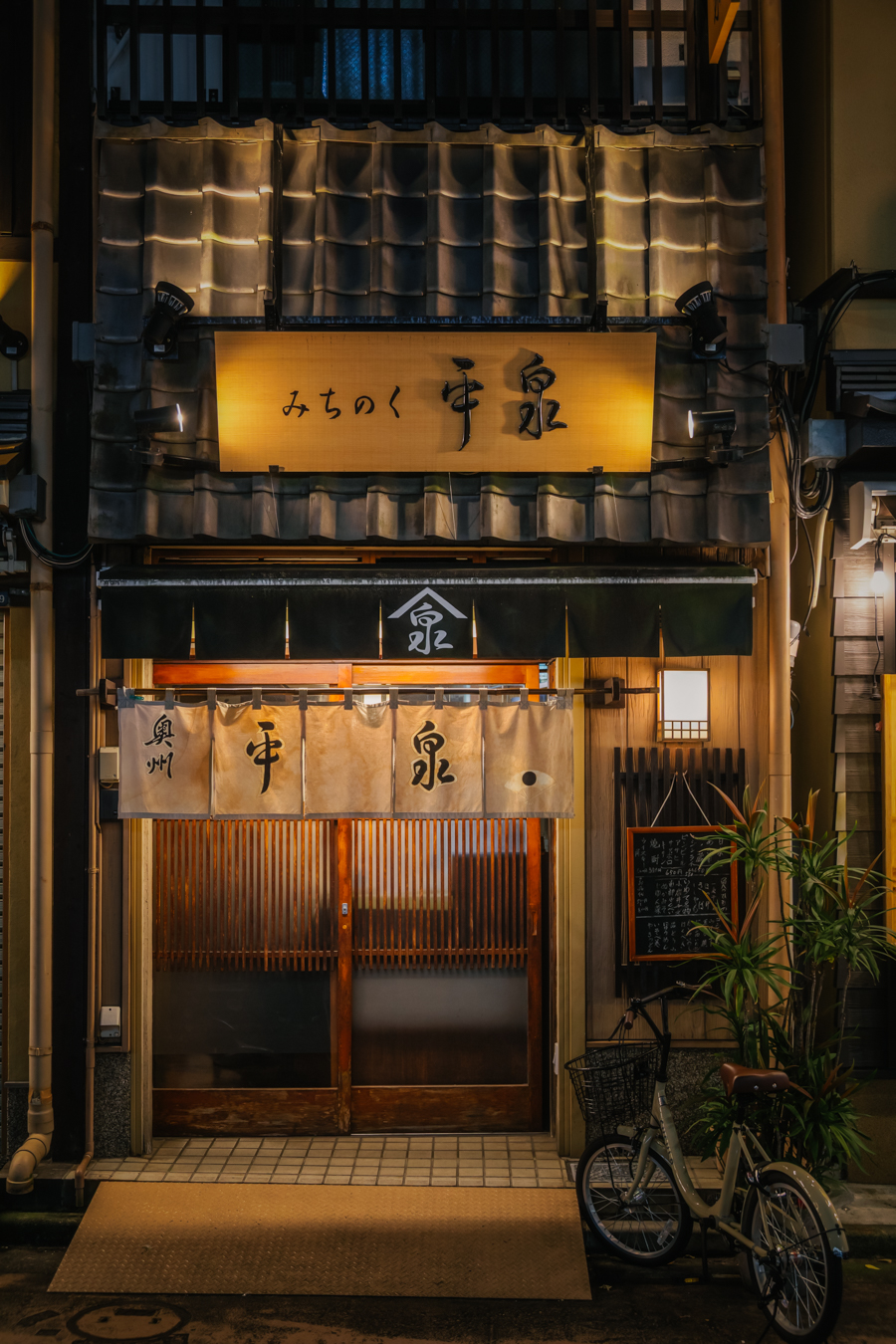
One of us is exhausted from our sumo exploits. Plus that pesky jetlag is reminding us that we’ve been awake for 15 and a half hours and walked 20,000 steps. But we still spend a little more time strolling around Asakusa at night. Here are some of Mr Fletche’s pics:
Asakusa: through the lens of Mr Fletche
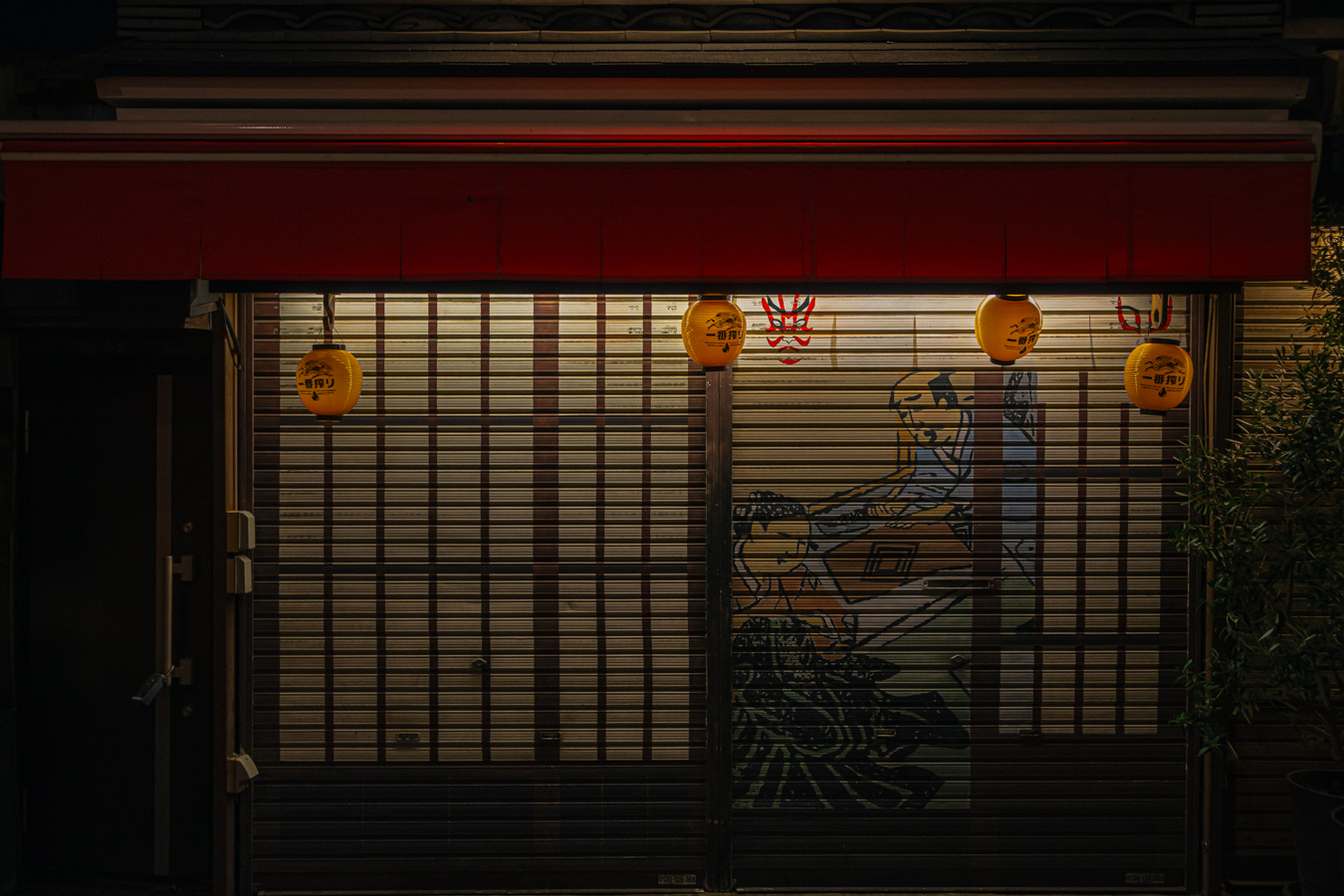
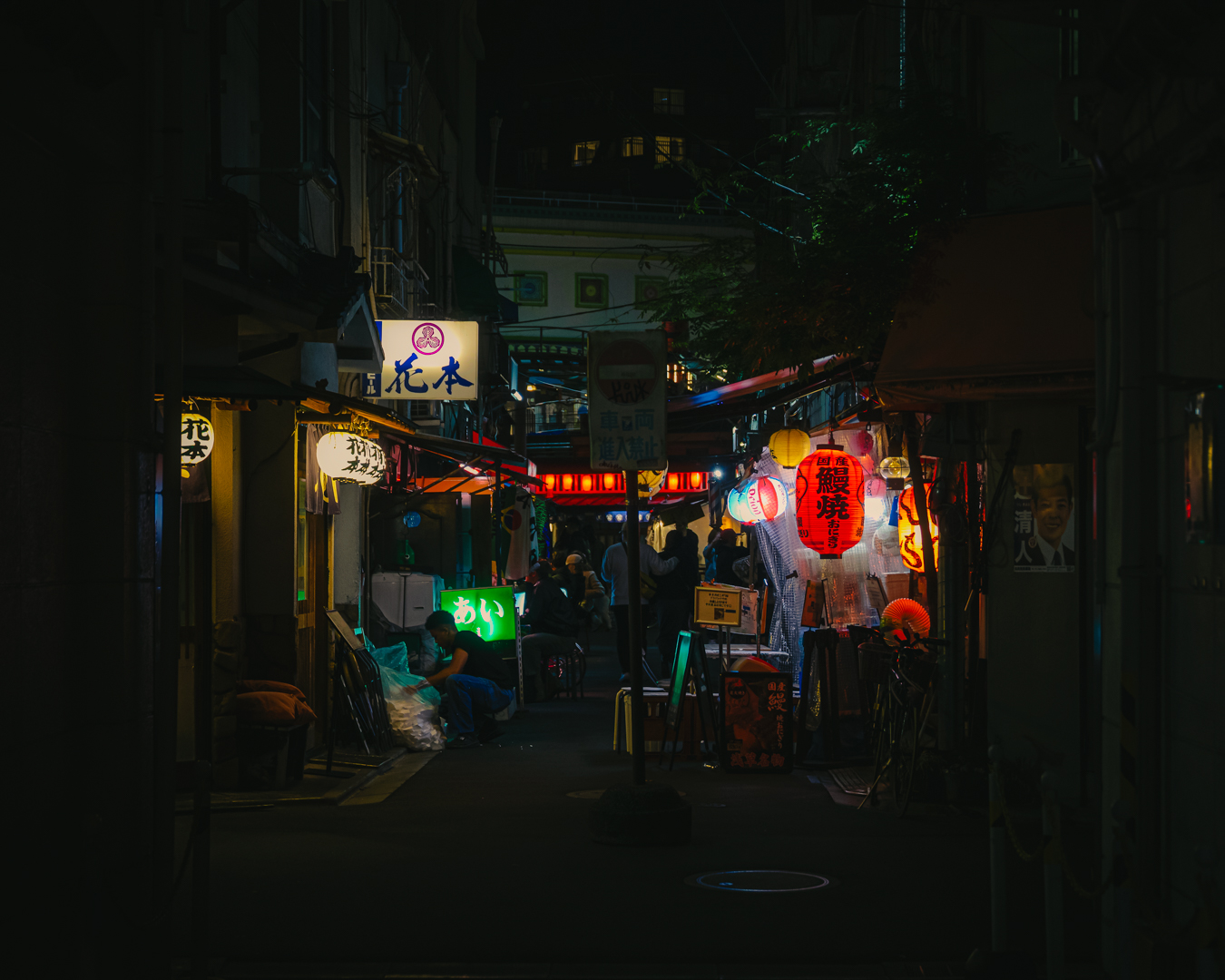
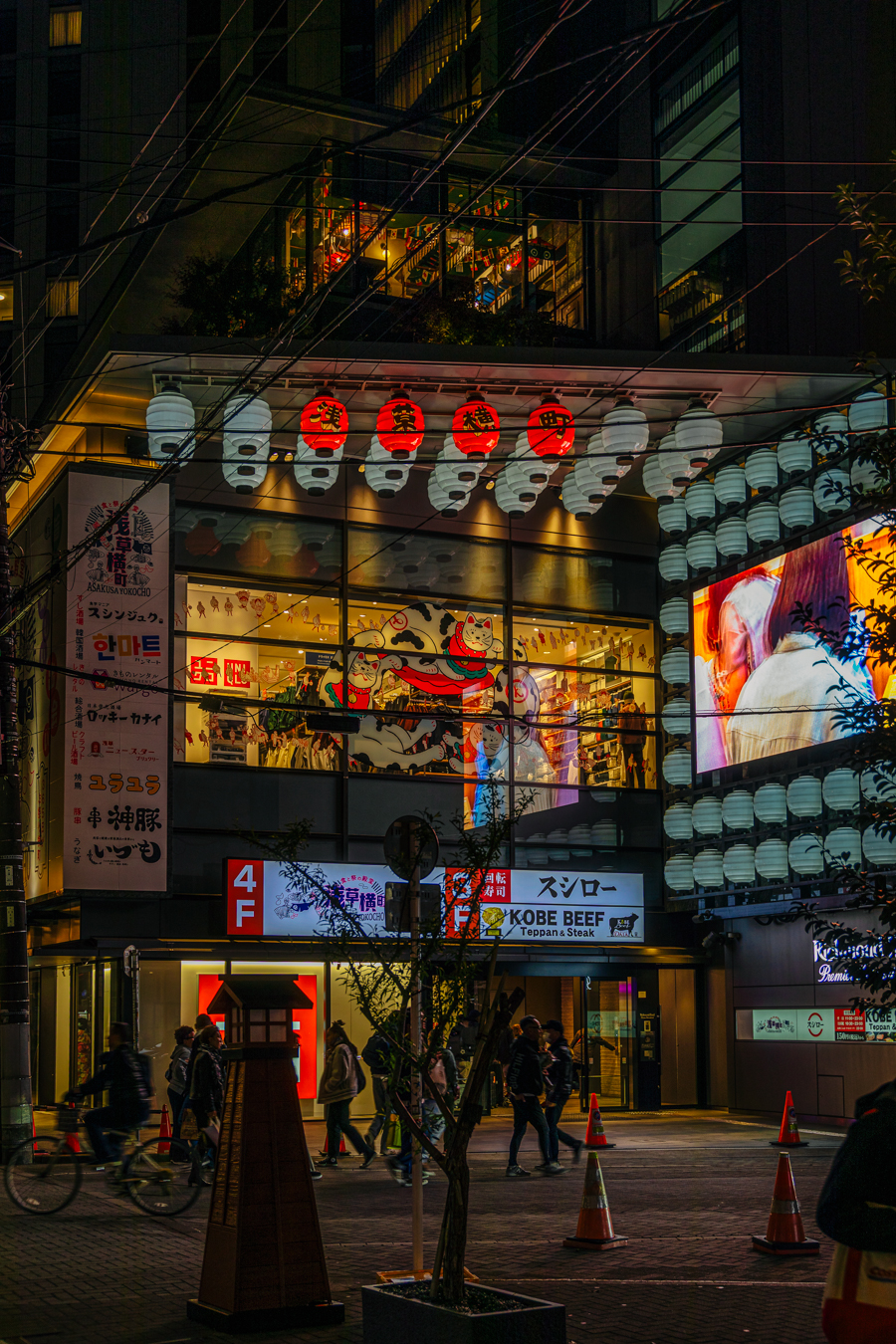
A blue and white penguin catches my eye, and a faintly familiar tune rings out. It’s time to pay our first visit to Donki (or Don Quijote), the chaotic variety store which sells… well, what doesn’t it sell? I head in – and promptly head back out again. Donki may be popular with tourists planning a huge shopping haul but I find it crowded, disorganised and a sensory overload. You could enter and not be seen for days. You’d eventually be found rocking in a corner, gently humming “don-don-don-donki” over and over again.
The journey back to Shinjuku from Asakusa seems to take an age. A combination of the gentle rocking of the carriage and the 4:30am internal alarm means that I struggle to keep my eyes open. Indeed, there are three corporate types sitting opposite me, yet in the blink of an eye there’s only one. And then an entirely different group. Mr Fletche assures me I didn’t snore. Or dribble.
Looking forward to Day 2 in Tokyo? Here’s what’s coming up. Gotokuji Temple, birthplace of the manekineko. Browsing the vintage and thrift stores in Shimokitazawa. First 7Eleven meal. Digital art at Teamlab Borderless
I try my hardest to keep the information in this travel guide up to date; however if you notice anything has changed please let me know! Happy travels, Emmalene


Your photos are stunning, I love the night time ones in particular. Wow! I can’t wait to visit Japan – hopefully next year 🙂
All the credit goes to Mr Fletche for the “good” night photos 😂
Love this dramatic shot!