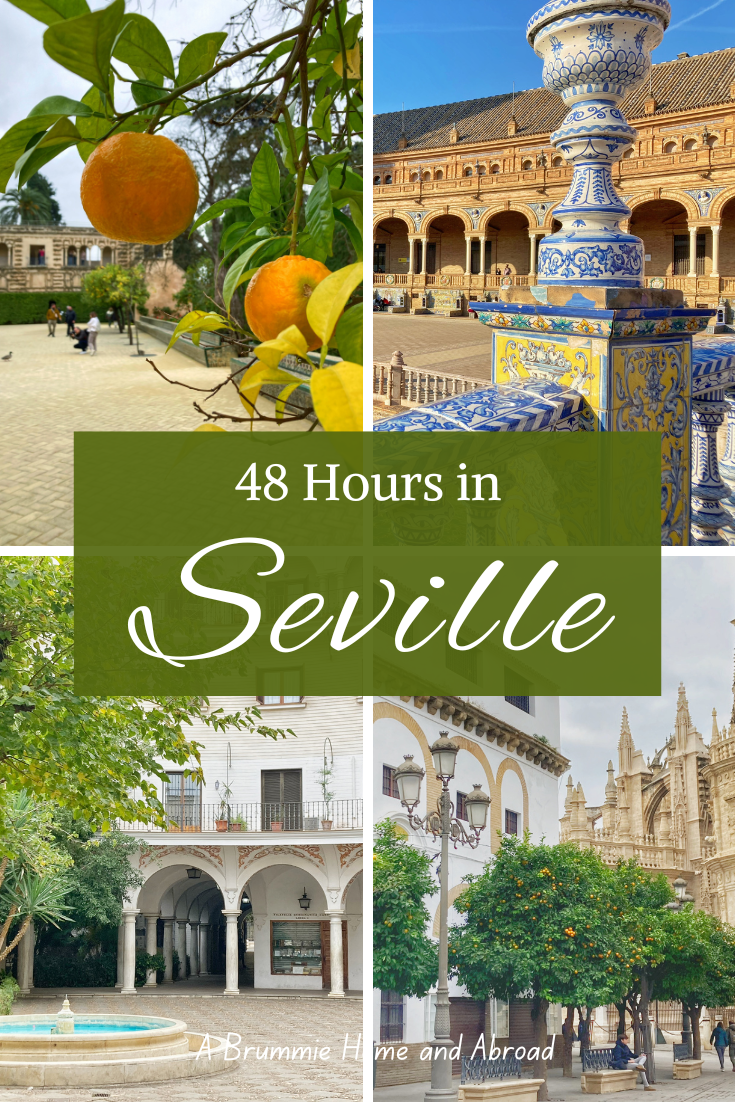
48 Hours in Seville – in November!
Tapas bars and stunning architecture. Hypnotic flamenco and the scent of oranges permeating the air. Winding alleyways and picturesque cobbled streets. Resplendent palaces and exotic gardens. Seville is a city likely to steal your heart. It’s certainly one of the prettiest cities we’ve visited. Even if the weather wasn’t always our best friend.
Prefer facts instead of a chatty travel diaries-style post? Don’t forget to read my 10 Unmissable Things to See and Do in Seville in November post. Or if you’re more interested in food, how about our Seville Tapas Crawl?
**This blog post may contain affiliate links. This means that if you go on to make a purchase or booking after clicking through one of my external links, then I may make a tiny bit of commission, at no extra cost to you!**
Our 48 Hours in Seville: Arrival Day
Getting to the city from Seville airport is a much smoother journey than others we’ve taken recently. (Yes, Bari, I’m looking at you). Taxis were lined up outside in an orderly fashion but we chose to take the airport bus on this occasion. There’s a kiosk if you turn right out of arrivals; tickets are €4 one way or €6 if you are returning within 24 hours. The buses are frequent, every 12 minutes. On a Sunday afternoon it took about 20 minutes to travel from the airport to La Buhaira Avenue (Eduardo Dato), the stop nearest our hotel.
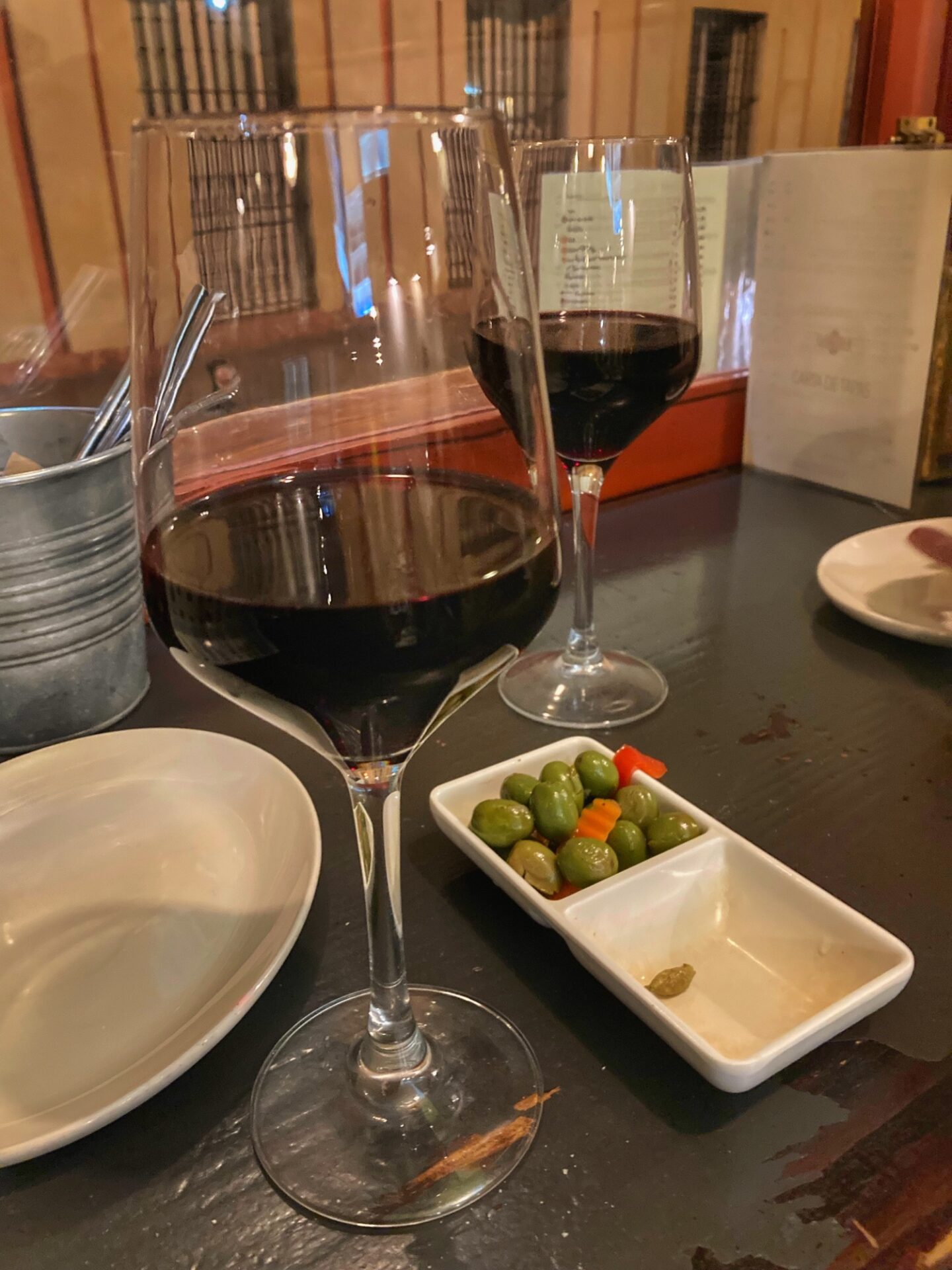
After a quick rest and refresh, we’re ready for some food. Naturally, tapas is on the menu. Just steps from our hotel is tapas bar La Bartola. It’s busy but we manage to grab the last stools at a counter in the window. We watch as a steady queue of people patiently await the next available table. We’re soon sipping Rioja Vega and popping olives in our mouths like they’re going out of fashion. It’s been a while since our Wetherspoons breakfast at Stansted.
With tapas you never know if you’re ordering too much or not enough. We have arroz rojo Thai (Thai red rice with vegetables and romescu sauce), carrillada Ibérica (Iberian pork cheek stew with potato parmentier puree), rollitos de pez espada (swordfish rolls with wakame seaweed) and croquetas casera (homemade croquettes). It’s the perfect amount of food. And that pork cheek stew? We don’t stop raving about it. Carrillada features in many of our Seville meals going forward but nothing quite tops that first meal at La Bartola.
From La Bartola we weave our way through narrow streets in the general direction of Las Setas de Seville (aka the Metrapol Parasol). We find ourselves getting hypnotised by bright lights and tempting bars and strolling slightly off path. Eventually though we find ourselves underneath the giant canopies, difficult to miss at night as different colours flash in sequence. Little wooden Christmas market huts are set up underneath, sadly we are a couple of days too early for festive festivities. We purchase our tickets from the ticket booth and walk the wrong way trying to find the entrance. Naturally, I pretend I’m just soaking up the atmosphere. (For future reference, the entrance is down the steps to the left of the ticket booth).
On finally finding the right way in, we descend the steps where an elevator waits to whisk us to the top. Before we’re let loose on the rooftop we’re herded into a small theatre to watch a multi sensory short film called Feeling Sevilla. And finally we have the opportunity to stroll the undulating walkways atop the magical mushrooms. The colours change to a specially curated soundtrack, and lights dance across the canopies under our feet. The cathedral and La Giralda are brightly lit up across the city; in between are a tangle of streets, coming to life for the night owls.


Instead of making our way back towards our hotel, we wind our way through the streets of Seville. I have a vague idea that there’s a square close by with some bars. And therefore disregard the hundreds of other bars we walk past. We walk. And keep walking. Seville just keeps on going. Eventually we end up at Alameda de Hercules and pick one of the many bars (Lola por Dios Alameda) to settle down for a drink or two. It has been a wonderful first evening in Seville, and I look forward to what our first full day has in store.
Day 1: 48 hours in Seville
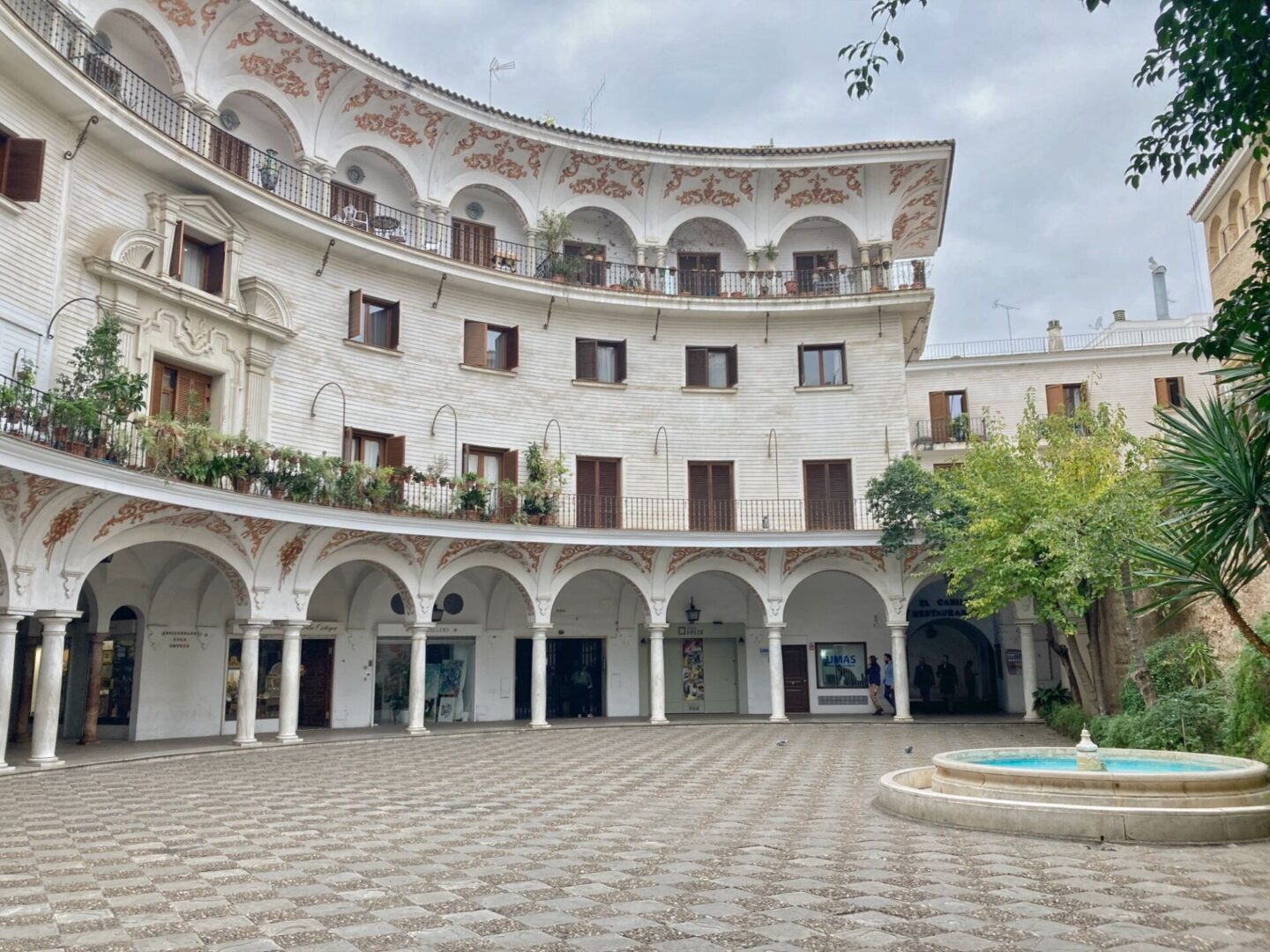
After a good night’s sleep and a hotel buffet breakfast, we head out to explore Barrio Santa Cruz. And then swiftly head back to the hotel to throw on a few more layers. Morning Seville is chillier than expected. Our Cathedral Rooftop Tour is booked for 11am so we have a little time to spend winding our way around the medieval neighbourhood. Just a stones throw from the cathedral is the beautiful Plaza del Cabildo, adorned with intricate decoration and marble columns.
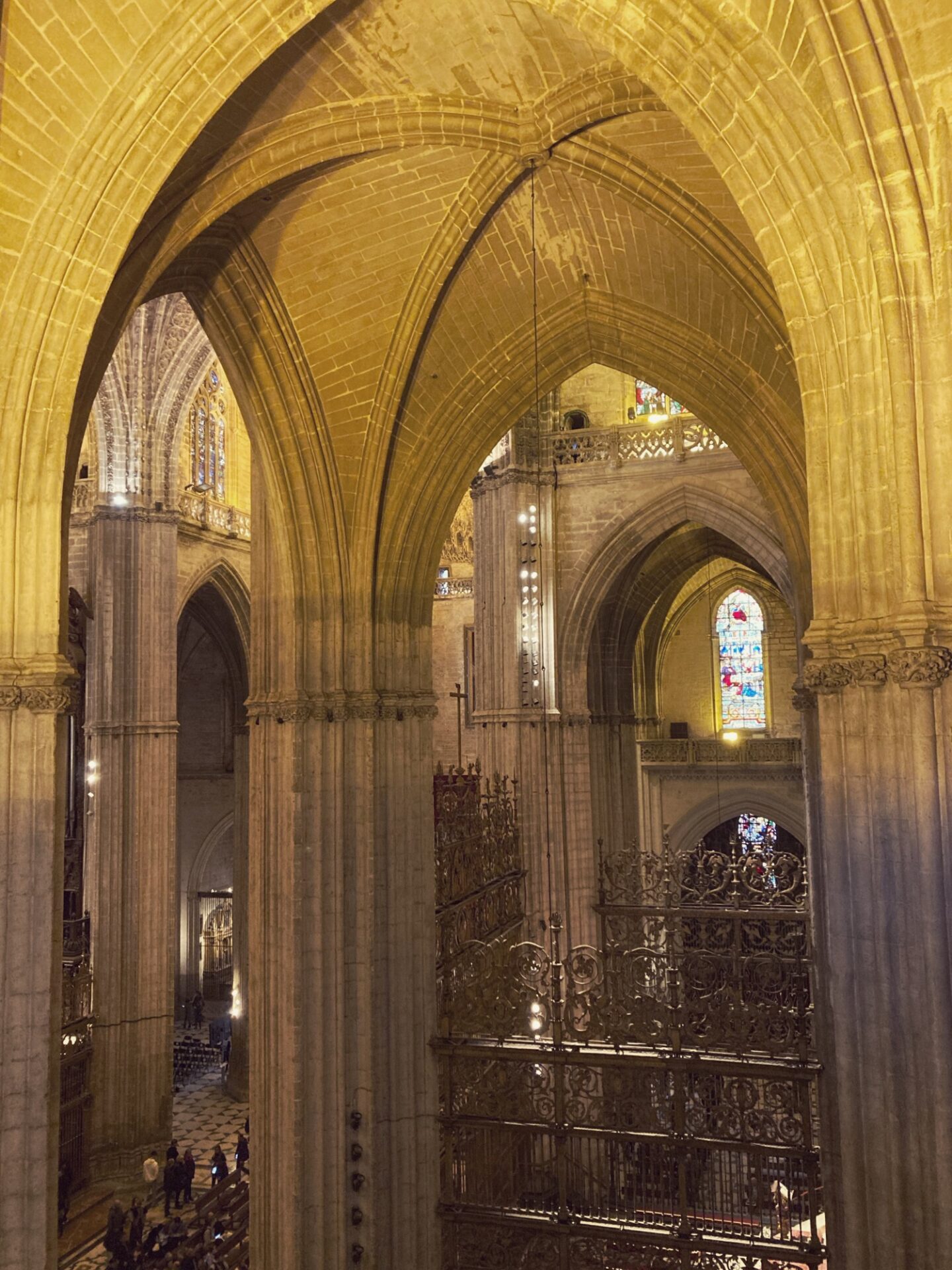
We arrive at the meeting point for our Cathedral Rooftop Tour a little early. But bang on time, the big wooden doors open, our digital tickets are scanned and headsets are being handed out. There’s a brief introduction to the cathedral before our small group is led across the nave to a secret door tucked away behind Christopher Columbus’ tomb. The only way is up from here.
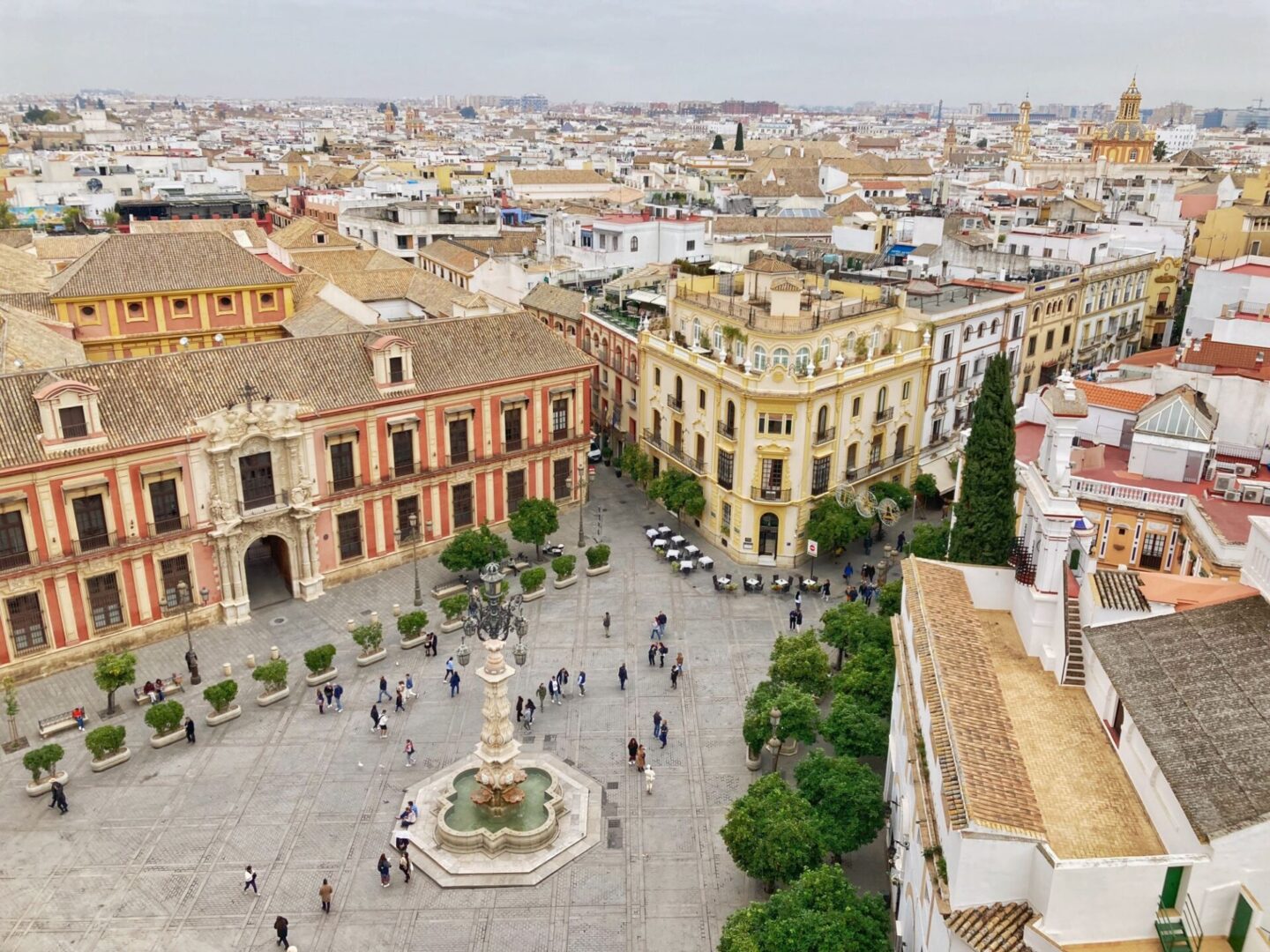
Some of the stairways are a little steep and narrow, but nothing that anyone with an average level of fitness couldn’t handle. There are breaks at each rooftop level before the next stairwell, so there’s plenty of time to catch your breath. The first level gives great views of the bustling Plaza del Triunfo below; the horse-drawn carriages below look like miniature toys. As we climb higher, we peer over the top of the domed Royal Chapel and the rooftop of the nave. We criss-cross balconies inside the cathedral’s interior, giving us wonderful views of the stained glass windows and intricate mouldings above, and of the nave far below. On the final rooftop we duck beneath flying buttresses, and admire the pinnacles reaching into the sky around us.
This tour focuses very much on the architecture of the cathedral, and the incredible feats of engineering employed during its construction. It’s a fascinating tour. Once we’re back on ground level we immediately decide to ascend again with our included La Giralda admission. In all honesty – if you’ve done the rooftop tour, skip La Giralda. It’s crowded, claustrophobic and wire screens prevent any good photography from the top.
If you’ve got your heart set on a rooftop tour definitely pre-book your tickets well in advance from the official cathedral website. Tickets currently cost €20 and include access to the Cathedral, La Giralda and to the Church of El Salvador. General admission tickets are €12 so the tour is great value.



It’s not the first time we’ve been up on the rooftop of a cathedral – we visited the rooftop of Milan’s magnificent Duomo – you can find out more here.
Plaza de España
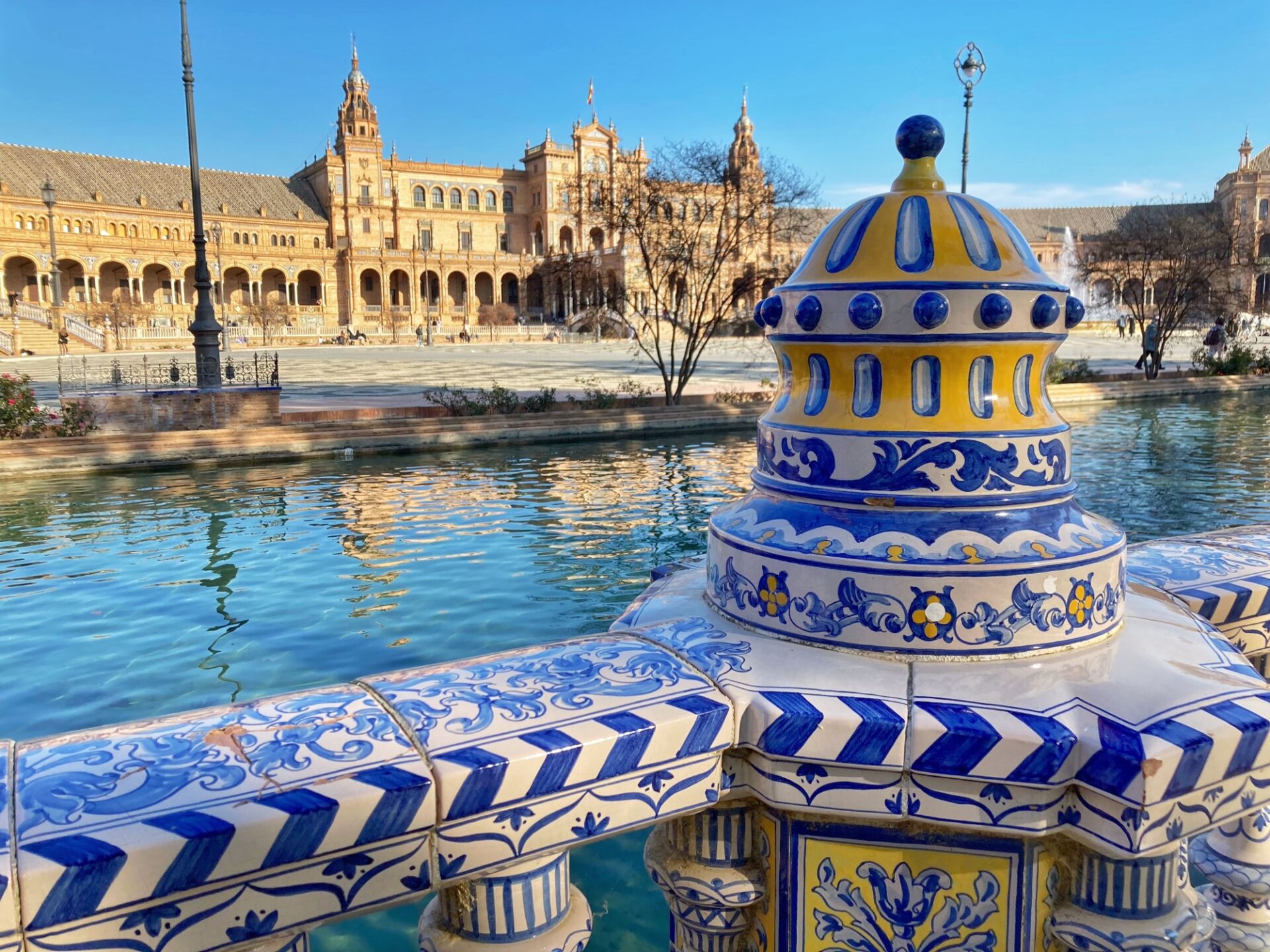
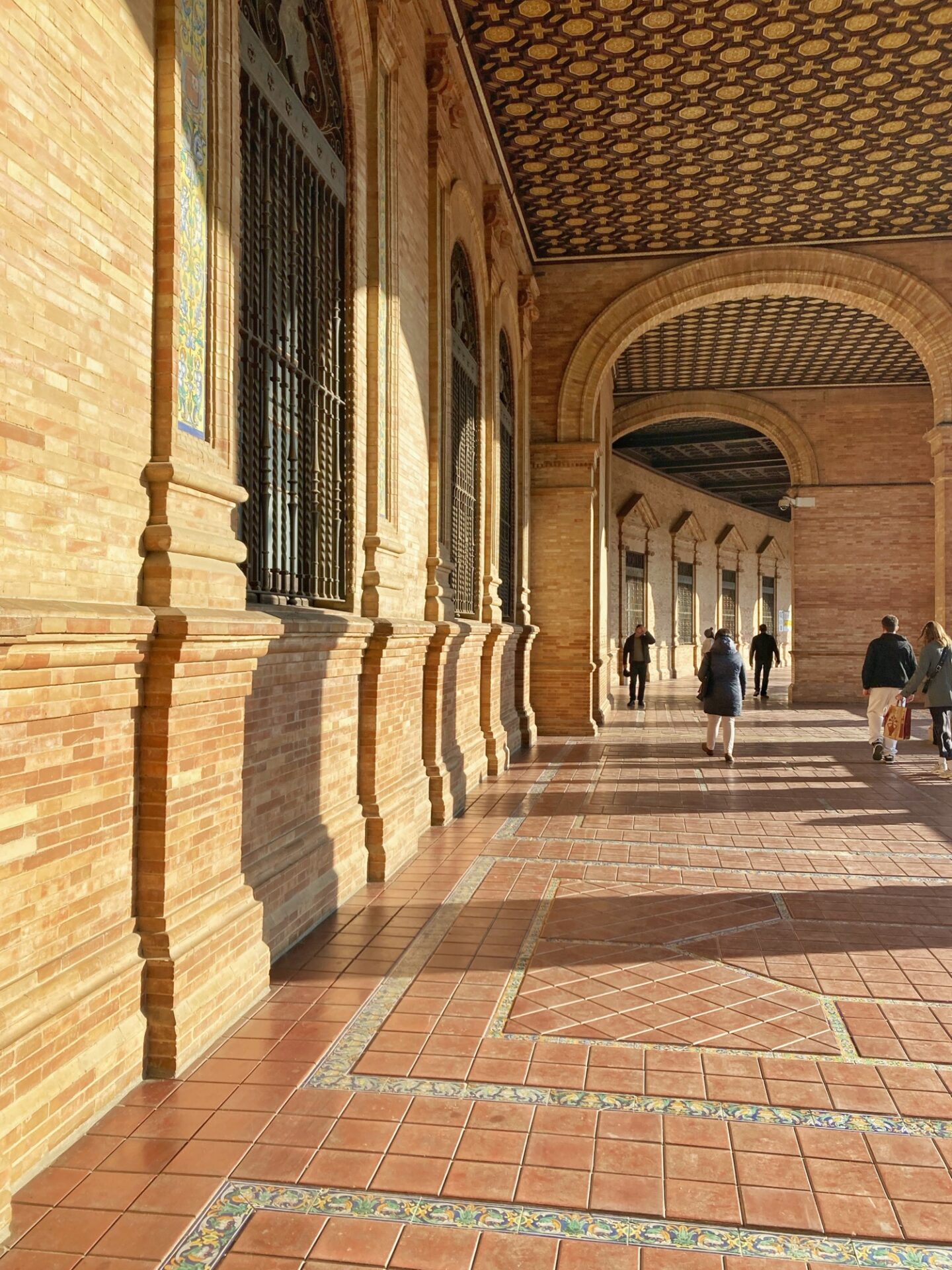
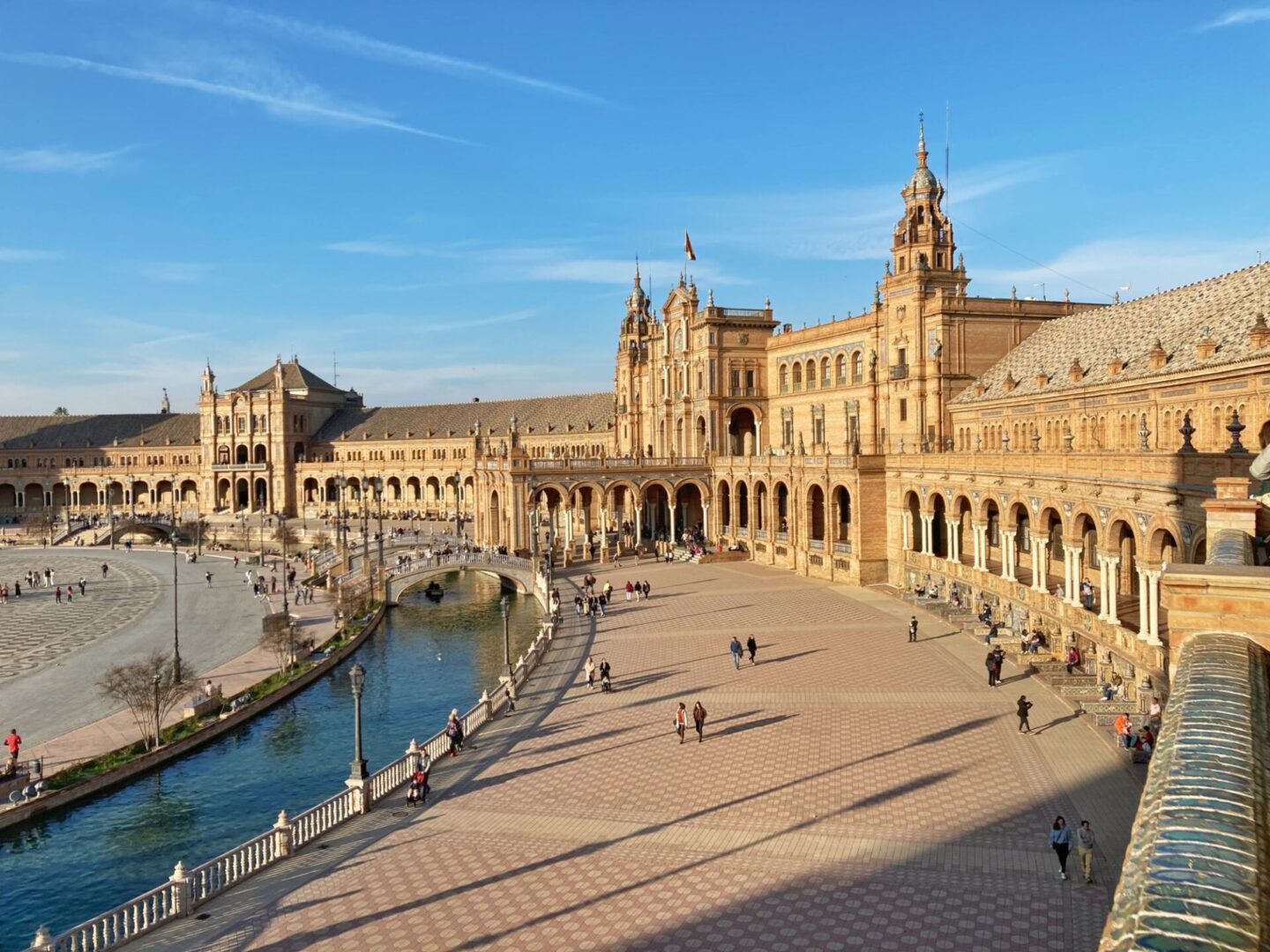
After all that climbing, it’s time for a light lunch. We end up at Casa Funes, just steps away from the cathedral. My confusing Brummie accent means I accidentally order a club sandwich instead of a tuna sandwich. Full of bread and beer, we head towards Plaza de España. Temperatures are finally starting to rise, and the grey blank sky melts away to uncover a beautiful blue sky. It’s the perfect opportunity to relax in Seville’s most iconic square. In fact, we linger until the November sun starts to set, catching a flamenco performance or two. Flamenco really is everywhere in Seville.

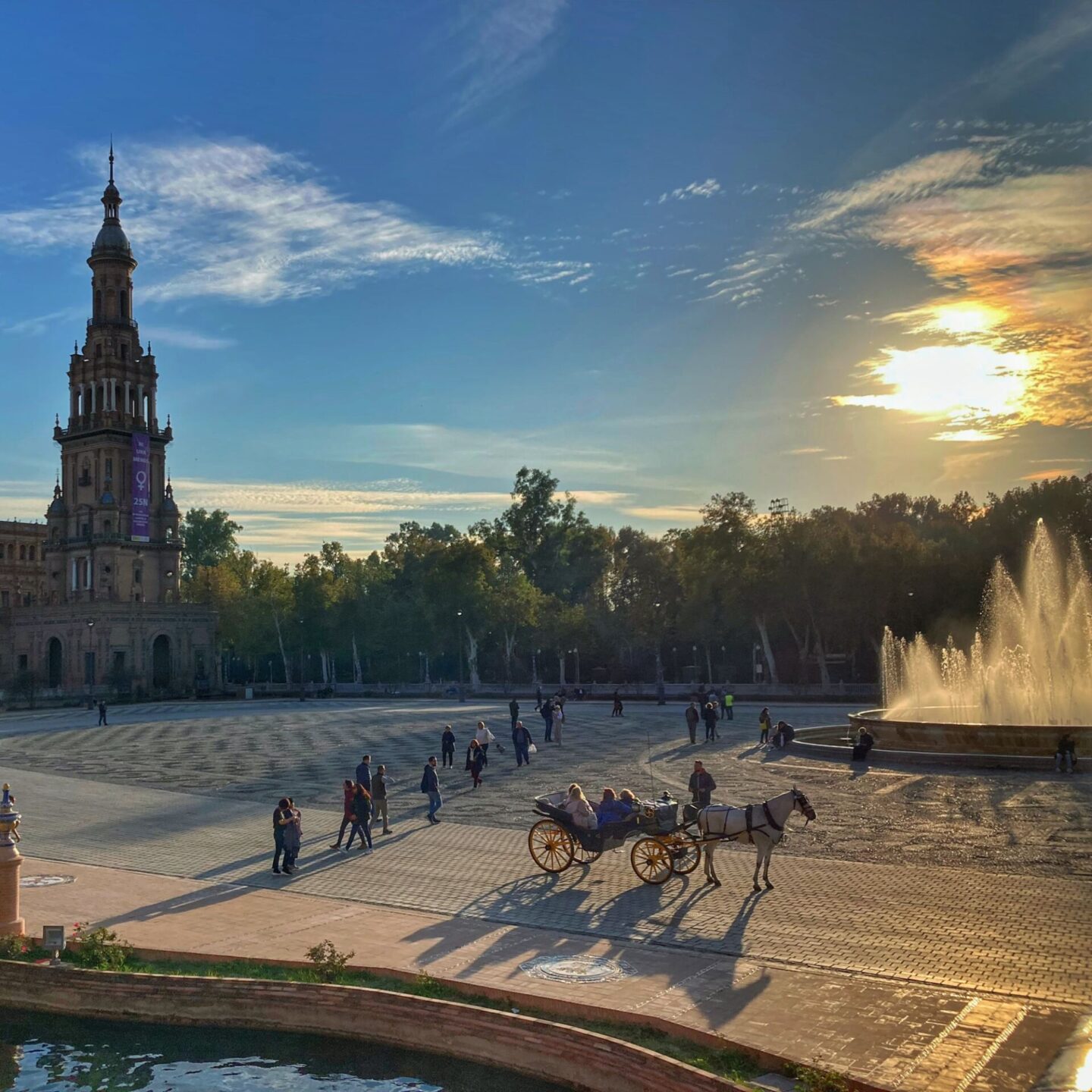
It’s time to head back to the hotel. Our evening plans are already scheduled. Wanting to sample some of Seville’s incredible tapas bars – but without the stress of planning where and what to eat – I had pre-booked a 3-hour tapas walking tour through Get Your Guide. We loosely knew where our meeting point was, having unknowingly wandered around the area the previous night. And this tapas tour was awesome. It was a great way to meet new people, explore less touristy areas of Seville and – most importantly – try lots and lots of local food and drink.
You can read more about our Seville Tapas Crawl here.

Day 2: 48 hours in Seville
It’s our wedding anniversary! The hotel had kindly delivered a bottle of bubbly to our room the night before so we take a swig or two after breakfast to set us up for the day ahead. We’re off to spend the morning at a royal palace.
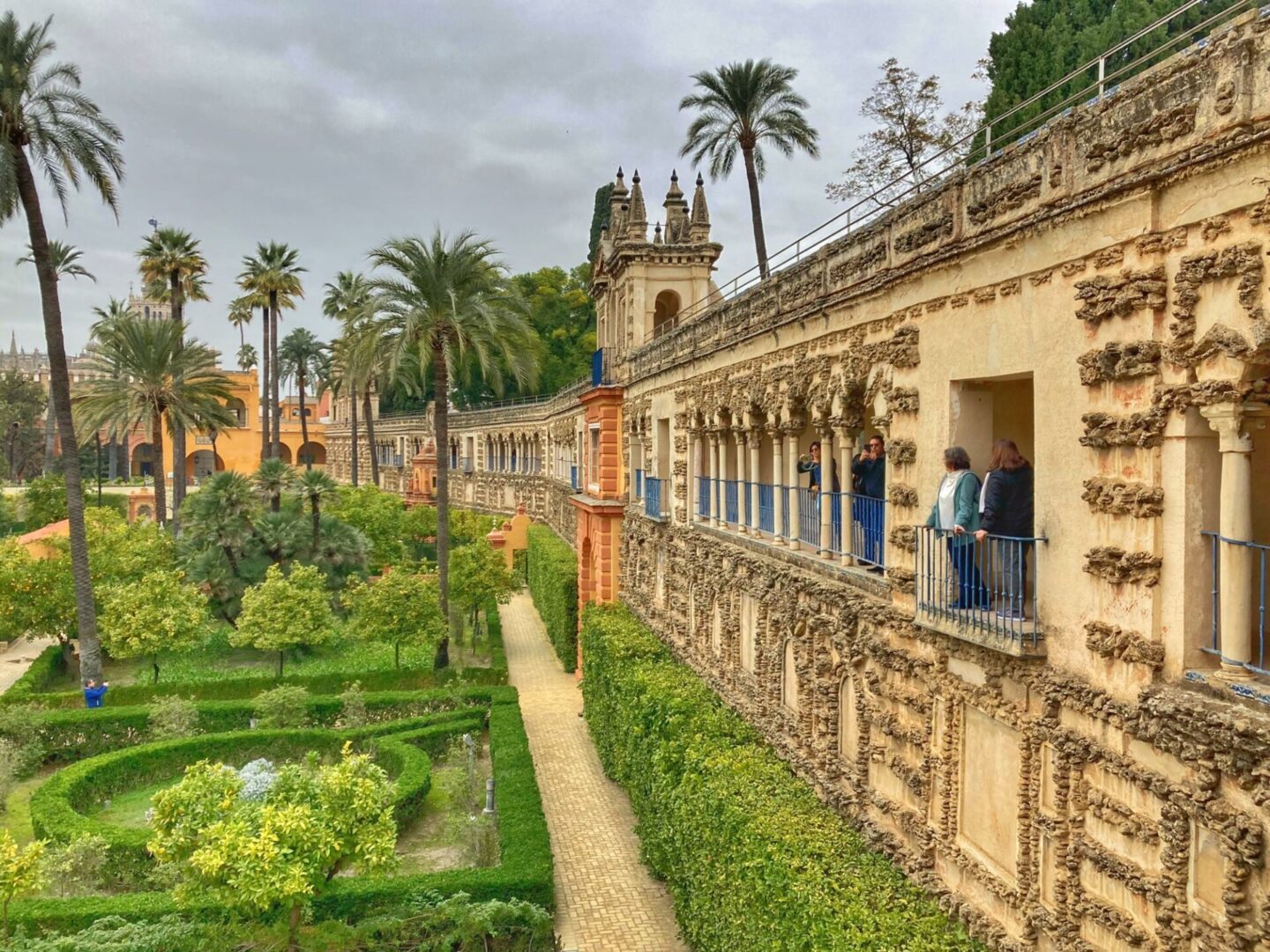
Pre-booking your tickets to the Royal Alcazar is a must if you don’t want to spend valuable time queuing twice. We’d booked the first tickets of the day and there was already a queue when we arrived half an hour before. I regret not decanting that bubbly into my water bottle. With the same efficiency as the cathedral tour the previous day, we’re checked in smoothly and soon we’re free to wander around the palace. The vaulted ceilings, ornate mosaics and gorgeous archways are quite spectacular, but we didn’t catch the gardens at their best as storms had recently battered the Alcazar. We didn’t bother with an audio guide on this occasion, preferring to make up our own historical tales.
I spend a while gently encouraging the peacocks to display their splendid tales, but they’re not playing ball. Mr Fletche reminds me that some of them are peahens. The weather has turned decidedly breezy so we take shelter in the palace café for coffee and cake. It all feels very National Trust at this point.

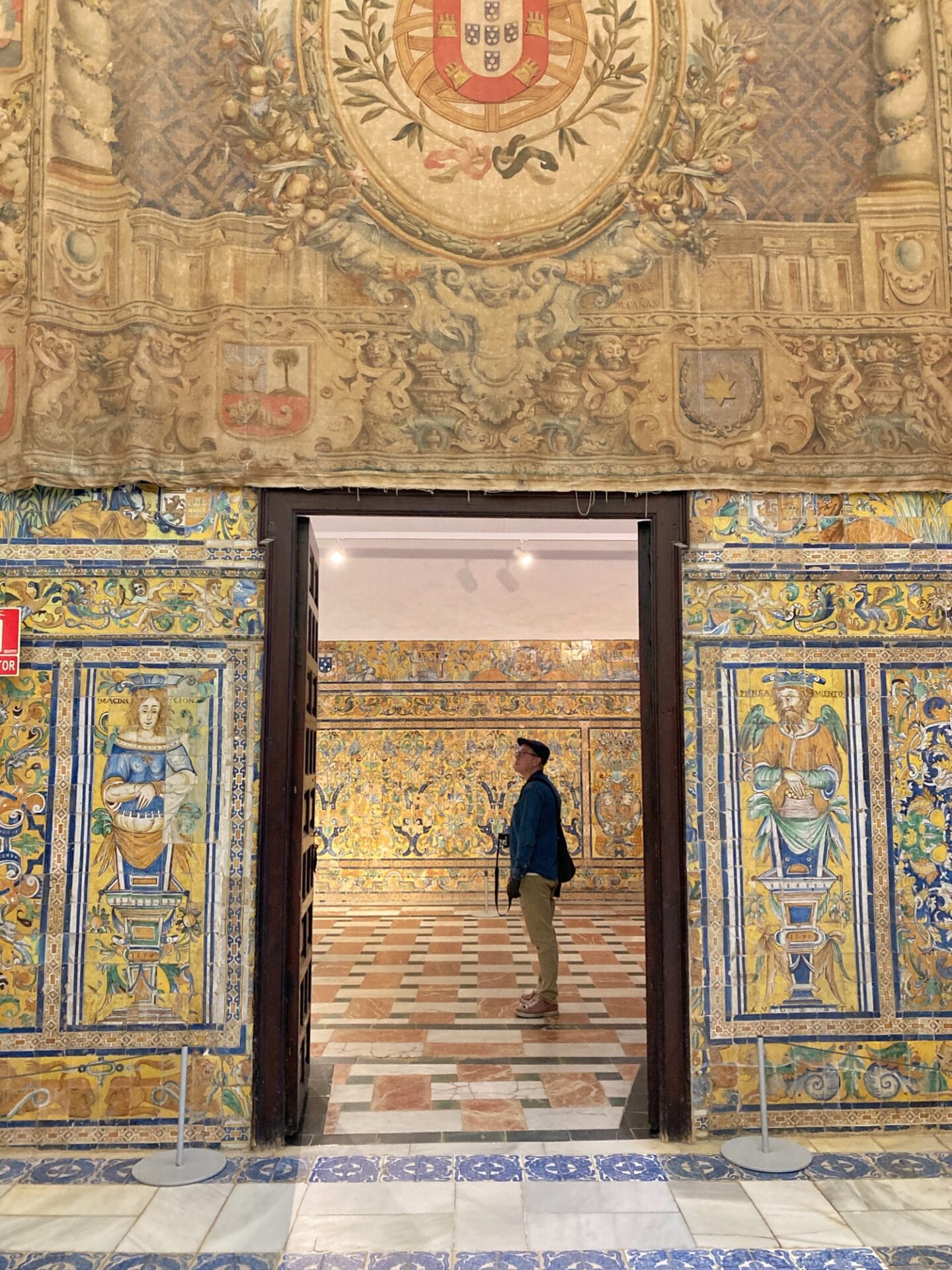
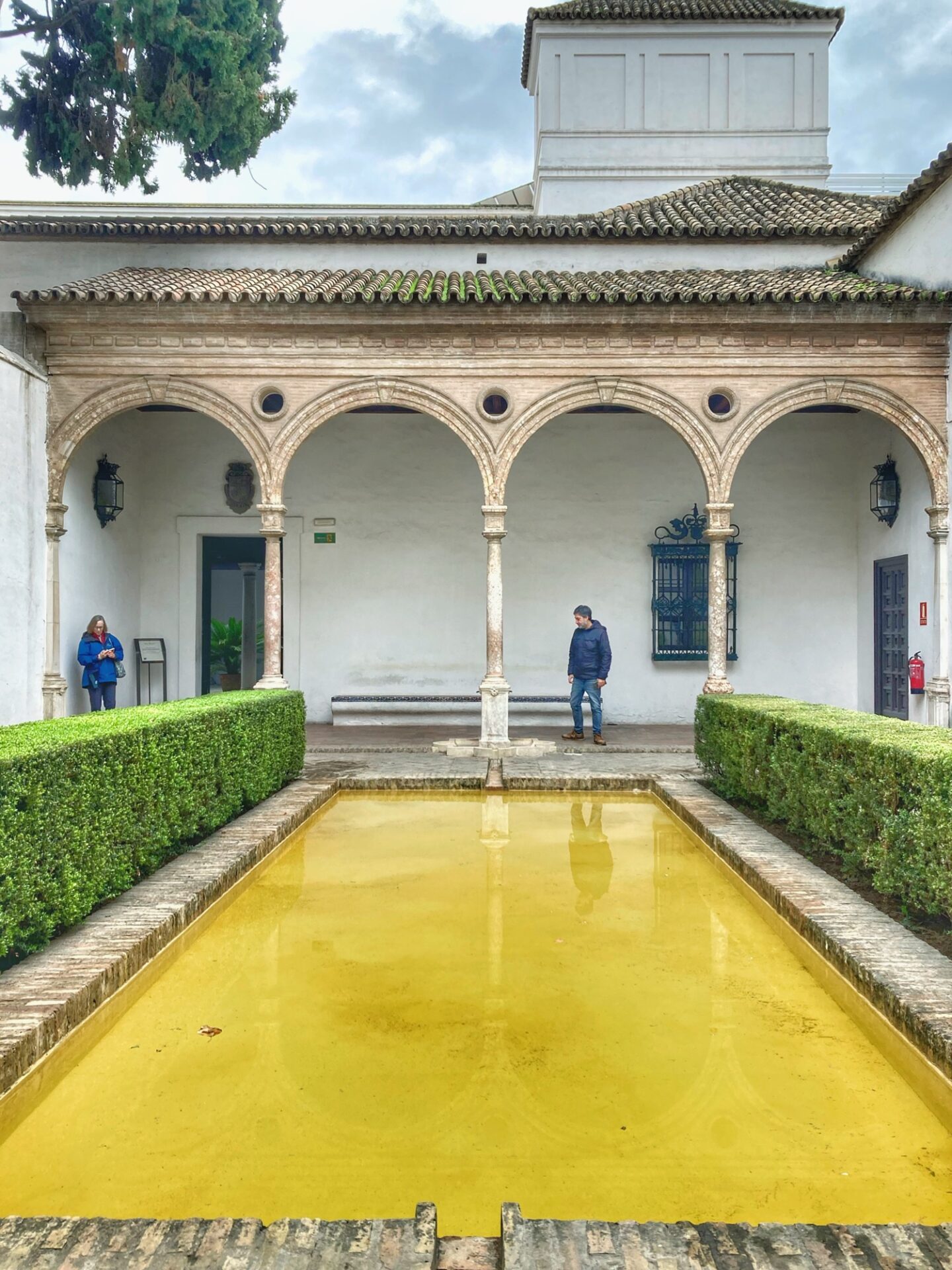
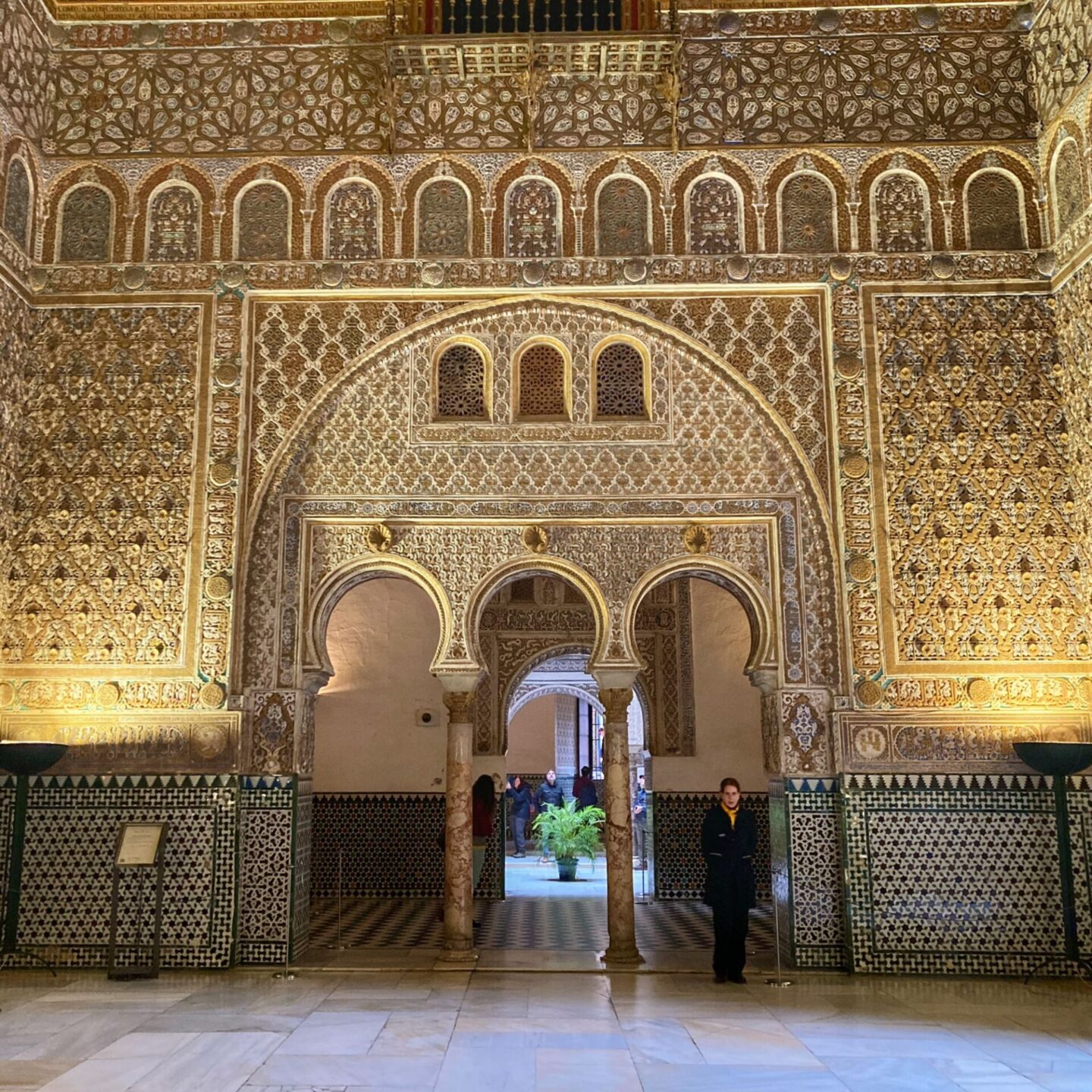

From the Alcazar – after a quick glass of wine – we head back through the city. I want to try out Mercado Lonja del Barranco for lunch. This food hall is a foodie’s dream. Naturally we take a tour of all the stalls whilst I shout out all the foods I see like a crazy game of food bingo. “Look Chris, tacos! Look Chris, oysters! Look Chris, sushi!” Mr Fletche gently takes me by the hand, sits me at a high table and goes off to buy a refreshing Cruzcampo to calm me down. Our anniversary lunch is a delicious charcuterie board with fancy pork scratchings. Perfect.
Post lunch we take a stroll along the Gualdalquivir river, past the Plaza de Toros de la Real Maestranza de Caballería and the twelve-sided Torre del Oro. A little further down the river they are setting up some sort of ice rink/funfair/winter wonderland. Fearing our riverside access is blocked, we perch on a bench for a while, wondering where all the people are coming from in that direction. Turns out our path is not blocked after all. We follow some joggers and a dog walker through, just in case it’s some sort of Seville Bermuda Triangle. It’s not. We find ourselves near Plaza de España again. It’s not half as pretty without the sunshine and we’re glad we’d spent time there the previous day.

Tonight is flamenco night. Despite all my restaurant research we end up in a tapas bar on the touristy Calle Mateos Gago – not a patch on La Bartola or anywhere we had eaten the night before but passable. But it means we’re close to Tablao Flamenco Los Gallos; in fact we arrive outside before the previous show has ended which means we get a spoiler of the loud rousing finale.
Flamenco is the sound of Seville – and I wrote more about it here!

Day 3: 48 hours in Seville
No, my maths isn’t THAT bad. We didn’t actually have much of a plan for our third day in Seville – I’d left an unusual gap in the itinerary. I loosely thought we might head out to Cordoba, an hour’s journey from Seville. But two things occurred on our third day in Seville. Firstly, the weather. We flung open our curtains to torrential rain. And secondly, as I picked at breakfast, I realised I was feeling decidedly queasy. Maybe the tapas from that unresearched restaurant really hadn’t agreed with me.
Seeking indoor activities, with shelter from the rain and ample places to sit down and rest, we headed to Seville Aquarium. The pulsating jellyfish did little to quell the nausea but at least we stayed dry. The rain has abated a little so we stroll back to the city alongside the river. Food is the last thing on my mind but Mr Fletche needs to eat. We head over the arched Puente de Isabel II to Mercado de Triana. Sadly, all the stalls appear to be closing up so we return to Mercado Lonja del Barranco. I nurse a lemonade whilst Mr Fletche gathers food for himself.
I take myself back to the hotel for an afternoon nap, feeling very sorry for myself. Eventually, I rally round enough to pop out for an evening stroll. Convinced that good tapas will tempt me to eat, we grab an inside table at Bodega Santa Cruz. I am wrong. One mouthful of food and my stomach is rolling. I stick to a glass of red (probably not advisable on a completely empty stomach) while Mr Fletche gamely battles his way through several small plates. I admit defeat, It’s an early night for me. Mr Fletche takes the opportunity to take some candid street snaps, warm glowing lights reflecting in puddles.
Seville through Mr Fletche’s lens


Where we stayed
We stayed at the four-star Hotel Fernando III located right in the historic heart of Santa Cruz, just a short stroll from Seville Cathedral, La Giralda and the Real Alcazar. One of the biggest draws of this hotel was the rooftop pool and bar. Neither of which we frequented, but would be absolutely perfect during warmer weather.
It’s a deceivingly large and maze-like hotel. Our room was on the third floor; functional if a little non-descript. Think more business than boutique. But we’re not here to admire the hotel room. If we wanted a quirky hotel room, we’d have returned to Rome.
Search more hotels in Seville here!
Seville accommodation is cheaper in November than in the summer months. We paid £465 for four nights in a standard double room with breakfast. In June, the exact same package is £220 more.

November weather in Seville
November temperatures in Seville are generally warmer than the chilly UK. Average daytime temperatures are 18-20 degrees, and around 8-10 degrees at night. There are about 5 days of rain on average, and about 7 hours of sunshine a day. Unless we’re visiting of course. The city’s inland location avoids too many storms and chilly winds, although Seville was recently rocked by storms that damaged some of the city’s parks. Our food tour guide gave us a little insight into how unbearably hot Seville gets during the summer months, so the city should definitely be avoided June-September.

The cooler temperatures actually make it ideal sightseeing weather. After all, there’s nothing worse than wilting on a walking tour on a scorchingly hot day, or exploring attractions with no shade in sight. Seville in November means perfect temperatures for exploring the city on foot. Just pack an umbrella.
You can read more about what it’s like to travel to Seville in November here!
Getting to and getting around Seville
Seville is well-connected by air, trains and buses to other Spanish cities and beyond. We travelled with Ryanair – yes, even after the Bari debacle – and flew from Stansted direct to Sevilla Airport. Travelling in November meant cheaper flights than in the summer months – our flights were about £75pp cheaper in November than in June for the same route.
We took the airport bus which costs €4 for a single journey. From arrivals, the Airport Bus is clearly signposted (to the right of the main exit). Tickets can be purchased from the kiosk, and the journey takes about 35 minutes. Taxis cost a flat rate €25 from the airport to the city centre (and vice versa) (Mon-Fri 07:00-21:00) or €28 at all other times. We used a taxi to return, not fancying the walk to the bus stop dragging our suitcases in the rain…
Unless you’re visiting Seville as part of a roadtrip in the Andalusia region you won’t need a car when visiting the city. Seville is a very walkable city; most of the key sights were within a 20 minute walk from our central hotel.
Is 48 hours in Seville enough?
Two days in Seville is a good length of time to enjoy this compact city, to truly appreciate the history, culture and culinary delights. Any less means rushing from sight to sight, and not allowing yourself the time to soak up the atmosphere. .
If you are planning to spend longer in the city, then a daytrip is a great option. From Seville it is easy to travel to Carmona, Cadiz or Córdoba by public transport. If you prefer a guided tour, consider this one which takes in both Córdoba and Carmona during a 10 hour small group tour. Or dedicate a whole day to Córdoba – especially in May for the famous patio festival. It’s a good excuse for us to return to Andalusia.
I try my hardest to keep the information in this travel guide up to date; however if you notice anything has changed please let me know! Happy travels, Emmalene